Invasive Species Control for Lakes and Ponds in NJ, NY, VT & Ontario
Key Takeaways
- Invasive species such as Eurasian watermilfoil, hydrilla, and zebra mussels can degrade water quality, collapse fisheries, and eliminate recreation on lakes and ponds across northern New Jersey, upstate New York, Vermont, and southern Ontario within a few growing seasons.
- Early detection and rapid response is crucial for control; eradication is more feasible when invasive species are detected early, before populations spread across an entire littoral zone.
- Integrated pest management for invasive plants and invasive pests combines mechanical removal, biological control, and carefully regulated chemical control methods to keep costs down and protect native species.
- Ready Scout, LLC provides end-to-end invasive species control, water quality monitoring, permitting, and ongoing lake management programs tailored to lakes and ponds in the Ready Scout service area.
- Lake communities that adopt best management practices, supported by Ready Scout training and consulting, reduce the risk of future biological invasions driven by global trade and regional boat traffic.
Introduction: Why Invasive Species Control Matters for Lakes and Ponds
A lake that hosted bass tournaments and swimming lessons five years ago can become a weed-choked, low-oxygen system unfit for either activity. That transformation happens when aquatic invasive species establish and spread without a structured response.
An invasive species is a non native organism introduced outside its native range that causes harm to the environment, human health, or the economy. Most non native species do not cause problems; the ones that do can displace native plants, alter fish habitat, accelerate shoreline erosion, and cost lake communities tens of thousands of dollars annually to manage.
If you are a lake association member or private pond owner in northern New Jersey, upstate New York, Vermont, or southern Ontario, the signs are familiar: dense mats of invasive weeds wrapping around dock pilings, clogged irrigation intakes, or nuisance algae blooms that close beaches. Rapid response can prevent widespread infestations of invasive species, but only if the problem is identified and acted on quickly.
This article walks through control methods, management practices, and how Ready Scout integrates invasive species management into broader lake stewardship, focused on lake and pond environments including shorelines and near-shore shallow zones where invasive plant species and invasive pests often establish first.
What Are Invasive Species in Lake and Pond Systems?
Aquatic invasive species in freshwater lakes and ponds include submerged and floating plants, mussels, fish, invertebrates, and pathogens. Each category disrupts water quality and habitat in different ways.
Invasive plants fall into three growth forms:
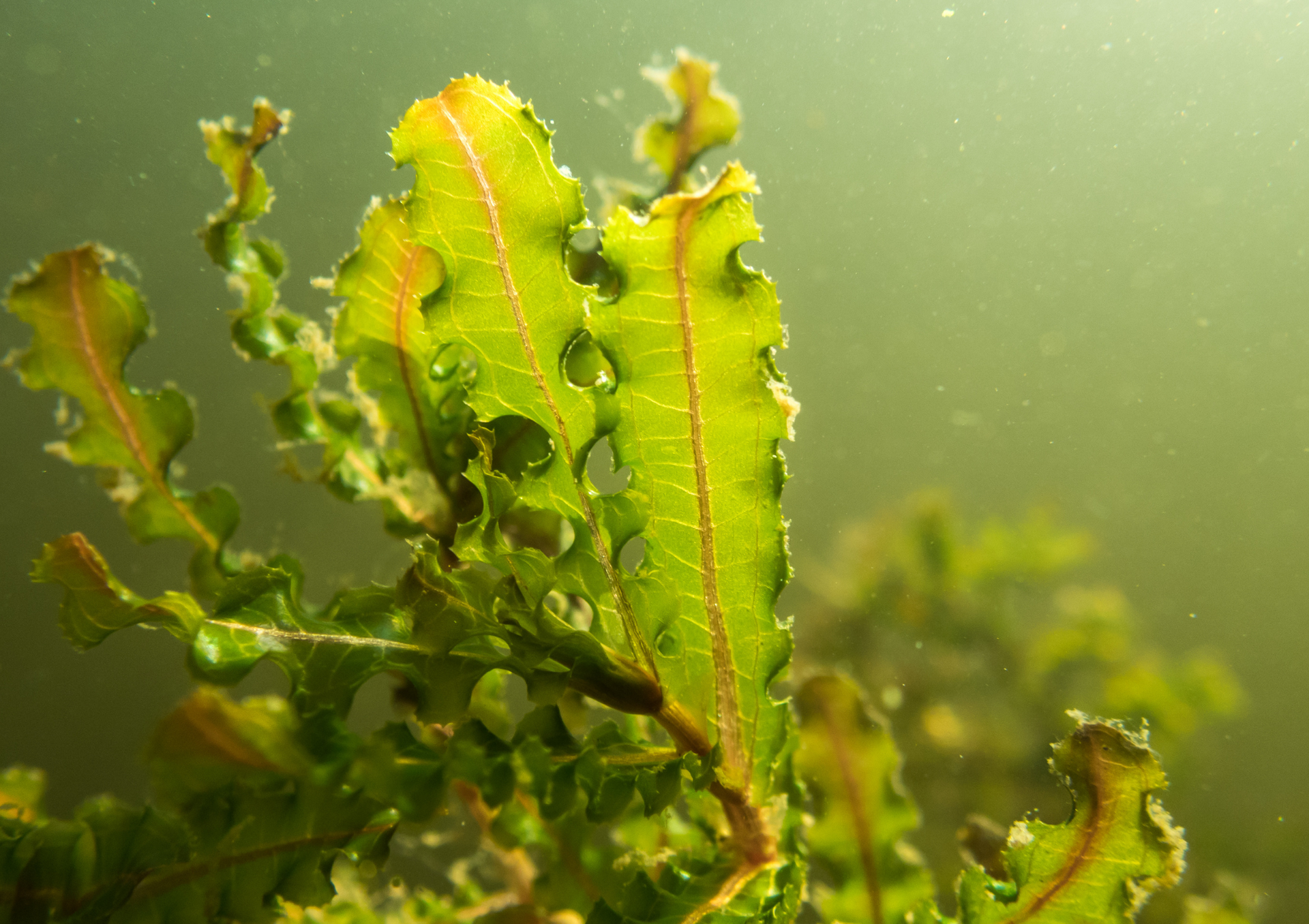
- Submerged species like Eurasian watermilfoil (Myriophyllum spicatum) and curly-leaf pondweed (Potamogeton crispus), which form thick underwater canopies
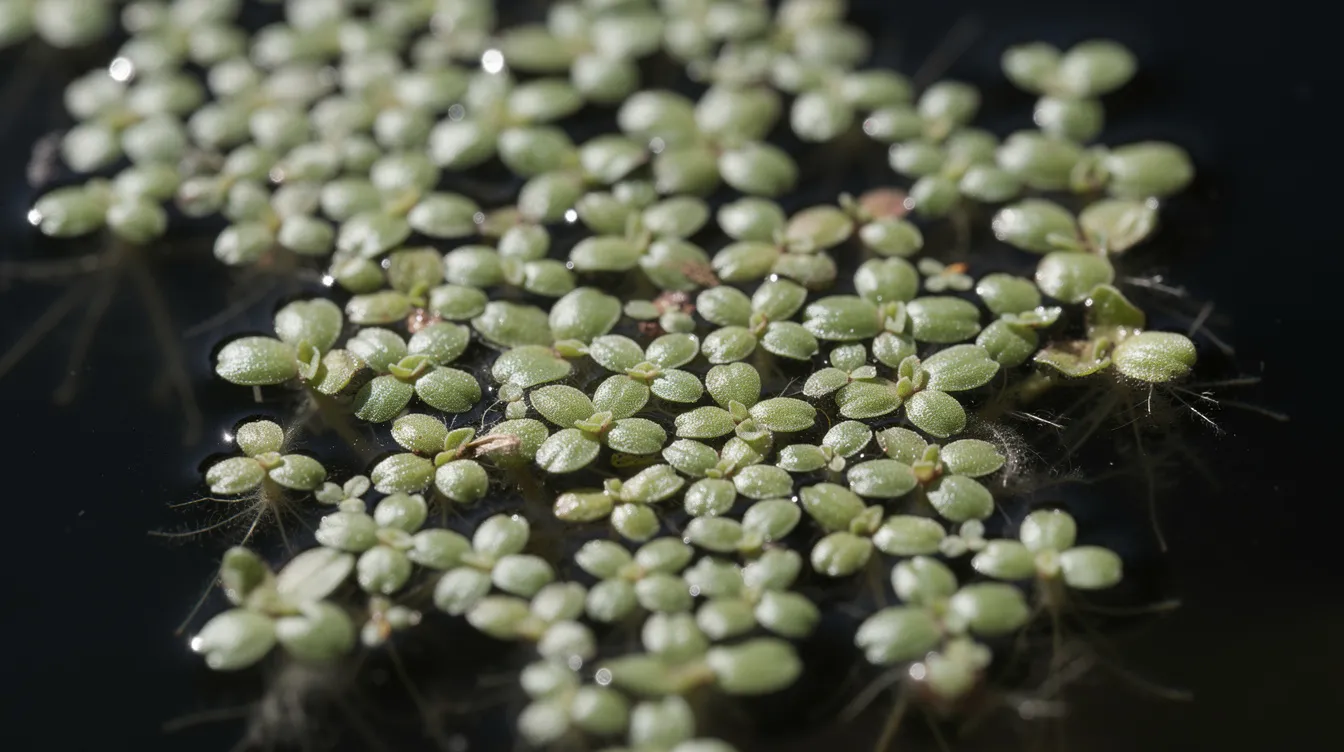
- Floating species like water chestnut (Trapa natans), which blankets surface water
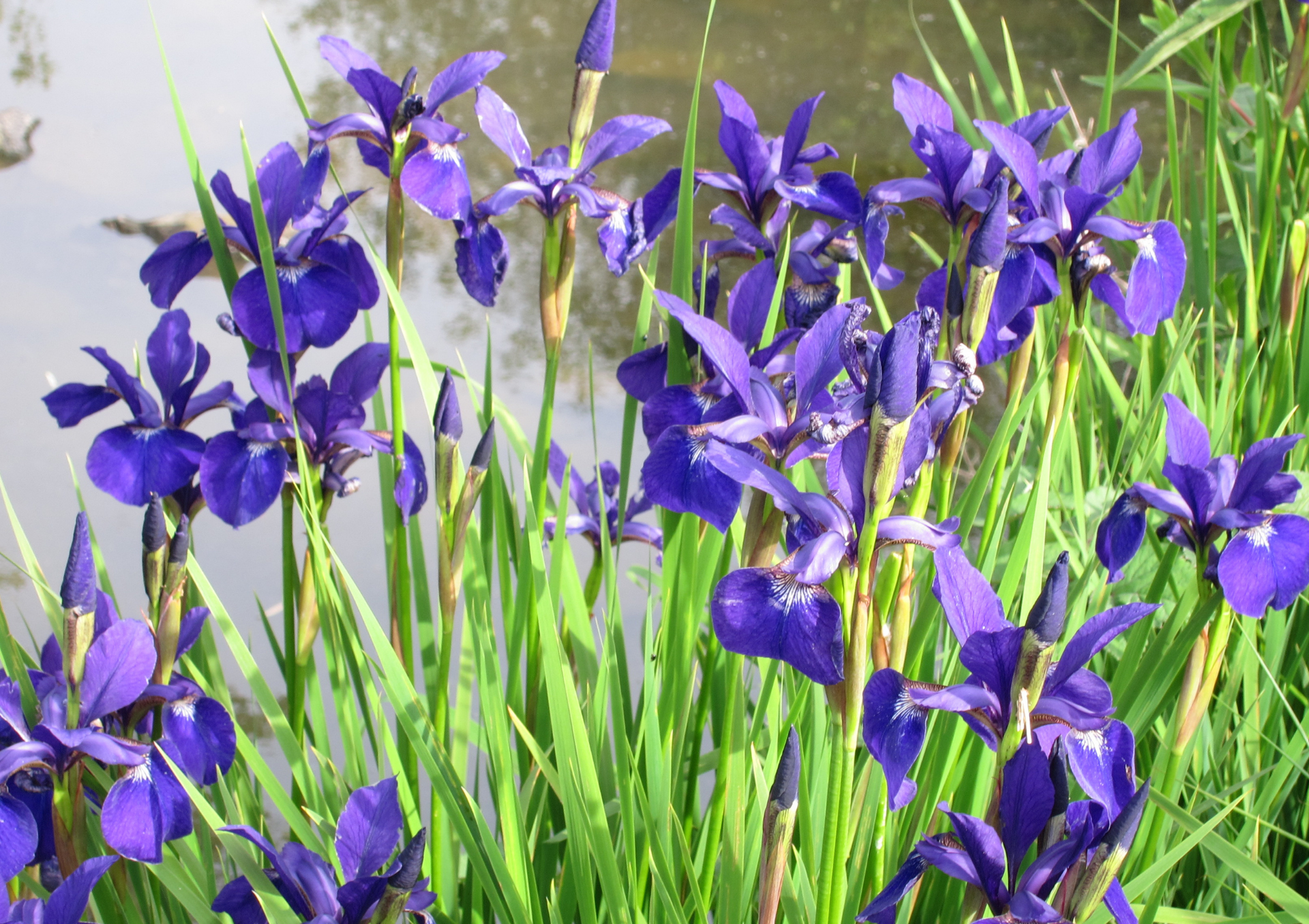
- Emergent species like purple loosestrife (Lythrum salicaria), which colonizes shorelines
Other invasive pests include zebra mussels and quagga mussels, which arrived in the Great Lakes region via ballast water in the 1980s and have since spread into connected inland waters. The spiny water flea, another Great Lakes invader, alters zooplankton communities that fish rely on for food.
How these species cause damage:
- Outcompete native plants for light, nutrients, and space
- Reduce dissolved oxygen through decomposition of dense biomass, triggering fish kills
- Alter wildlife habitat for amphibians, aquatic insects, and birds that depend on native plant communities
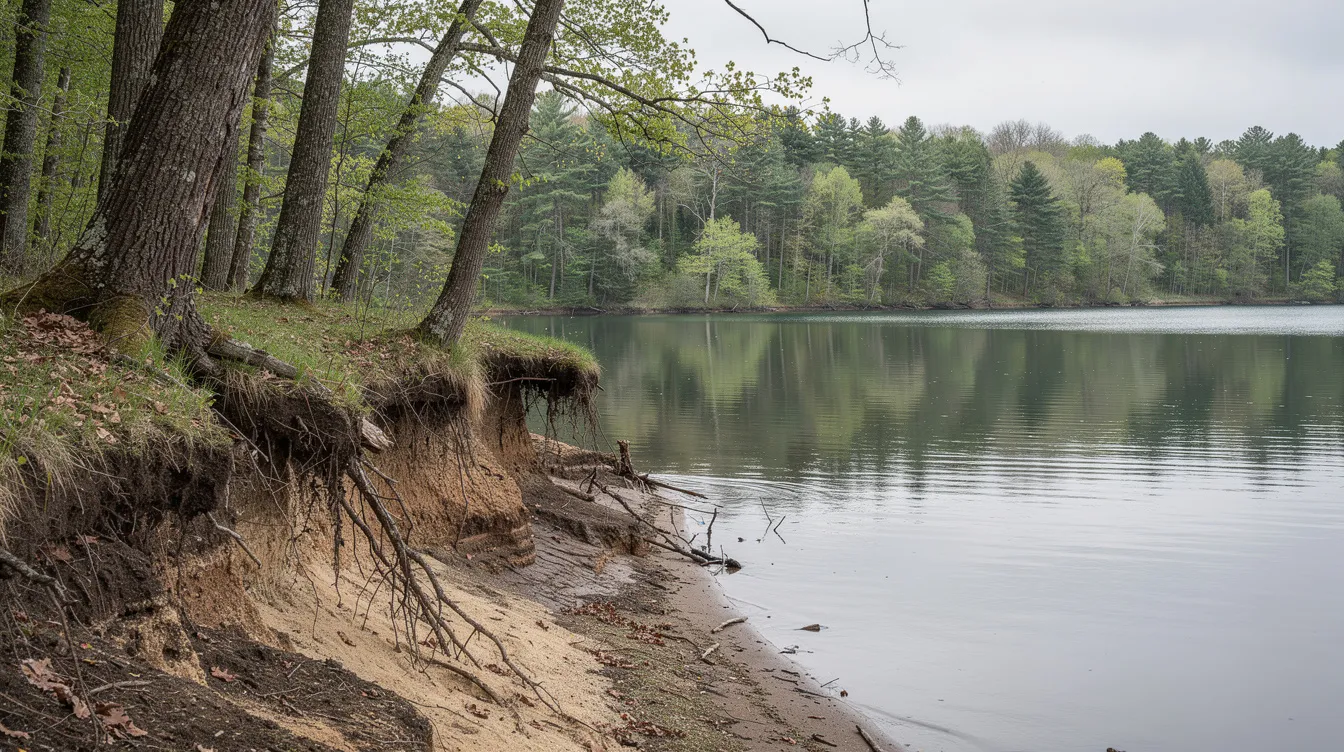
- Accelerate shoreline erosion by displacing stabilizing native vegetation
Only a fraction of non native species become invasive, but those that do require structured invasive species control programs and long-term monitoring.
Pathways and Drivers: How Biological Invasions Reach Your Lake
Biological invasions follow a predictable sequence: introduction, establishment, spread, and impact. Interrupting any stage reduces harm, which is why high-risk corridor surveillance targets vectors for invasive species introduction.
Common pathways into lakes and ponds in the Ready Scout service area:
- Global trade and aquarium releases: water garden plants like hydrilla and parrot feather enter local waters when hobbyists dump tanks
- Bait and fishing gear: live bait buckets carry weed seeds, fish parasites, and invertebrate larvae between waterbodies
- Trailered boats: vessels moved from Lake Ontario, Lake Champlain, or the Finger Lakes carry plant fragments, mussel veligers, and standing water in bilges and livewells
- Construction and landscaping equipment: machinery transferred between job sites can transport soil, seeds, and organisms on tracks and buckets
Climate change compounds the problem. Warmer water and longer growing seasons allow invasive plants to germinate earlier and grow faster, compressing the window for effective control. In the Great Lakes region, shifting temperature regimes and calcium levels favor continued expansion of zebra mussels and quagga mussels into new infestations.
Impacts on Water Quality, Fisheries, and Lake Communities
Picture a lake where you could see the sandy bottom at six feet. After three years of unchecked Eurasian watermilfoil growth, the same lake has surface mats so thick that a canoe paddle tangles with every stroke, dissolved oxygen drops below survival thresholds for trout, and shoreline homeowners watch their property assessments decline.
Invasive species cause billions in economic damage annually across the continental United States. Globally, invasive species can lead to the extinction of native species; 124 of 215 documented species extinctions were caused by non-native species. Invasive species can decrease native species richness by 16.6%, a figure that translates directly into degraded fisheries and simplified food webs in affected lakes.
The ecological impacts reach specific species in the Ready Scout region. The spiny water flea caused a $140 million decline in water quality in affected Great Lakes waters. Zebra mussels filter plankton so aggressively that they restructure entire aquatic food chains, harming native wildlife from juvenile fish to diving ducks.
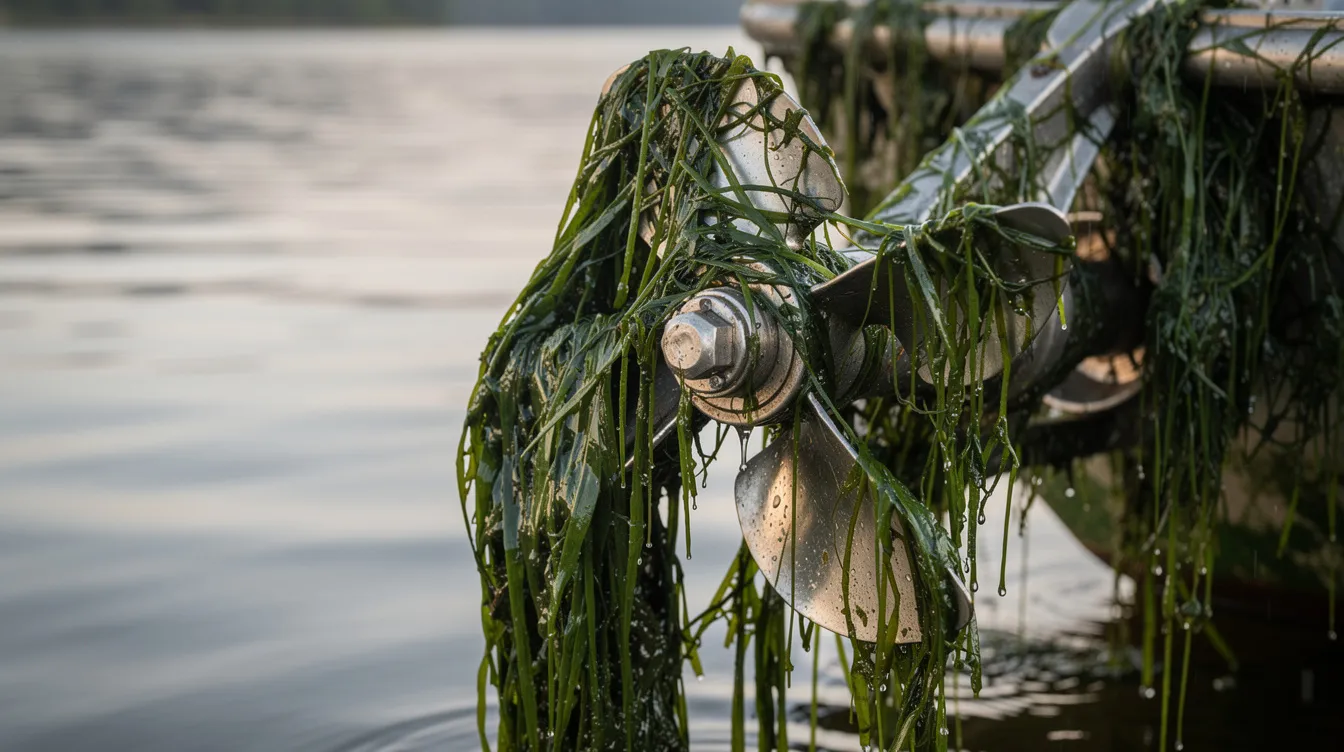
Infrastructure and recreation costs add up fast. Clogged irrigation intakes, jammed dock lifts, and tangled boat props are routine complaints from lake communities dealing with dense invasive plant growth.
Where near-shore plant communities shift from native to invasive-dominated, the ecological damage extends to forest health in surrounding watersheds. Amphibians, aquatic insects, and birds that depend on pond-edge habitat lose nesting sites and food sources, weakening the link between water resources and adjacent natural areas.
Understanding Control Methods for Aquatic Invasive Species
Complete eradication of a large, established infestation is rare. Functional control, keeping invasive species below the threshold where they cause measurable harm, is the realistic goal for most lakes and ponds.
The main control methods used in the region:
- Mechanical and physical removal: hand-pulling, suction harvesting, cutting, benthic barriers, drawdowns supported by professional pond weed management services
- Chemical control: targeted aquatic herbicides and algaecides applied under permit
- Biological control: host-specific insects, pathogens, or sterile organisms that suppress invasive populations
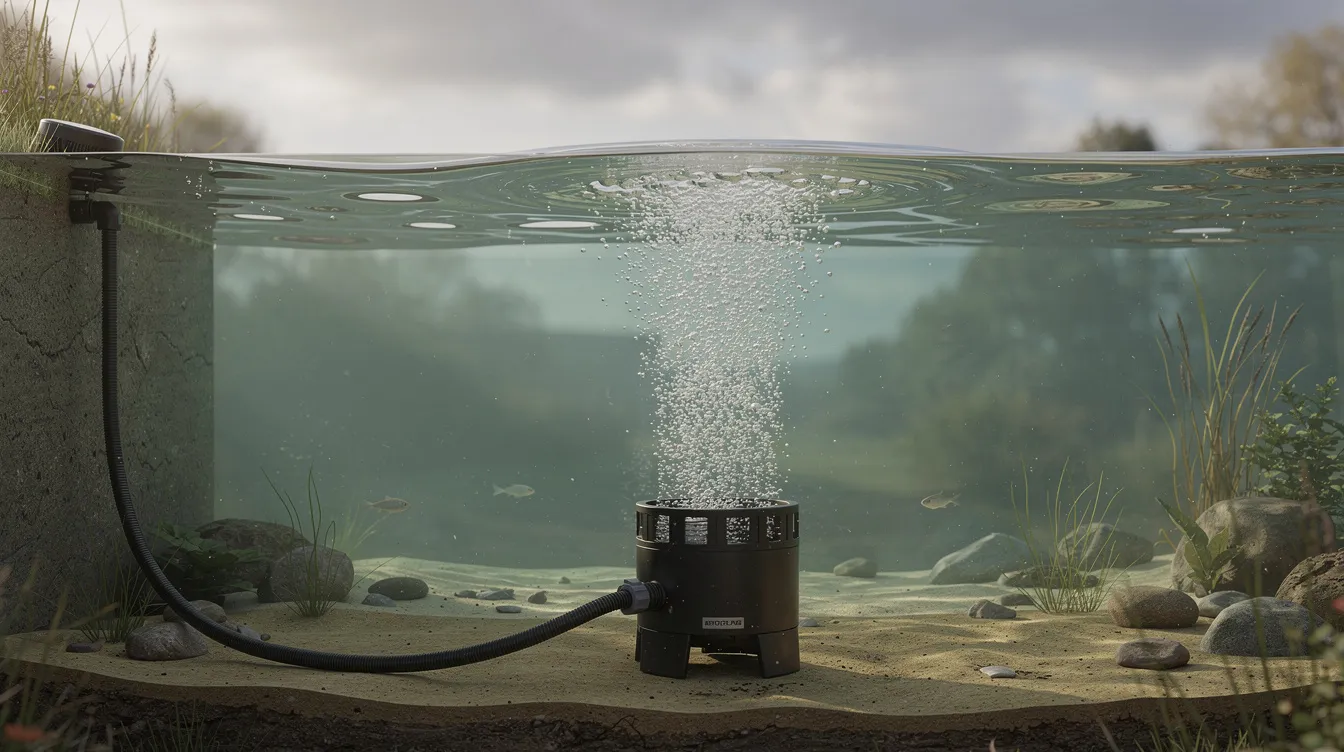
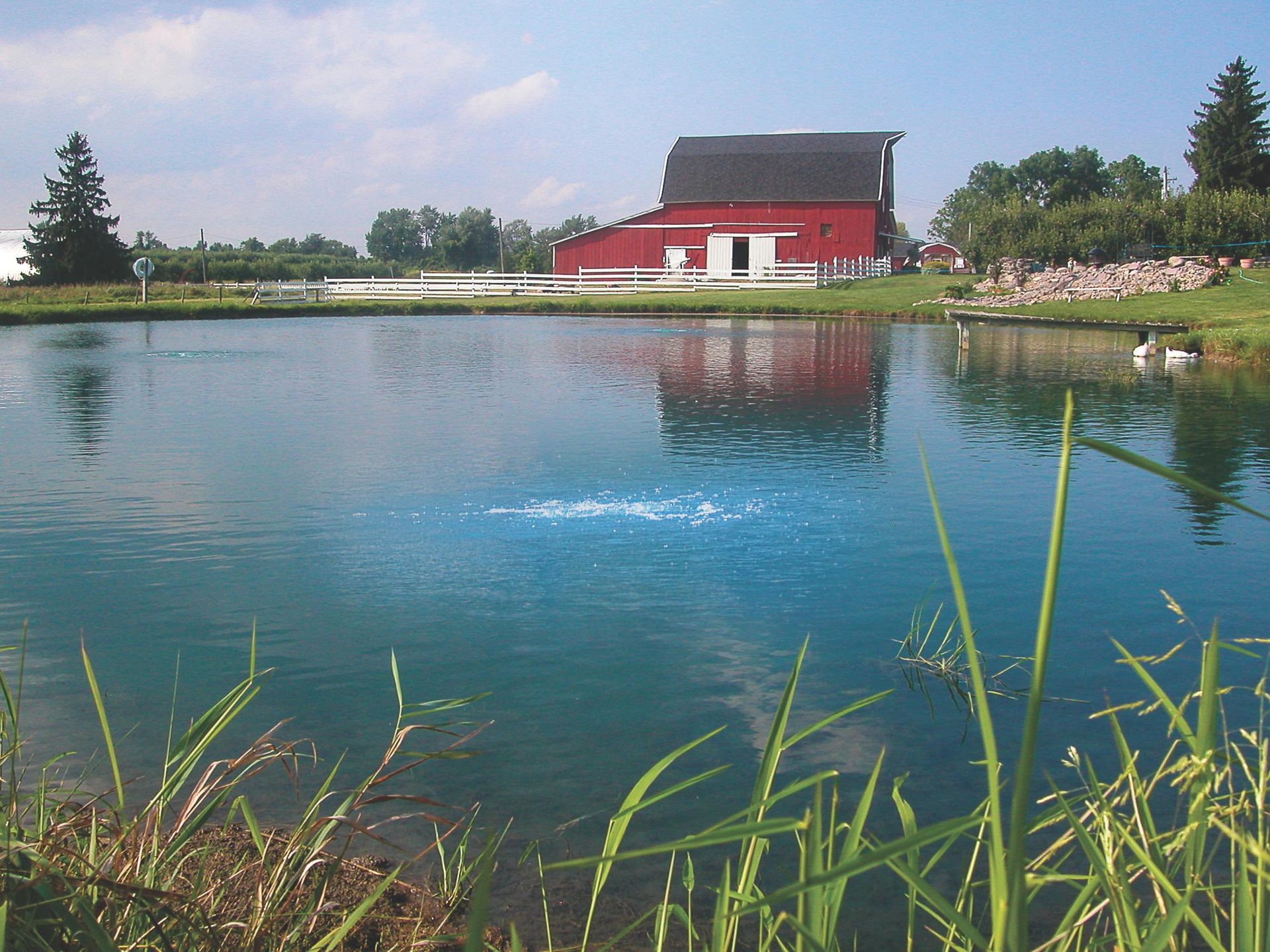
- Habitat modification: aeration system design and operation, nutrient reduction, shoreline restoration to favor native plants
- Prevention: boat decontamination, equipment sanitation, public education
Integrated pest management layers these tools over time, guided by water quality monitoring data and clear ecological and recreational objectives. Ready Scout develops site-specific lake consulting and management plans rather than applying a single template, accounting for local regulations and waterbody uses including drinking water, swimming, irrigation, and fisheries.
Mechanical and Physical Control in Lakes and Ponds
Physical methods are often the first tools lake associations try. Their success depends on technique, timing, and realistic expectations about what manual control can achieve alone.
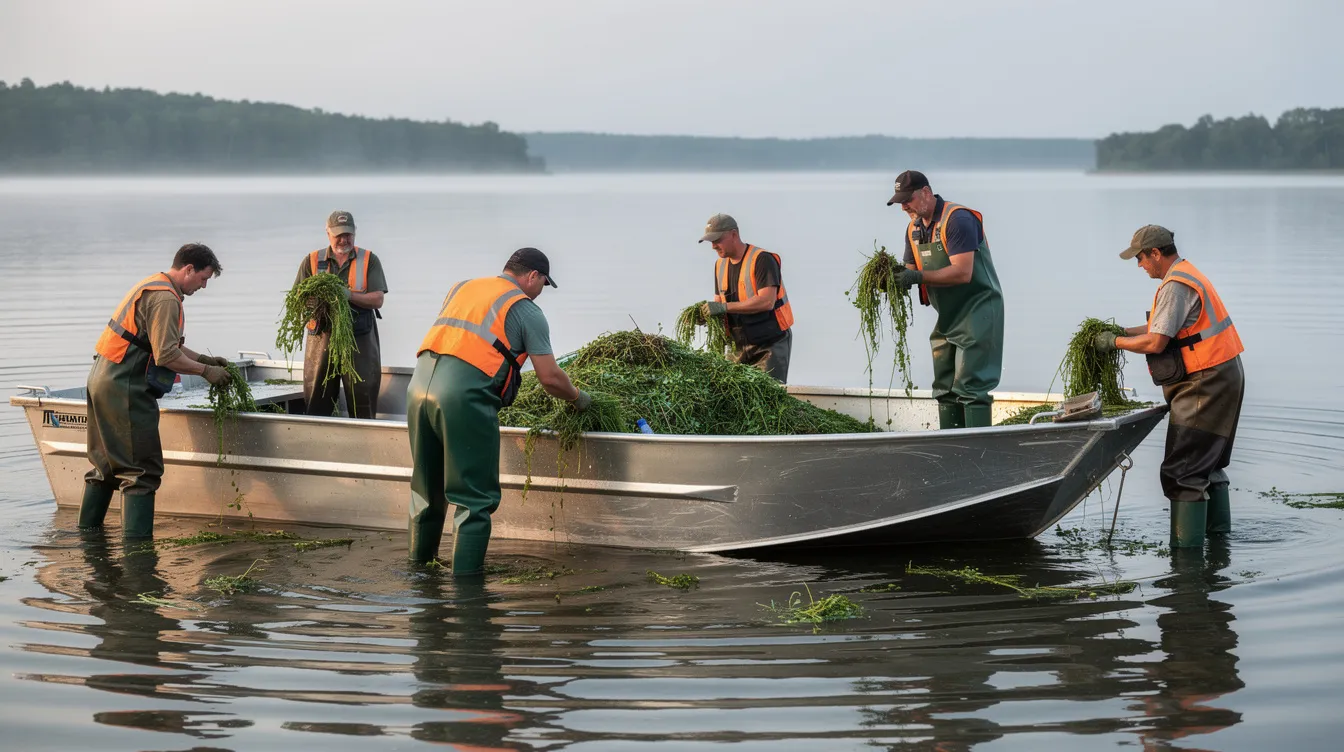
Hand-pulling and diver-assisted suction harvesting (DASH) work well for localized invasive plant beds. A crew identifying an early hydrilla or Eurasian watermilfoil patch near a boat launch can remove it before it spreads. Root structures must come out; leaving fragments behind risks regrowth. In Vermont, DASH costs range from $6,000 to $12,000 per acre in dense beds, making it labor intensive but viable for high-priority zones.
Mechanical harvesters cut and collect plant biomass from larger beds. They provide immediate navigation improvement, but fragmentation risk is real: loose stem pieces can drift and root elsewhere, creating new infestations. Lake Iroquois, Vermont, estimated harvester contracting at roughly $5,000 per acre; purchasing a machine outright cost about $250,000.
Bottom barriers (benthic mats) block light and prevent plant growth in swimming zones, around docks, and near boat launches. They work in small footprints but kill all vegetation beneath them, including native plants. In one Vermont case, bottom barrier installation ran approximately $54,000 per acre when covering many small plots. Permits are required in most jurisdictions.
Decontamination and exclusion target invasive mussels and plant fragments on boats. Constructing barriers such as boat ramp cleaning stations, hot-water pressure washing units, and inspection checkpoints reduces spread between waterbodies. Seasonal drawdowns, where lake structures allow lowering the water level, can expose and freeze invasive plant beds or mussel colonies.
Ready Scout evaluates slope, depth, sediment type, and access points to design safe, cost-effective mechanical control strategies for each client's lake or pond.
Chemical Control: Targeted Herbicides and Algaecides
Chemical control is a core tool in many invasive plant management programs, but it requires precision, regulatory compliance, and careful coordination with lake users.
Chemical control uses pesticides, herbicides, fungicides, or insecticides depending on the target organism. For aquatic invasive plants in the Ready Scout region, common herbicide categories include:
- ProcellaCOR (florpyrauxifen-benzyl): targets Eurasian watermilfoil at low doses; Joe's Pond, Vermont, treated 23 acres in August 2025 and achieved 100% mortality of the target species, though some non-target plant damage occurred
- Glyphosate: non-selective systemic herbicide for emergent and floating invasive plants; NY regulation requires documentation of necessity for use on state property
- Triclopyr: selective for broadleaf species and woody invasive weeds along shorelines; timing and aquatic-label requirements apply
- Flumioxazin: contact herbicides used for curly-leaf pondweed control and other submerged species
Chemical controls must be applied with proper equipment and protective gear by licensed applicators, always referencing official aquatic product label information. Application of chemical controls may be prohibited in sensitive areas, including near drinking water intakes or within buffer zones around endangered species habitat. Pre-treatment public notification to the lake community is required in most jurisdictions.
Herbicide cost per acre drops when treating large, contiguous zones. Lake Iroquois, Vermont, spent approximately $1,300 per acre on herbicide treatment across 38 to 39 acres, totaling about $50,000 plus $5,000 to $10,000 in ancillary water testing and post-treatment surveys.
Ready Scout advises clients on product selection, dosage, timing, and permit acquisition across New Jersey, New York, Vermont, and Ontario, coordinating directly with environmental agencies on behalf of lake associations and pond owners.
Biological Control and Emerging Biocontrol Agents
Biological control uses living organisms to manage invasive species over the long term. The core principle: reunite an invasive species with natural enemies from its native range, suppressing its population without permanent chemical inputs.
Biological control agents include insects, pathogens, fish, and other organisms selected for host specificity. Concrete examples in aquatic and near-shore systems:
- Host-specific beetles (Galerucella spp.) have reduced purple loosestrife stands along lakeshores and connected shorelines across the northeastern US since the 1990s. These natural predators feed exclusively on purple loosestrife tissue.
- Triploid grass carp graze submerged invasive plants where legally permitted. Vermont prohibits their use; New York and New Jersey allow stocking under specific permits.
- Milfoil weevils (Euhrychiopsis lecontei) have been tried for Eurasian watermilfoil suppression, with limited success depending on stocking rate and ecological conditions but these insects may not be commercially available anymore.
Biological control can reunite natural enemies with invasive plants, but it acts slowly compared to herbicides, carries risk of non-target impacts if poorly chosen, and requires regulatory approvals and science-based risk assessment. Newer genetic biocontrol concepts, including sterile organisms and gene-based control, remain experimental and are not yet permitted for field deployment in the Ready Scout service area.
Ready Scout reviews available biological control options, weighs ecological risks, and integrates wetland and invasive species control with other methods rather than relying on it as a stand-alone solution.
Integrated Pest Management (IPM) for Aquatic Invasive Species
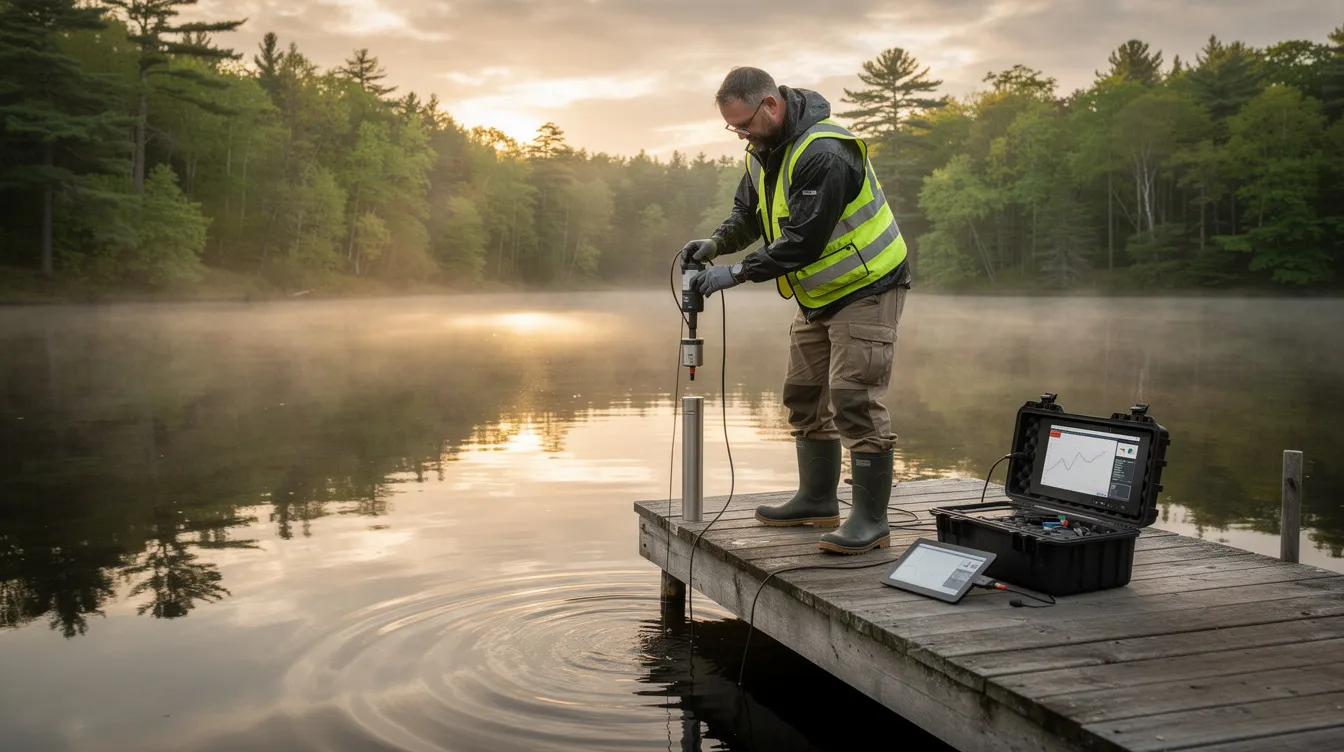
Integrated pest management combines multiple strategies for pest control: prevention, monitoring, mechanical removal, biological control agents, and chemical control, increasingly supported by smart water management technologies that provide real-time data rather than habit.
The IPM cycle for a lake or pond follows a consistent sequence:
- Baseline survey and mapping: identify which invasive plant species are present, measure coverage, and record georeferenced locations
- Set thresholds: define what level of invasive plant coverage triggers treatment (e.g., 30% littoral zone)
- Select combination treatments: match tools to the species, infestation size, and waterbody use
- Monitor response: track plant community changes, water quality, and non-target effects
- Adjust annually: refine the plan based on results, not assumptions
Chemical control can be part of an integrated approach to manage invasives without becoming the only tool used. Monitoring should include measuring the impact of invasions on ecosystems, not just whether treated plants died. Lake Iroquois mapped 70 acres of milfoil infestation across its 100-acre littoral zone in 2014, then evaluated each control option against cost, efficacy, and ecological risk before selecting an integrated strategy.
Ready Scout's IPM programs and broader lake management and conservation strategies include lake mapping, ongoing water quality testing, and multi-year invasive species control planning for associations and municipalities.
Best Management Practices (BMPs) for Lake and Pond Owners
Best management practices are day-to-day actions that reduce the chance of new invasive species introductions and support active control efforts.
Prevention-focused BMPs:
- Clean, Drain, Dry all boats, trailers, and livewells before and after use
- Disinfect fishing gear, waders, and anchors between waterbodies
- Never release aquarium plants, fish, or bait into local waters
Shoreline and watershed BMPs:
- Maintain vegetated buffers of native pond plants along shorelines to filter runoff and resist invasive colonization
- Minimize fertilizer and pesticide application near water to reduce nutrient loading that favors invasive plants and nuisance pond algae
- Stabilize eroding banks using bioengineered methods rather than imported fill that may carry weed seeds
Community practices:
- Establish rules for outside contractors (landscapers, dock installers) regarding equipment cleanliness and fill material sources
- Equipment sanitation prevents accidental spread of invasive species and pathogens between job sites
Ready Scout offers lake community self-sufficiency consulting, supported by educational resources on lake, pond, and wetland management, helping boards create BMP handbooks, signage, and annual education meetings tailored to their specific lake or pond.
Regulatory Compliance, Permits, and Risk Management
Chemical control, water-level manipulation, and stocking of biological control agents all require permits or approvals. Operating without them risks fines, project delays, negative media coverage, and unintended ecological damage.
Regulatory layers in the Ready Scout region:
- New Jersey: The Aquatic Invasive Species Management Plan (NJAISMP), approved May 2024, sets goals for prevention, surveillance, response, and long-term control
- New York: DEC General Permit GP-0-25-008 (effective May 15, 2026, to May 14, 2031) covers manual techniques, benthic barriers up to 1 acre, mechanical harvesting, and aquatic pesticide application under defined conditions
- Vermont: Aquatic Nuisance Control permitting through the Vermont Department of Environmental Conservation oversees both chemical and non-chemical methods
- Ontario: The Invading Species Act mandates Clean-Drain-Dry; invasive species action plans coordinate with Conservation Authorities for enforcement and reporting
Ready Scout manages permitting and regulatory communication on behalf of lake associations and pond owners, drawing on the expertise of its Certified Lake Manager-led team, reducing administrative burden and ensuring control methods align with current laws.
Designing a Long-Term Invasive Species Management Plan
Invasive species control is a multi-year commitment, not a one-time project. Lakes and ponds connected to larger river systems or high-traffic waterways face ongoing re-introduction pressure that demands consistent monitoring and adaptive response.
Core components of a plan:
- Goals: recreation targets, habitat quality, drinking water protection
- Baseline ecological assessment: plant mapping, water chemistry, fisheries data; standardized protocol mapping is essential for logging invasive species data consistently year over year
- Prioritized invasive species list: focus resources on the species causing the greatest negative impacts
- Control schedule and budget: phased treatments matched to funding capacity, with contingency for new infestations
- Communication strategy: regular updates to stakeholders, public notification for treatments
Consistent site revisits are necessary for effective monitoring of invasive trends. Annual plant mapping, periodic invasive pest checks, and water quality tracking measure progress and guide adaptive changes. Integration with broader lake management actions, such as aeration system design, nutrient reduction, and shoreline restoration, multiplies the return on each control dollar spent.
Ready Scout partners with lake boards over 3- to 5-year horizons, combining comprehensive lake and pond management services and data-driven lake management planning with governance support including budgeting, stakeholder education, and a joint effort between association leaders and on-the-water crews. This approach helps collect data systematically across seasons and ensures that the plan evolves rather than repeating the same treatment year after year.
Localized Considerations in New Jersey, New York, Vermont, and Ontario
Invasive species risks and regulations vary by region. A plan built for a Vermont mountain lake will not fit a northern New Jersey reservoir, and vice versa.
Upstate New York: The Erie Canal, Finger Lakes, and Lake Champlain corridors are hotspots for the spread of invasive species. Water chestnut and Eurasian watermilfoil dominate. The geological survey of waterbody connections shows how rapidly organisms move along canal systems. NY DEC's GP-0-25-008 streamlines permits for control activities starting May 2026.
Northern New Jersey: Dense development drives high phosphorus and nitrogen input into ponds, favoring invasive plant and algal growth. The NJDEP's 2024 Aquatic Invasive Species Management Plan emphasizes decontamination, education, and early detection. Eurasian watermilfoil and curly-leaf pondweed are common; hydrilla is on the watch list as a potentially invasive species.
Vermont: Many lake associations are volunteer-run with limited budgets, often spending dollars annually on control that far exceed their initial expectations. Sweet clover and other non native plants appear on shorelines while Eurasian watermilfoil dominates underwater.
Southern Ontario: Great Lakes pathways dominate. Zebra mussels and quagga mussels are widespread. Ontario mandates Clean-Drain-Dry for all boats; the wildlife service and Conservation Authorities enforce rules and run public awareness campaigns. The National Park Service and equivalent Canadian bodies coordinate on cross-border issues affecting shared water resources.
Each lake or pond should be viewed in the context of its regional watershed and boat-traffic network, not as an isolated waterbody. Ready Scout teams specialize in service areas across northern New Jersey and upstate New York and know local agencies, conservation authorities, and permitting nuances in each service area, streamlining project planning and approvals.
Frequently Asked Questions About Invasive Species Control for Lakes and Ponds
How do I know if a plant in my lake is invasive or just a nuisance native?
Visual similarity between native and invasive plant species can be misleading. Eurasian watermilfoil and native northern watermilfoil look nearly identical at the surface; accurate identification requires close inspection of leaf pairs, stem structure, and growth patterns, often with underwater photos or physical samples. Rather than guessing, contact Ready Scout with clear photos and GPS coordinates. Ready Scout conducts professional plant surveys and mapping that distinguish invasive from native vegetation and guide treatment decisions.
Can I control invasive plants in my pond without using herbicides?
Non-chemical options such as targeted hand-pulling, benthic barriers, and drawdowns can be effective for small ponds or early-stage infestations. For dense, pond-wide problems, non-chemical methods alone rarely achieve lasting results. An integrated pest management approach that combines manual control with selective herbicide use, where permitted, tends to produce better outcomes at lower cumulative cost. The emerald ash borer, though a forest pest and not an aquatic species, illustrates a parallel lesson: relying on a single tool without integration leads to poor outcomes.
How long does it take to see results from an invasive species control program?
Mechanical cutting yields immediate navigation benefits. Herbicide treatments take two to six weeks for full plant die-off; biological control agents often require one to three growing seasons to establish population-level suppression. Realistic expectations depend on species biology, infestation size, and the methods chosen. Ready Scout frames results in multi-season and multi-year horizons rather than promising overnight change.
Will invasive species control harm fish or other native wildlife?
Professionally designed control programs are timed and targeted to minimize non-target impacts. Treatments avoid fish spawning windows, use selective herbicides where possible, and protect habitat for native wildlife and endangered species. Unmanaged invasive species often pose a greater long-term risk to habitat quality than well-planned control efforts. Ready Scout discusses these tradeoffs with each client before any treatment begins.
What does a typical Ready Scout invasive species consultation involve?
The process includes an initial conversation about your lake or pond history and goals, an on-site assessment with water and plant sampling, mapping of invasive plants or pests, review of the regulatory context for your jurisdiction, and delivery of a written management plan with phased options and budget ranges. Bring any prior water quality reports, photographs, or historic treatment records to help Ready Scout design a more effective control strategy from day one.
Take Back Your Lake or Pond: Partner with Ready Scout
Every season without a plan gives invasive species another year to expand. Whether your lake faces a first milfoil sighting or a decade-old mussel problem, Ready Scout builds structured, data-driven programs that fit your waterbody, your budget, and your regulatory environment.
Services relevant to invasive species control include, as part of Ready Scout's lake consulting and management offerings:
- Invasive plant and algae management
- Invasive species surveys, mapping, and water quality monitoring
- Aeration system design and installation
- Permitting and regulatory compliance across NJ, NY, VT, and Ontario
- Lake community self-sufficiency consulting and BMP development
Contact Ready Scout through our
lake and pond management contact page to schedule a site assessment or strategy call. Early planning before the growing season improves outcomes and reduces costs. Remote consultation options are available for boards and committees, plus ongoing support packages for multi-year lake and pond stewardship.
Smart Clean Water Management: How Ready Scout Uses Smart Water Technology to Protect Lakes and Ponds