Lake & Pond Management Services in New Jersey
Lake Management Services in New Jersey | Ready Scout
If your New Jersey lake is dealing with recurring algae blooms, weed-choked shorelines, murky water, or NJDEP compliance notices, you need a management partner who understands the state's specific ecology and regulations - not a company offering cookie-cutter chemical treatments. Ready Scout provides science-based lake and pond management services across northern New Jersey, delivering long-term solutions for communities that depend on healthy, usable waterbodies.
Whether you represent a lake association managing a shared recreational resource, an HOA maintaining stormwater ponds, or a private owner protecting a valued pond, this page outlines the expertise, services, and regulatory knowledge we bring to every New Jersey engagement. We focus on ongoing management partnerships, not one-off treatments that leave you guessing about next season.
Call
908-310-8775
for a lake assessment in New Jersey or
request a management proposal to get started.
Why New Jersey Trusts Ready Scout for Lake & Pond Management
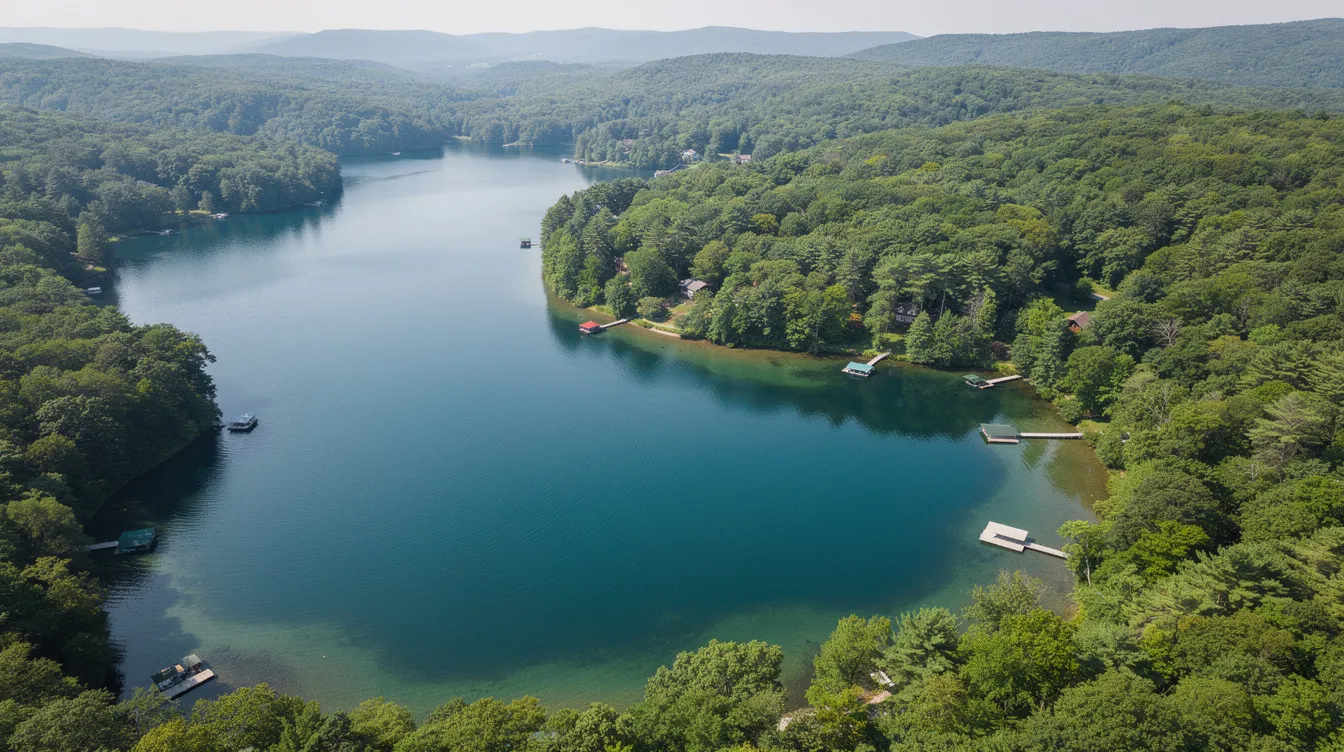
Ready Scout is a specialized lake management company serving northern New Jersey and nearby regions, built around deep knowledge of the state's freshwater ecosystems and regulatory framework. Our team brings local expertise - not generic service promises - to every pond and lake we manage.
- Led by a Certified Lake Manager with 30+ years of experience in northeastern U.S. aquatic ecosystem management
- Extensive experience coordinating with NJDEP on freshwater lake and pond permits, aquatic pesticide applications, and HAB (Harmful Algal Bloom) response
- Long-term management partnerships with New Jersey lake communities, HOAs, golf courses, and municipal stormwater systems
- Professionalism and communication that boards, residents, and regulators can rely on season after season
What Makes Ready Scout Different for Lake Management in New Jersey
Not every management company approaches lake and pond management the same way. Ready Scout emphasizes lake management sciences, compliance, and community education as the foundation for every engagement - because timely interventions grounded in data outperform reactive treatments every time.
- Science-first, chemical-lean approach - We reduce herbicide and algaecide use over time through nutrient management, aeration systems, and watershed practices. Water quality testing alone can reduce chemical use by 20% to 40%.
- Northern New Jersey watershed expertise - We understand the region's suburban development pressures, steep slopes, glacial lake geology, and legacy dams that shape how your waterbody behaves.
- Hands-on lake association support - We attend board meetings, present reporting to members, and provide budgeting guidance so your community has access to the resources needed to plan ahead.
- Multi-year management plans - Our focus is on long-term solutions that stabilize water quality instead of chasing seasonal crises. Long-term management plans combine multiple strategies for effectiveness.
- Training and self-sufficiency consulting - We help lake associations and staff build internal knowledge so your community can manage its future with confidence. Community engagement enhances lake management effectiveness.
Ready to discuss your lake's needs? Schedule an on-site evaluation anywhere in northern NJ.
New Jersey Lake & Pond Environments: What Makes Them Unique
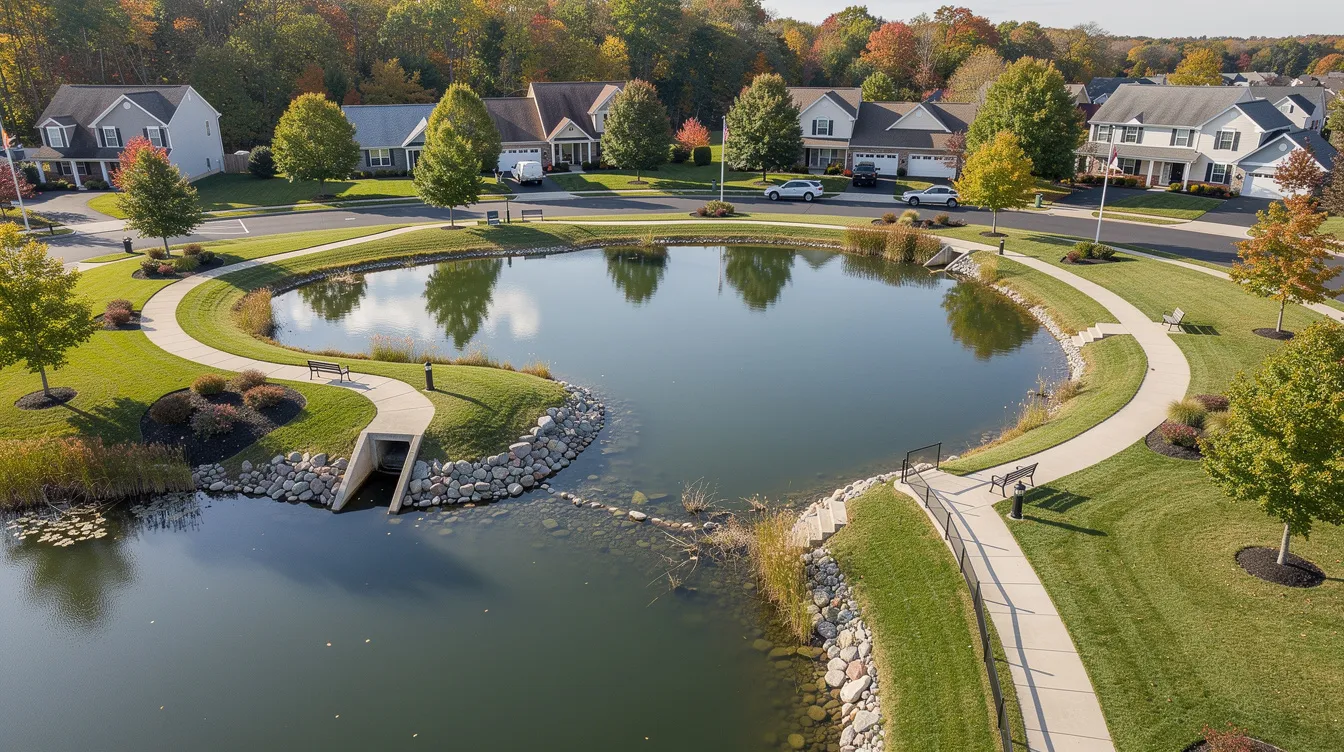
New Jersey lakes and ponds span a wide range: glacial lakes in Sussex and Passaic counties, man-made reservoirs serving municipal water supplies, HOA-managed small ponds, and stormwater basins developed alongside suburban subdivisions. Each type presents distinct ecological conditions - and an effective lake management plan should be tailored to those specific conditions.
Several regional drivers create challenges unique to New Jersey:
- High development and impervious cover - Suburban expansion across northern NJ increases runoff carrying phosphorus, nitrogen, sediment, and road contaminants into lakes. Stormwater runoff management can involve the use of rain gardens or bioswales to intercept pollutants before they reach waterbodies.
- Warm, humid summers - Extended heat fuels eutrophication, which occurs due to aging and nutrient over-enrichment in waterbodies. Shallow HOA ponds heat rapidly, creating ideal conditions for algae and aquatic weed growth.
- Legacy dams and aging infrastructure - Many New Jersey lakes are impoundments behind older dams. As of April 2024, 37% of the 1,728 principal-hazard dams in New Jersey were overdue for required inspections.
- State focus on public health - NJDEP emphasizes HAB advisories, bathing beach monitoring, and stormwater permits (MS4, NJPDES) that directly affect lake operations and recreational access.
Effective lake management in New Jersey must integrate watershed management, shoreline protection, and stormwater controls - it can't stop at the water's edge.
Common Lake Problems We Solve in New Jersey
The same issues appear repeatedly across Jersey lakes and ponds due to climate patterns, land use intensity, and aging infrastructure. Here are the problems our clients face most often.
Algae Blooms & Discolored Water
Nutrient-driven algae blooms - including Harmful Algal Blooms (HABs) - threaten aquatic ecosystems and can trigger NJDEP advisories that shut down swimming, fishing, and boating. Phosphorus and nitrogen are the primary drivers of poor water quality in lakes. Excess nutrients can trigger algal blooms, producing pea-soup-colored water, surface scums, foul odors, and sudden fish kills. Warm, shallow stormwater ponds and HOA basins are especially vulnerable during New Jersey summers. Routine water quality monitoring is essential for detecting harmful algal blooms and nutrient levels before a bloom reaches advisory thresholds.
Invasive Aquatic Weeds & Overgrown Shorelines
New Jersey's frequent invaders - Eurasian watermilfoil, curly-leaf pondweed, water chestnut, and hydrilla - form dense mats that tangle propellers, render swimming areas unusable, and reduce flow through stormwater facilities. Invasive species can disrupt local ecosystems and biodiversity, and they require aggressive monitoring and early control for effective management. Proper management of aquatic plants requires identifying species before treatment, because control methods differ significantly between native and invasive populations. Encroaching cattails and unmanaged emergent vegetation can narrow coves relied upon by lake communities for recreation and wildlife habitat.
Poor Water Clarity, Odors & Sedimentation
Runoff from local roads, lawns, and construction sites carries sediment and debris into NJ lakes, causing turbidity and progressive fill-in of coves and pond basins. This reduces depth, raises water temperature, and worsens algae problems. Organic muck accumulation impacts wading areas, docks, and boat launching zones. Nutrient reduction requires minimizing organic pollution in the watershed to prevent weed proliferation.
Stormwater & Infrastructure Issues
Clogged outlet structures, failing risers, eroded inlets, and undersized spillways are common across New Jersey's developed lake communities. Stormwater and sediment control measures are critical post-storm to assess runoff impacts. Non-compliance with municipal stormwater permits and dam safety requirements creates legal and financial risk. Hidden infrastructure failures can cause flooding, property damage, and expensive emergency repairs.
Regulatory Compliance & Documentation Gaps
Many lake communities struggle with NJDEP permitting, dam inspection reports, and HAB response requirements. A lack of documented
management plans, bathymetric maps, and water quality records complicates approvals and eliminates grant opportunities. Permitting is essential for lake management compliance in New Jersey.
Our New Jersey Lake & Pond Management Services
Ready Scout offers full-service, science-based lake and pond management tailored to New Jersey regulations and ecology. Lake management services should include comprehensive diagnostics and ongoing monitoring for effectiveness. Services can be combined into annual or multi-year contracts or provided as targeted consulting for specific water quality issues.
Water Quality Monitoring & Lake Mapping
Good data underpins every successful NJDEP permit application and cost-effective treatment plan. Our water quality monitoring and lake mapping services include:
- Routine sampling of parameters such as phosphorus, nitrogen, chlorophyll-a, dissolved oxygen, pH, and Secchi depth
- Seasonal monitoring plans designed for New Jersey's growing season - spring through early fall - to catch problems before they peak
- Bathymetric surveys and sediment mapping to document depth, volume, and areas of infill for dredging planning
- Trend analysis reports that boards can share with members and regulators
- Monitoring water quality is essential for maintaining ecological balance and preventing costly reactive treatments
Algae Control & Aquatic Plant Management
Ready Scout targets root causes of algae and weed issues rather than relying solely on repeated chemical treatments:
- Integrated management plans combining mechanical harvesting, spot herbicide treatments, and nutrient reduction
- Use of targeted, NJ-approved algaecides and herbicides when appropriate, applied by licensed professionals - using algaecides or aquatic herbicides should be done as a short-term solution with proper permits
- Non-chemical tools including strategic shading, circulation improvements, shoreline buffers, and selective drawdowns
- Special attention to HAB-prone lakes, including early-warning monitoring and communication support aligned with NJDEP guidance
- Mechanical removal as a chemical-free method for algae control in sensitive areas
Invasive Species Identification & Control
Early detection of aquatic invasive species is critical in New Jersey lakes - invasive species management often requires multi-year plans to achieve lasting control:
- Professional plant surveys and mapping to locate and quantify invasive populations
- Control options ranging from diver hand-pulling and mechanical removal to selective herbicide applications - targeted aquatic herbicides can control invasive aquatic weeds effectively
- Boat launch signage, community education, and decontamination best practices to prevent re-introduction
- Coordination with watershed groups and neighboring lakes where invasives spread via connected waterways
Aeration & Circulation System Design
Aeration systems improve water quality and reduce harmful algal blooms by addressing the oxygen levels that drive lake health. Aeration techniques can be used to improve oxygen levels in lakes, especially during hot months. Aeration can reduce chemical use by 20% to 40%.
- Design and sizing of bottom-diffused aeration systems and surface fountains for NJ lakes and ponds of varying depths - Hydro Logic pond aerators are locally built in Pennsylvania
- Installation and seasonal maintenance services, including spring startups and fall shutdowns
- Benefits include improved dissolved oxygen, reduced stratification, support for fish populations, and mitigation of odor and algae issues
- Energy-efficient design considerations for HOA budgets and municipal electric infrastructure
Shoreline Stabilization & Habitat Enhancement
Stabilizing eroding shorelines protects property, water clarity, and wildlife habitat. Healthy lakes support vibrant ecosystems and enhance property value.
- Assessment of active erosion zones along developed shorelines, parks, and HOA common areas
- Bioengineering solutions such as coir logs, native plantings, and stone toe protection suited to NJ lakes
- Conversion of mowed turf to vegetated buffer strips to intercept nutrients - establishing shoreline buffers can filter 60% to 90% of sediment and fertilizer runoff, and maintaining riparian buffers can discourage nuisance geese
- Habitat enhancements including fish structure placement and native planting plans - fish management involves maintaining a balanced community to support water clarity
- Waterfowl can introduce phosphorus and bacteria into freshwater systems through fecal matter, making buffer management critical near populated shorelines
Regulatory & Permitting Support (NJDEP, Local & Federal)
Navigating New Jersey's regulatory framework is a major value of working with Ready Scout. The New Jersey Department of Environmental Protection oversees strict regulations on aquatic pesticide applications, and aquatic pesticide applications typically require a permit and must be conducted by licensed applicators.
- Assistance with NJDEP freshwater wetlands, lake dredging, and aquatic pesticide permits
- Support for HAB response communication aligned with current NJDEP guidance and health advisories - regulatory compliance helps prevent harmful algal blooms in water bodies
- Coordination with local municipalities on stormwater (MS4) and dam safety requirements affecting lake operations
- Preparation of documentation, maps, and data needed to streamline agency reviews
- Regular inspection and maintenance of septic systems are crucial to reduce phosphorus leakage into nearby waterbodies
Lake Community Education & Self-Sufficiency Consulting
Ready Scout helps lake associations and HOAs build internal knowledge, not just buy external treatments. Lake associations play a crucial role in community self-sufficiency. Effective lake management requires collaboration among stakeholders.
- Workshops for boards and residents on nutrient management, HAB awareness, and best practices for shoreline owners
- Development of easy-to-follow lake management handbooks and annual maintenance calendars specific to each community
- Guidance on fundraising, grant pursuit, and budgeting for multi-year restoration projects
- On-call consulting support when boards need independent advice on vendor quotes or proposed projects
How Our New Jersey Lake Management Process Works
Engaging Ready Scout is straightforward, but the process is thorough because lakes are complex systems. Here's what our clients experience.
Step 1: Site Visit, Assessment & Objectives
Contact us by phone or email with your location, history, current issues, and any NJDEP notices you've received. We'll schedule an on-site assessment that includes a shoreline walk, water quality sampling, infrastructure check, and photo documentation. We listen to your lake association or owner's priorities - whether that's swimming, fishing, aesthetics, or compliance - and account for existing budget constraints.
Step 2: Science-Based Lake Management Plan
Data from the assessment drives a tailored plan - not a one-size-fits-all program. Managing small lakes in New Jersey focuses on controlling nutrient inputs and managing biological growth. Stormwater ponds capture runoff and filter pollutants effectively when properly maintained.
- Written recommendations for algae, weed, and nutrient management aligned with NJ rules
- Proposed monitoring schedule and performance indicators so boards can track progress year to year
- Prioritized actions - immediate, near-term, and long-term - to align with available funding
- Clear, itemized cost estimates for services, equipment, and optional enhancements
Step 3: Implementation, Reporting & Ongoing Support
Field work is scheduled around seasons and community use, avoiding peak recreational weekends where possible.
- Regular updates after treatments, sampling events, and inspections - written in plain language for boards and residents
- Annual review meetings to adjust the plan based on results, new regulations, or community priorities
- Emergency and short-notice availability for fish kills, sudden blooms, or storm damage inspections
Our clients are never stuck guessing about their lake's condition or next steps.
New Jersey Regulations & Compliance for Lake Management
New Jersey has specific rules for aquatic pesticide use, HAB advisories, wetlands disturbance, and dam safety that affect most managed lakes and ponds. New Jersey requires compliance with local environmental regulations for lakes, and lake management courses cover regulatory compliance topics extensively. Ready Scout does not provide legal advice but helps clients align their management with current requirements.
Key NJDEP Considerations for Lakes & Ponds
- Aquatic pesticide permitting requirements (N.J.A.C. 7:30-9.3) before using herbicides or algaecides in public or community lakes
- Freshwater Wetlands Protection Act implications for dredging, shoreline work, and in-lake construction
- HAB response protocols and public communication expectations when cyanobacteria are suspected or confirmed - NJDEP defines a confirmed freshwater bloom at 20,000 cells/mL or higher
- Regulations change over time, and Ready Scout stays current on guidance affecting client projects
Local & Federal Interfaces (Municipal, Dam Safety, Stormwater)
Municipal ordinances, county agencies, and federal programs (EPA grants, FEMA) can all intersect with lake management in NJ.
- Support for dam owners and lake communities navigating New Jersey dam safety inspection recommendations - a 2026 disclosure law now requires sellers to disclose dams on property
- Considerations for lakes within MS4 municipalities regarding stormwater best management practices
- Documentation that supports applications for restoration grants or matching funds where available
New Jersey Counties & Communities We Serve
Ready Scout focuses on northern New Jersey and understands its specific lake and watershed conditions. We serve clients across these primary counties and communities:
- Sussex County - Lake communities near Lake Hopatcong, Sparta, and Vernon
- Passaic County - Greenwood Lake area and surrounding residential lakes
- Morris County - HOA ponds and private lakes in towns such as Denville, Mountain Lakes, and Randolph
- Warren and Hunterdon Counties - Rural ponds, reservoirs, and private club lakes
- Additional northern and central New Jersey communities by arrangement
Ready Scout also serves upstate New York, Vermont, and Ontario, but this page addresses our New Jersey management services. If your location isn't listed, contact us to confirm coverage.
Local New Jersey Lake Management Project Example
The best way to understand Ready Scout's approach is through a representative northern NJ case study.
A residential lake association in Morris County contacted us after multiple summers of worsening algae blooms and nuisance weed growth that had restricted swimming and generated complaints from residents. Previous treatment had relied on repeated herbicide applications with diminishing results - a pattern we see frequently across New Jersey lakes.
Our assessment included historic data review, water quality sampling (phosphorus levels well above thresholds for the lake's classification), bathymetric mapping revealing significant sediment accumulation in the main cove, and an infrastructure check that identified a partially obstructed outlet structure. Mechanical harvesting was used to remove excess organic sediment and dense aquatic plants from the primary swimming area.
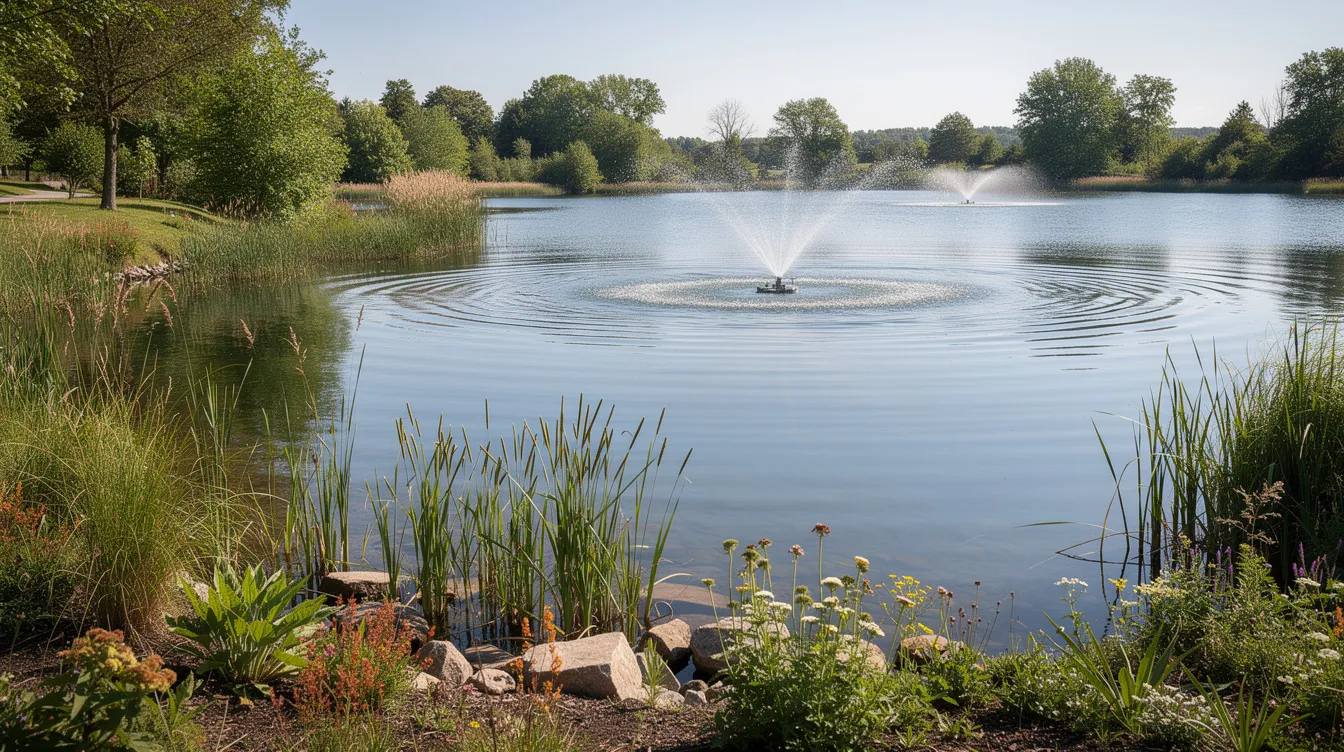
The integrated management plan combined aeration system installation to improve oxygen levels, conversion of 400 feet of mowed shoreline to vegetated buffer strips, targeted herbicide applications for an established milfoil population, and a quarterly monitoring schedule. Professional lake management includes regular water quality assessments as the foundation for year-over-year adjustment.
Over three seasons, water clarity improved measurably, complaint calls to the board dropped substantially, chemical inputs decreased, and the association's NJDEP interactions became smoother with documented data supporting every permit application. Healthy ecosystems increase property values in lake communities - and this community saw renewed interest in lakefront properties as conditions stabilized.
Why Choose Ready Scout for Lake Management in New Jersey
Ready Scout combines local expertise, regulatory fluency, a science-driven approach, and commitment to community education into a partnership that grows stronger each season.
- Deep knowledge of new Jersey lakes, ponds, wetlands, and stormwater systems
- Integrated service offerings covering monitoring, treatment, infrastructure, and compliance
- Transparent communication with clear reporting that boards can share with their communities
- Long-term partnerships aimed at preserving and improving lakes over many seasons - not just "this summer"
- Training and support that help your team and community learn to protect your waterbody's future
The result for our clients: safer recreation, a healthier ecosystem, stronger property value, and more predictable management budgets.
Frequently Asked Questions About Lake Management in New Jersey
These FAQs address common concerns New Jersey lake associations and pond owners raise before engaging a management partner.
How much does professional lake management cost in New Jersey?
Costs depend on lake acreage, depth, accessibility, permitting needs, severity of existing problems, and the scope of services included in your contract. Annual contracts scale with lake size and monitoring frequency. Ready Scout provides detailed proposals after an initial assessment so boards can plan multi-year budgets with realistic numbers - not vague estimates. Factors unique to New Jersey, such as aquatic pesticide permitting and dam safety compliance, also influence total costs.
When should we start lake management work during the year?
New Jersey's seasonal pattern favors early action. Planning and baseline monitoring work best in late winter and early spring. Primary treatments and system adjustments occur during late spring and summer. Evaluation, mapping, and major project planning - such as dredging discussions - happen in fall. Earlier engagement each season allows more preventative and less reactive management.
Can you help us reduce our reliance on chemicals in our lake?
Yes. Ready Scout's core approach focuses on nutrient control, aeration, buffers, and watershed best practices to reduce chemical dependence over time. Aeration systems help maintain healthier conditions in water bodies and can significantly cut algaecide needs. Some situations still require permitted herbicides or algaecides, but they're always part of a broader integrated plan- never the entire strategy.
What do we need to do before contacting Ready Scout?
Having these items ready helps, but isn't required:
- Basic lake information - size, depth estimates, ownership or association structure
- Any available past reports, NJDEP correspondence, or water quality test results
- A description of issues observed, photos, and how long problems have been occurring
We can still help even if you don't have complete documentation. Creating a new account of your lake's condition is part of what we do.
Do you coordinate with our town, county, or NJDEP if needed?
With client authorization, Ready Scout communicates directly with local officials and NJDEP staff about technical aspects of management plans. This support helps streamline permitting and align lake work with broader municipal and state requirements, saving boards significant time and frustration.
Ready to Improve Your New Jersey Lake or Pond?
Healthier, more stable lakes and ponds. Fewer emergencies. Smoother regulatory interactions. That's what Ready Scout delivers for New Jersey communities - through science, expertise, and a genuine commitment to your waterbody's long-term health.
Your next step is simple: call or email us. Initial conversations focus on listening to your lake's history and current challenges - no pressure, no generic sales pitch.