Best Plants for a Pond: A Practical Guide for Healthy, Beautiful Ponds
Choosing the right pond plants determines whether your water feature stays clear or turns into an algae-choked mess. This guide covers the species, placement, and regulatory details that matter for pond owners in the Northeast.
Key Takeaways
- A healthy pond benefits from a mix of plant types: floating plants, marginal plants, and submerged plants working together to control algae, stabilize edges, and shelter fish.
- Native plants like pickerel weed, blueflag iris, cardinal flower, sweet flag, sedges, and creeping jenny outperform exotic ornamentals for water quality and long-term stability in northern New Jersey, upstate New York, Vermont, and southern Ontario.
- Check local lists for invasive plant species before planting; species like water hyacinth, Eurasian watermilfoil, and curly-leaf pondweed are regulated across the Northeast.
- Healthy ponds should maintain 20-40% aquatic vegetation for balance; too little leaves nutrients unchecked, too much chokes the ecosystem.
- Ready Scout designs, permits, and maintains native planting plans for ponds and lakes across its service area.
Understanding Pond Plant Types and Their Roles
Aquatic plants fall into three groups, and a balanced pond uses all three.
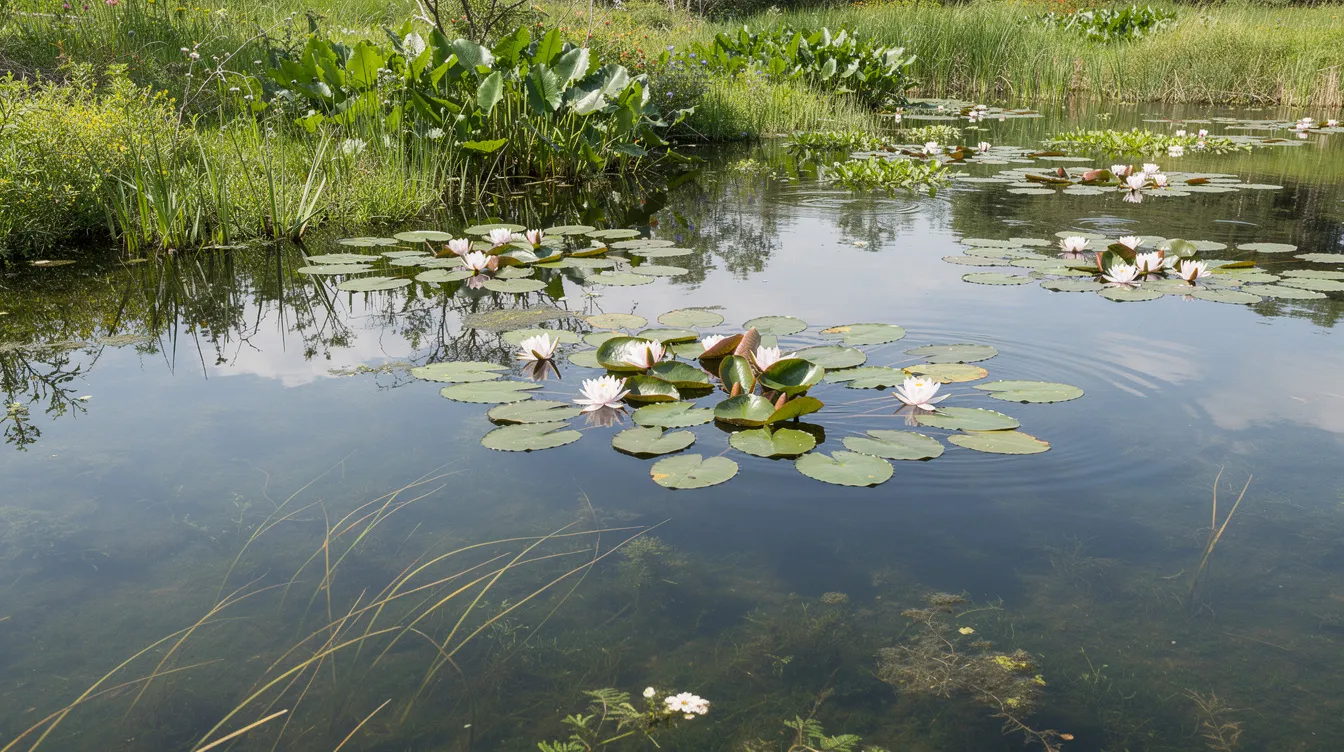
Floating plants sit on or near the surface. They block sunlight, reducing algae growth, and deep-water plants cool water and prevent algae blooms. Water lilies shade the water and provide cover for fish and amphibians. Penn State Extension recommends keeping combined floating coverage under about 60-70% of surface area to preserve light for underwater vegetation.
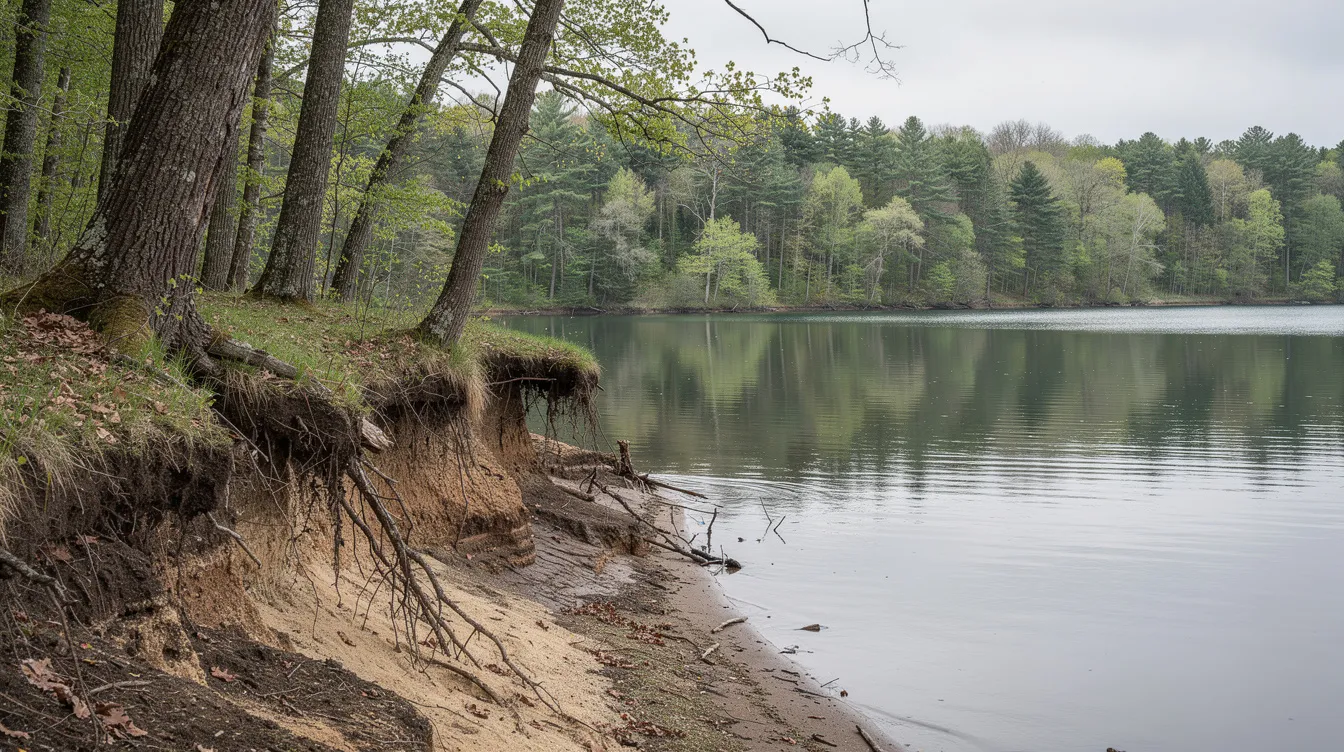
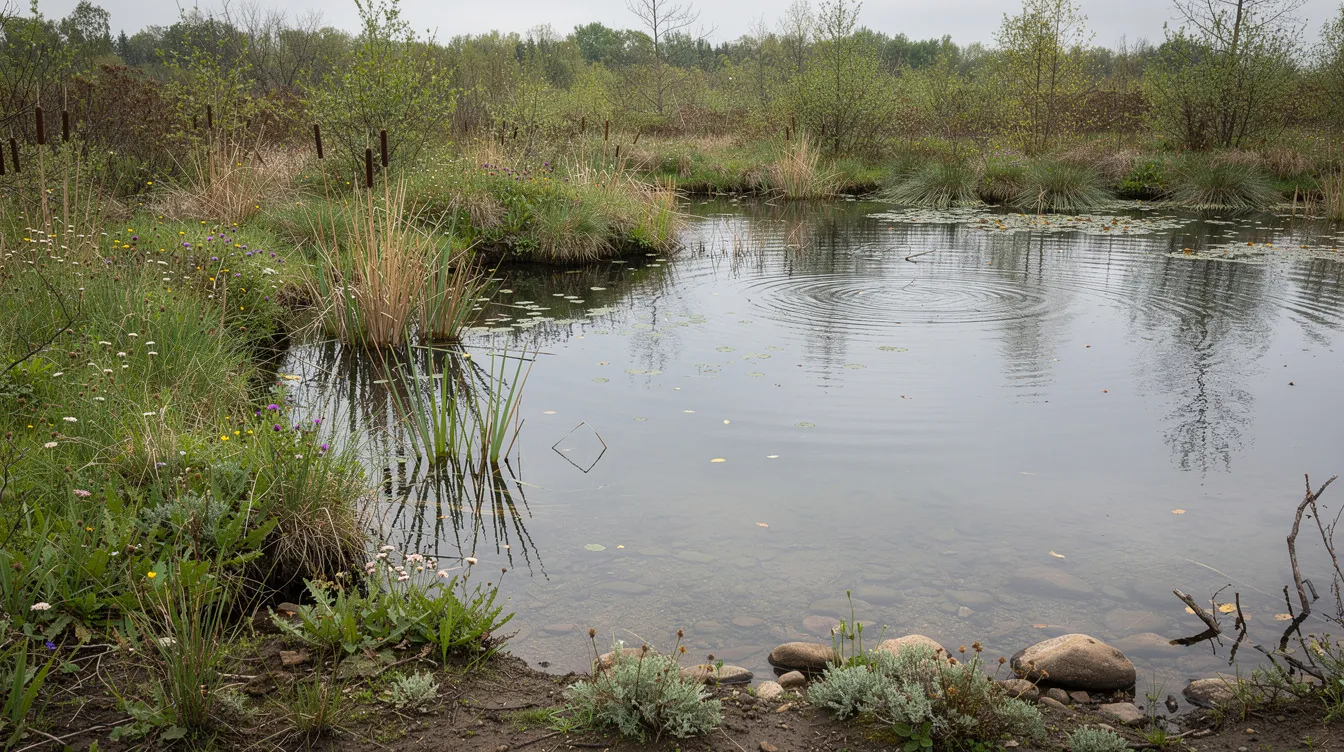
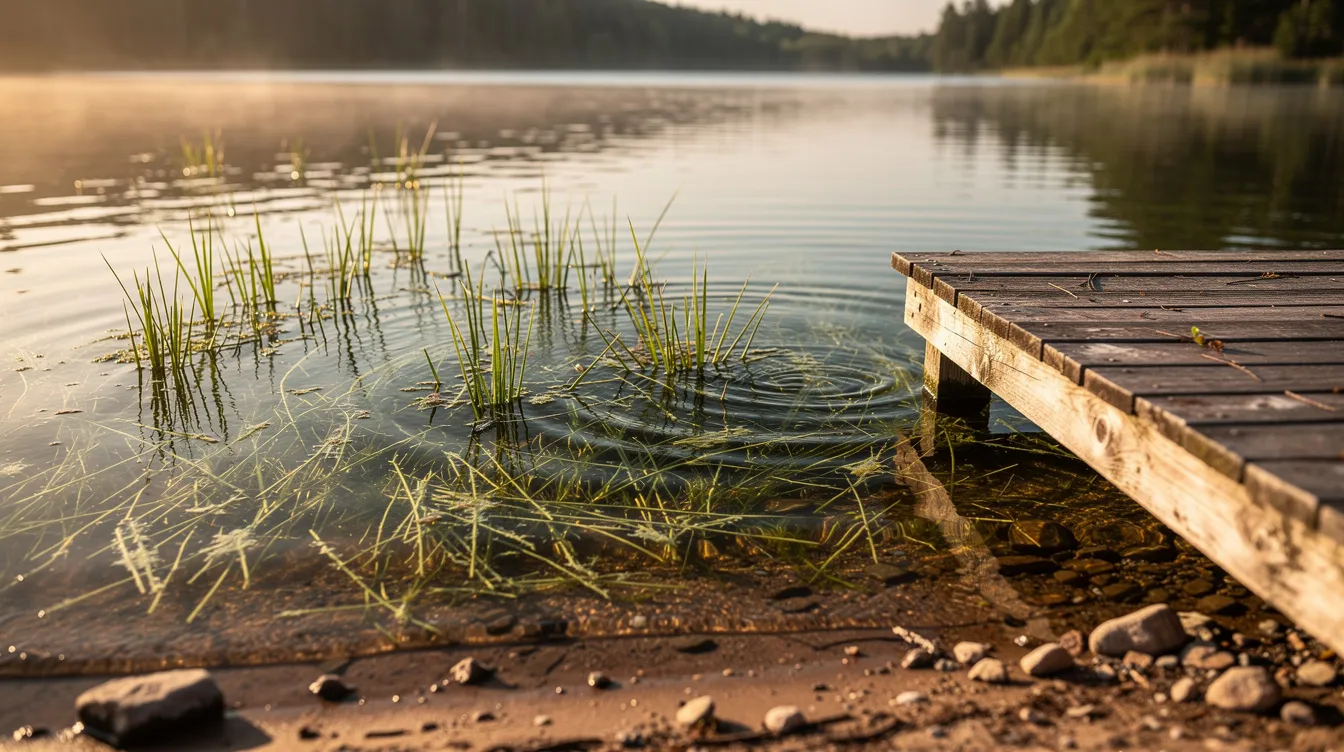
Marginal plants root in shallow water with foliage rising above the surface. They absorb excess nutrients and nitrates from water, stabilize shorelines, and act as a living filter strip against runoff. Plants around the shoreline increase biodiversity in pond ecosystems.
Submerged plants live fully underwater. They produce oxygen through photosynthesis during the day; aquatic plants consume oxygen at night while producing it during the day, so balance matters. Oxygenators help control algae growth in ponds, and submerged oxygenators are crucial for maintaining water clarity. A 2026 meta-analysis across 657 studies found that submerged macrophytes outperformed other plant forms for reducing nutrient resuspension and improving clarity.
Ready Scout starts any planting plan by deciding what percentage of a pond should be shaded, vegetated at the margins, and vegetated underwater based on whether the pond serves fishing, swimming, aesthetics, or stormwater management, drawing on comprehensive lake and pond management services tailored to long-term water quality and ecological balance.
Best Native Marginal Plants for Pond Edges
Native plants provide food and shelter for local wildlife, attract beneficial insects like dragonflies, and face fewer regulatory barriers than exotic species. Here are the best options for Northeast ponds.
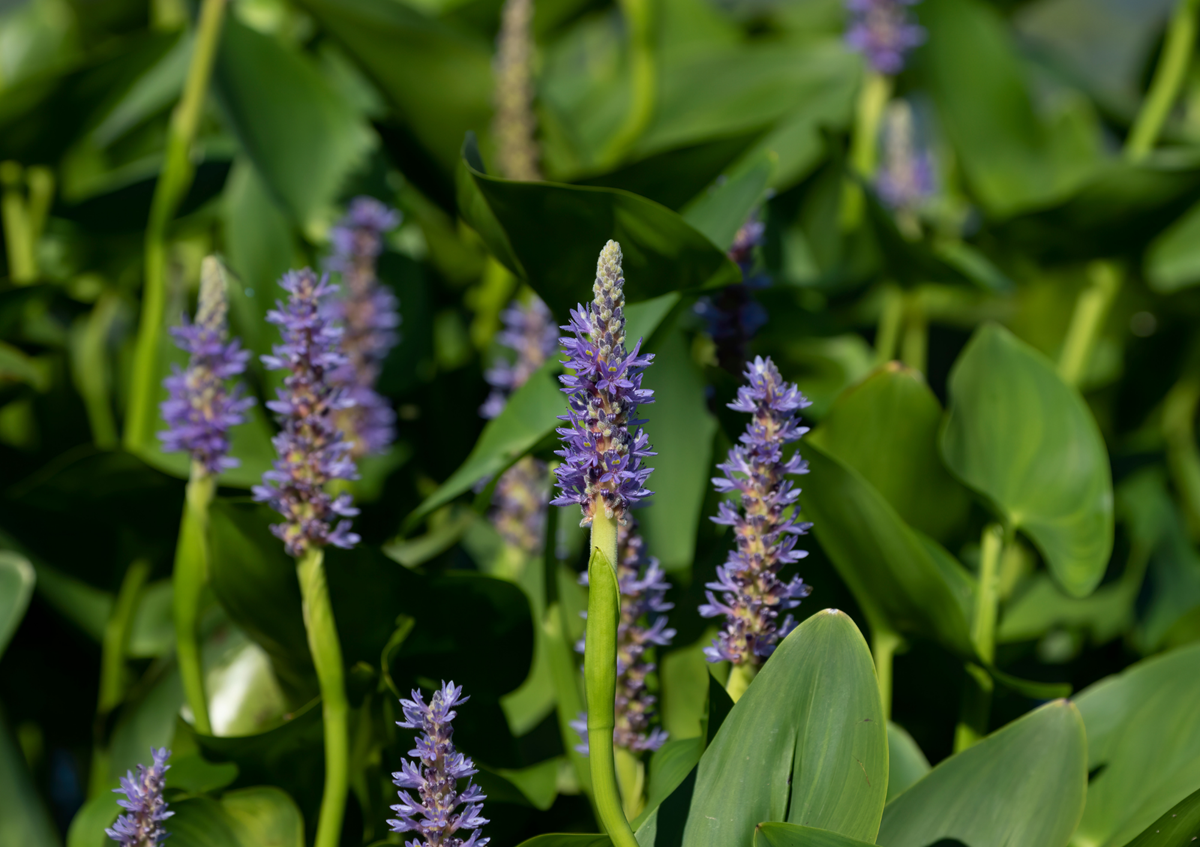
Pickerel weed (Pontederia cordata) grows 1-4 feet tall and blooms June to November with violet blue flowers. It filters pond nutrients, draws bees and butterflies, and thrives on shallow shelves in full sun.
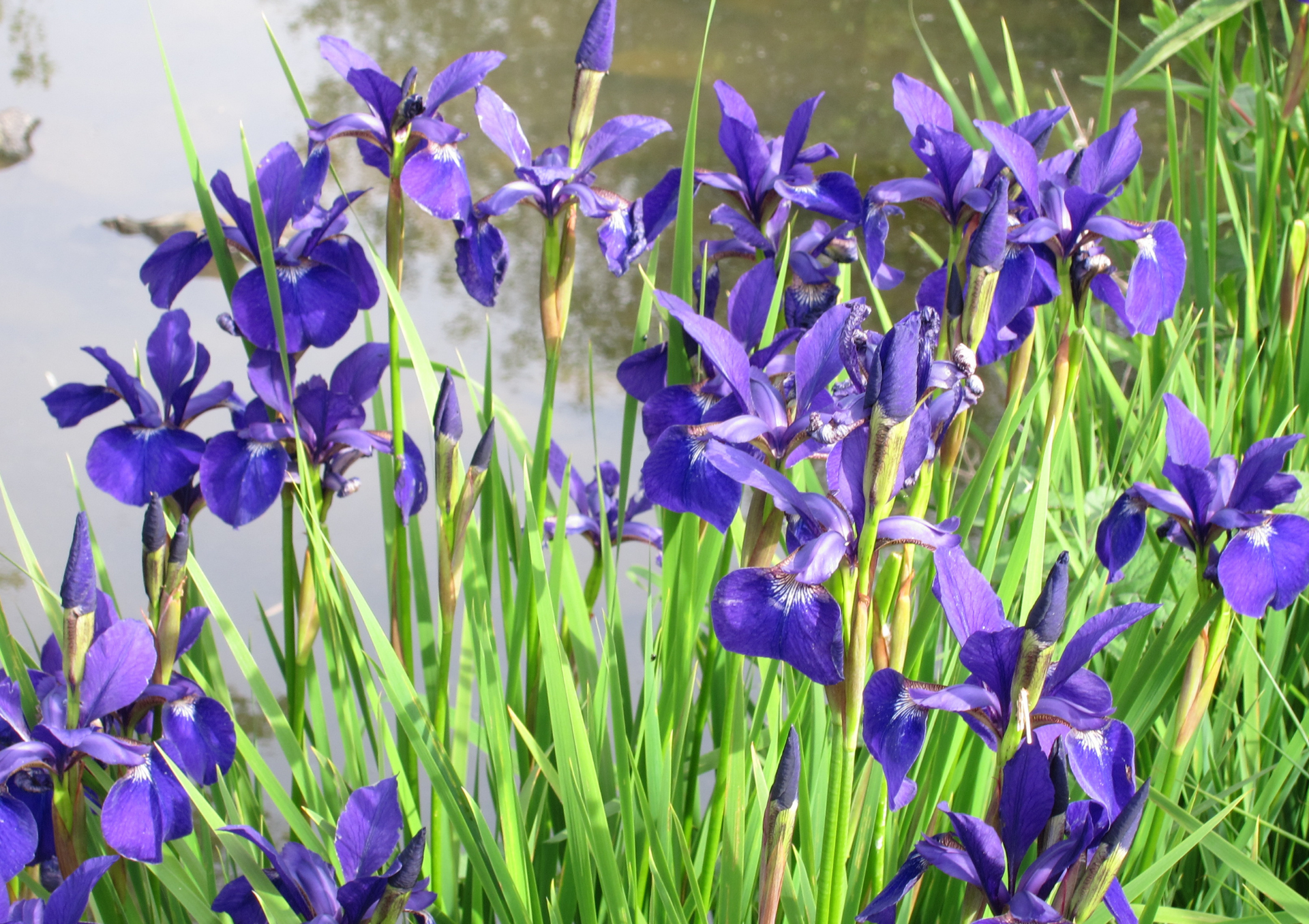
Blueflag iris (Iris versicolor) can grow up to four feet tall and produces violet blue flowers from May through late summer. It resists browsing by geese and tolerates wet feet in standing water or saturated soil.
Cardinal flower (Lobelia cardinalis) grows from two to five feet tall with bright red tubular flowers from July to October. It is one of the strongest hummingbird attractors along pond edges and inlet streams, preferring part shade and consistently moist soil.
Sweet flag (Acorus spp.) offers grassy, variegated foliage that adds visual interest year-round in milder areas. Roots sit in water or saturated soil, making it useful in both formal water gardens and naturalistic shorelines.
Native sedges and rushes (Carex and Juncus species) form dense root systems that stabilize shorelines. Their low growth habit provides wildlife cover for amphibians and birds without blocking views.
Arrowhead (Sagittaria latifolia) sends up arrow-shaped leaves and small white flowers, tolerates fluctuating water levels, and produces tubers eaten by ducks and other animals.
Swamp milkweed (Asclepias incarnata) reaches 2-6 feet tall with deep pink flowers from June through August. It is a monarch butterfly host plant and improves water quality in wet buffer zones. Marginal plants absorb excess nutrients that promote algae blooms, making every species here a functional addition, not just a decorative one.
Property owners in NJ, NY, VT, and Ontario should consult with Ready Scout's plant and algae management team before planting to match species to local soil, water depths, and regulations, and to confirm that their project falls within Ready Scout's NJ and NY service area.
Top Floating Plants for Shade and Natural Filtration
Floating plants are powerful tools for managing algae and temperature, but they require careful selection to avoid turning a small pond into a maintenance headache.
Waterlilies (Nymphaea spp.) are the safest primary floating plants in the Northeast. Hardy cultivars survive winter in zones 3-7 by overwintering rhizomes below the freeze line. Ideal coverage is about half the pond surface, typically 30-50%, with blooms in white flowers, yellow, pink flowers, and orange depending on cultivar. They provide shade and shelter for fish.
Water lettuce (Pistia stratiotes) floats with roots dangling in the water column, absorbing excess nutrients from pond water. It works as a summer filter in contained water gardens but dies in winter and is considered invasive in several Northeast states. Use it only in lined ponds where it cannot escape.
Mosaic plant (Ludwigia sedioides) forms red-green diamond-shaped leaf rosettes with small yellow flowers. It is a tropical ornamental for warm containers, not for natural lakes or unlined ponds in cooler climates.
In northern NJ, upstate NY, Vermont, and southern Ontario, verify whether any floating plant appears on your state or provincial invasive species list before purchase. Ready Scout maintains current lists and can advise on regulatory compliance and wetland invasive species control.
Best Submerged Plants for Water Quality and Clarity
Submerged plants absorb nutrients through their leaves directly from the water column, outcompeting algae for dissolved nitrogen and phosphorus. They are the underwater workhorses of any pond ecosystem.
Native pondweed species (Potamogeton spp.) and Canadian waterweed (Elodea canadensis) are common choices for managed ponds and small lakes in the Northeast. Hornwort acts as a powerhouse oxygenator in ponds and requires no rooting substrate. Aquatic plants in this category provide habitat and absorb nutrients that would otherwise fuel algae.
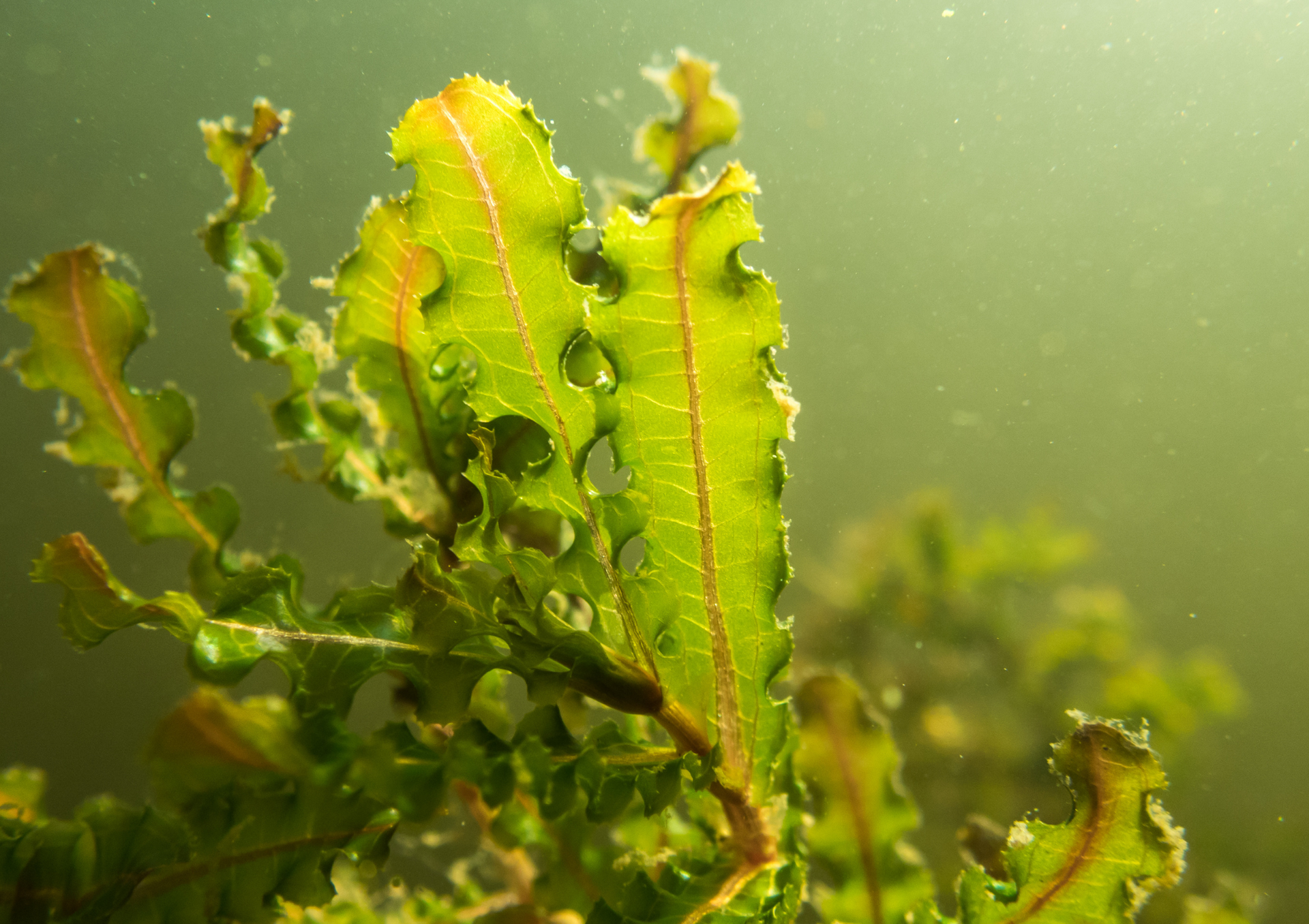
Avoid Eurasian watermilfoil (Myriophyllum spicatum) and curly-leaf pondweed (Potamogeton crispus). Both are listed as invasive in NJ, NY, and Vermont, and certain invasive plants require extensive management efforts once established. Work with a lake and pond consultant to select compliant submerged species and density targets based on water depth and recreational use.
Designing a Balanced Planting Plan for Your Pond
The best water plants only deliver results when arranged by depth zone. Deep water gets submerged plants and waterlilies. Shallow shelves hold pickerel weed, blueflag iris, and sweet flag. The shoreline and upper bank get swamp milkweed, sedges, rushes, and shrubs.
Creeping jenny (Lysimachia nummularia) grows about 2 inches tall and thrives in Zones 3-10, softening rocks and edges with bright green or golden foliage that spills into very shallow margins. Note that horsetail reed can grow up to 24 inches tall and spreads quickly; it needs containers or barriers to prevent takeover.
Build a native plants buffer zone of at least several feet around your pond with dense, diverse vegetation to filter runoff and intercept nutrients before they reach the water. This buffer also supports beneficial insects that help control mosquitoes. As part of effective lake and pond management and conservation, excessive vegetation can create management problems in ponds, so plan for annual thinning from the start.
Ready Scout builds multi-year planting and management plans for lake communities and private pond owners, including mapping, plant selection, and phased installation matched to budgets and seasonal conditions.
Avoiding Invasive Plants and Common Pond Planting Mistakes
Some attractive pond plants are invasive plants that spread into natural lakes, wetlands, and rivers. Water hyacinth can become problematic invasive plants in warmer parts of the region, and invasive plants can quickly take over and harm native species once they escape containment, making it important to follow expert lake and wetland management guidance when planning plant selections and control strategies.
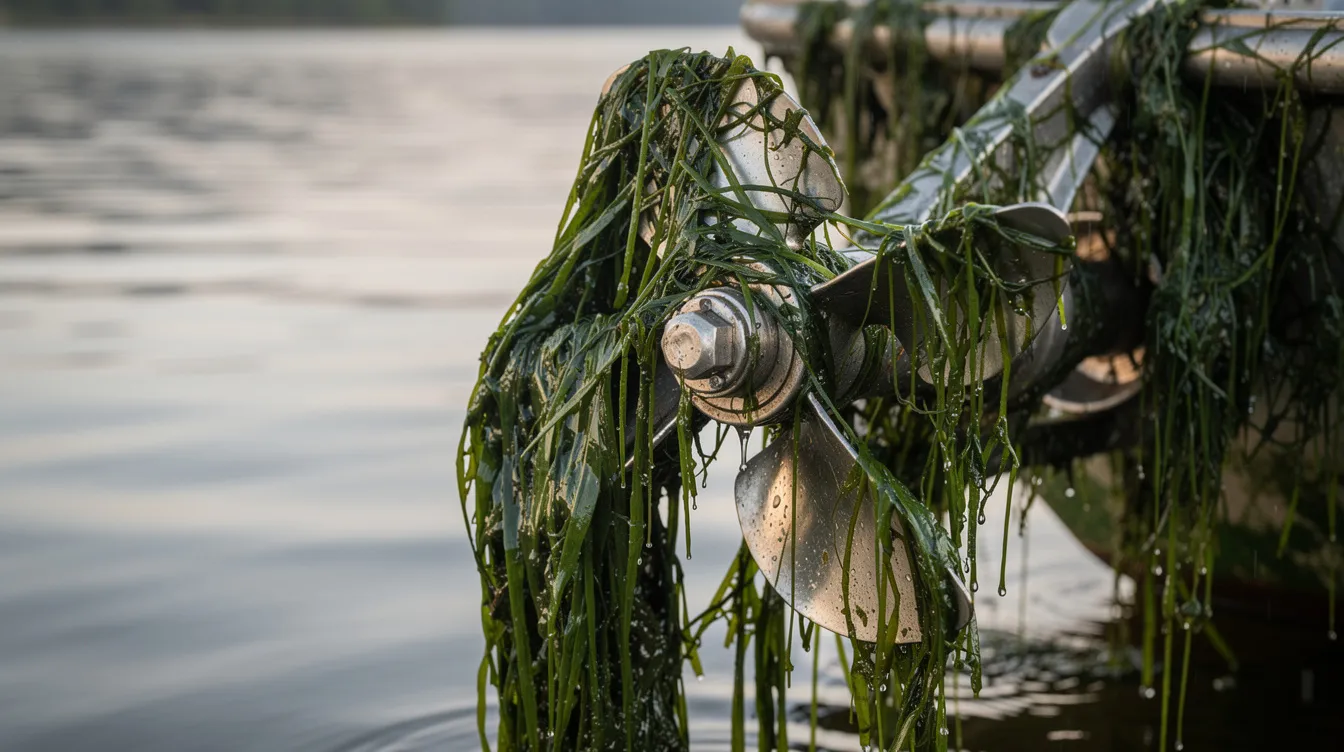
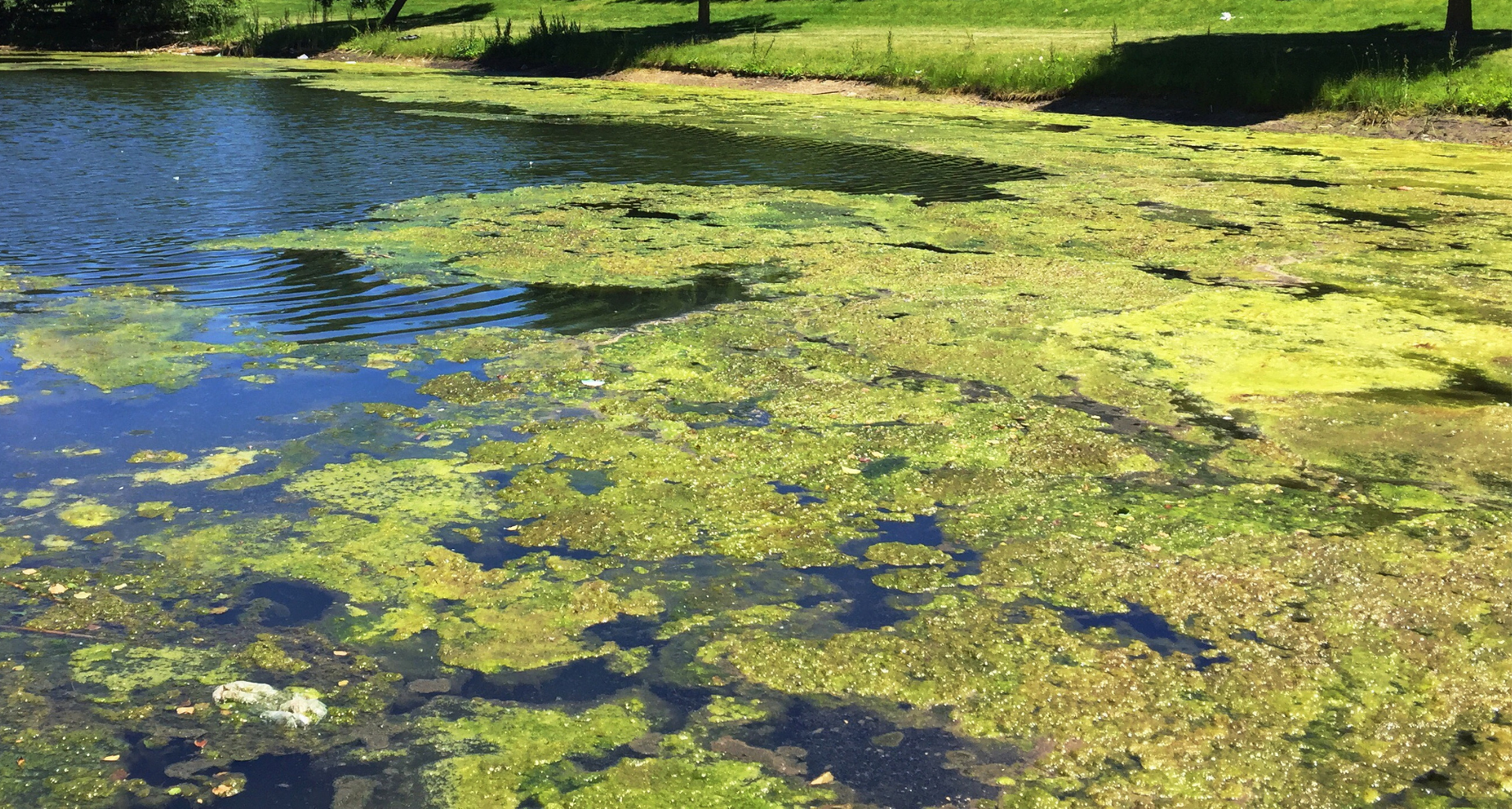
Common problem species in the Northeast include Eurasian watermilfoil, curly-leaf pondweed, purple loosestrife, non-native cattails, water hyacinth, and water lettuce where regulated. Even legal species become nuisance vegetation if overplanted, leading to dense mats, fish kills, or blocked access.
Buy from reputable suppliers. Verify Latin names. Check state or provincial invasive species lists. Dispose of aquatic plants properly to prevent invasiveness; bag removed plants and landfill them or dry them well away from water. Never dump water garden or aquarium plants into natural waters.
Ready Scout conducts aquatic vegetation surveys, identifies existing invasive plants, and develops control strategies combining mechanical removal and targeted herbicide use with long-term prevention, supported by dedicated wetland and invasive species control expertise.
How Ready Scout Supports Healthy Pond Planting and Water Quality
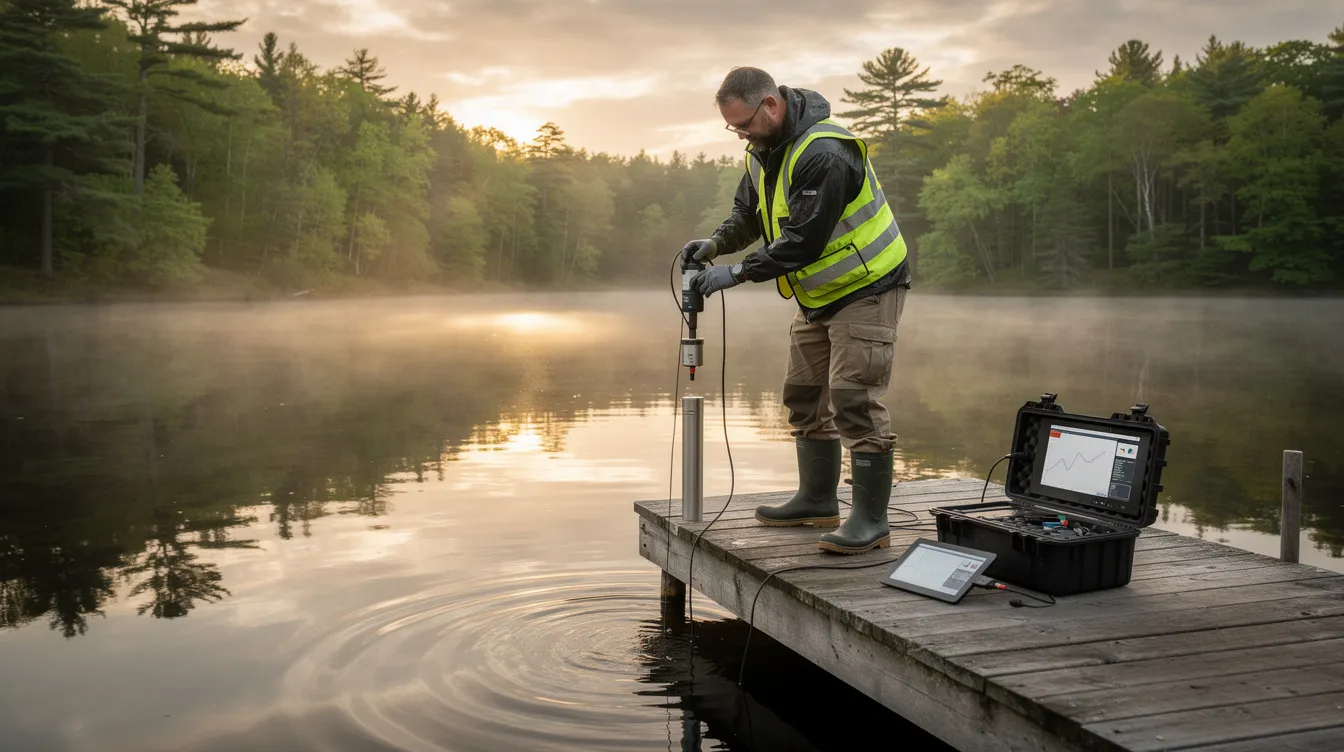
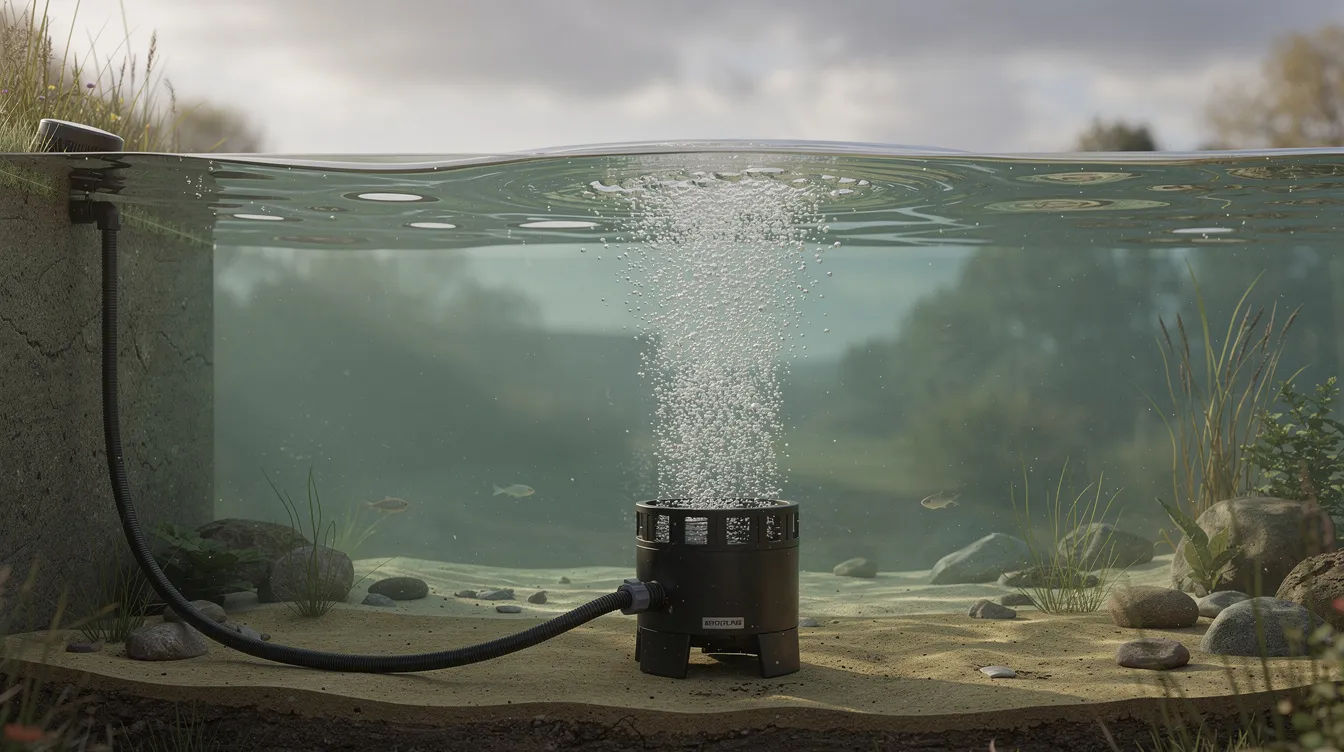
Ready Scout is a regional specialist in lake and pond management across northern New Jersey, upstate New York, Vermont, and southern Ontario, offering professional lake consulting and management. Core services relevant to pond plants include water quality monitoring, aquatic vegetation surveys, invasive species control, shoreline and wetland planting design, and aeration system installation backed by specialized aeration system design and maintenance services.
We pair native plantings with aeration, nutrient management, and algae control to produce clear, stable, swimmable ponds. We handle permitting, herbicide compliance, and wetland impact reviews, all overseen by our Certified Lake Manager-led team. For lake associations, our self-sufficiency consulting trains communities to manage their own ecosystems over time, supported by comprehensive lake and pond management services that prioritize long-term water quality and ecological health.
Contact Ready Scout for a site visit or virtual consultation to design a planting plan and water quality program for your pond or small lake.
Frequently Asked Questions About Best Plants for a Pond: A Practical Guide for Healthy, Beautiful Ponds
How many pond plants do I actually need for healthy water quality?
Target about half the surface covered with a mix of floating and emergent pond plants, plus submerged plant coverage in shallow areas. Exact densities depend on pond size, depth, and use. A small pond used for fishing needs less surface coverage than one managing stormwater.
Are native pond plants always better than non-native ornamentals?
Native plants support local wildlife, tolerate regional winter conditions, and carry lower invasive risk. They the safer open ponds connected to steams and other waterbodies.
Can I add pond plants if I already have algae problems?
Adding the right mix of aquatic plants helps long-term by competing with algae for nutrients, but severe blooms often need a combined approach: aeration, nutrient reduction, and sometimes targeted algae control before new plants can establish and keep water clear.
Do I need a permit to plant or remove pond plants in my area?
Permitting rules vary by state, province, and municipality. Larger lakes, wetlands, and any herbicide use almost always require permits. Pond owners in NJ, NY, VT, and Ontario should review local regulations before major planting or removal projects.
When is the best time of year to plant new pond and shoreline vegetation?
In the Northeast, most pond plants establish best from late spring through early fall, roughly May through September. Plant once water temperatures stay above 50°F so roots develop before winter. Hardy perennial species planted by midsummer have the best survival rates heading into their first frost season.