Lake Shoreline Erosion Control: Practical Options for Inland Lakes
Key Takeaways
- Preventing shoreline erosion on inland lakes is almost always cheaper and more effective than repairing damage later. Property owners and lake associations in northern New Jersey, upstate New York, Vermont, and southern Ontario should act before erosion accelerates.
- The most durable erosion control strategy combines natural vegetation and native plants in a well-designed buffer zone with selective structural tools like rock rip rap or bioengineering techniques-not one method alone.
- Many erosion control methods require permits and regulatory review across NJ, NY, VT, and Ontario. Ready Scout helps clients navigate these requirements and avoid costly delays or fines.
- Simple land use changes-reducing paved areas, diverting surface runoff, and protecting shoreline vegetation-can significantly prevent erosion and protect water quality without major construction.
- Ready Scout, LLC serves as a specialist partner for shoreline assessment, erosion control design, permitting, and long-term lake management across the northeastern U.S. and southern Ontario.
Introduction: Why Lake Shoreline Erosion Control Matters Now
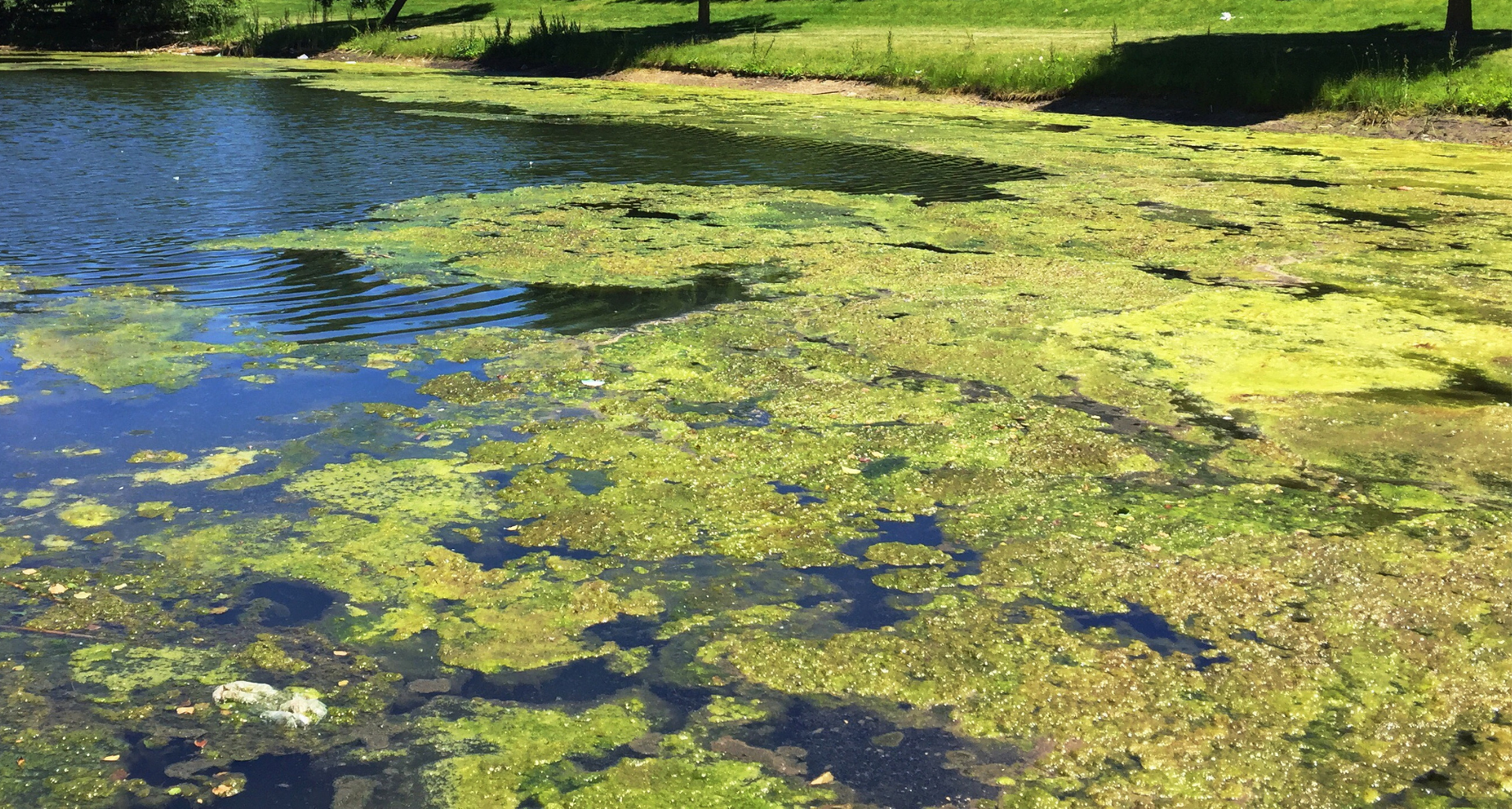
Shoreline erosion is a natural process accelerated by human activities-and it's getting worse. Intense storms, fluctuating lake levels, and ice-free winters throughout the 2020s are hammering inland lake shorelines across the Northeast. The result: undermined docks, retreating banks, cloudy water, and algae blooms that diminish property values and recreational activities.
Even shorelines that look stable around lakes in Sussex County (NJ), the Adirondacks (NY), the Green Mountains (VT), and southern Ontario are often quietly receding several inches each year. Severe erosion threatens structures and can lead to expensive property loss, while unchecked erosion can cloud water and trigger harmful algal blooms that affect entire lake communities.
In plain terms, shoreline erosion is the loss of shoreline soil at the water's edge. There is a difference between slow, natural shoreline change-which will naturally occur on any water body-and accelerated erosion caused by human influences like vegetation clearing, stormwater pipes, and boat wakes.
Ready Scout, LLC is a regional lake and pond management firm that helps communities design and maintain practical erosion control solutions rather than one-off quick fixes. The rest of this article walks through causes, natural and structural erosion control methods, planning steps, regulations, and how Ready Scout can support both individual property owners and lake associations.
Basic Principles of Lake Shoreline Erosion Control
Before choosing any erosion control methods, it helps to understand a few guiding principles that apply across inland lakes and ponds:
- Slow erosion, don't freeze it. The goal is not to lock the shoreline in place forever. It is to reduce erosion to a tolerable, near-natural rate while protecting structures, access, and habitat. Preventing erosion is easier and less expensive than repairing eroded banks.
- Slopes beat walls. Well-designed slopes with vegetated banks dissipate wave energy from wind and boat wakes far more effectively than vertical cuts or rigid walls. Natural shorelines absorb wave energy, reducing erosion, and provide habitat for fish and wildlife.
- Effective shoreline erosion control relies on soft engineering and natural barriers. Hard structures should not be the first choice for erosion control. Agencies like NYSDEC strongly prefer vegetative and bioengineering approaches.
- Inland lakes are not oceans. Wave fetch is shorter, ice shove is more significant, and water level swings can be extreme relative to bank height. Erosion control methods that work on big Great Lakes shorelines do not always translate to smaller lakes and ponds.
- Balance three priorities. Every shoreline solution must balance engineering (slope stability, structural integrity), ecology (native plants, water quality), and aesthetics (views, swimming, boating access). Shoreline management techniques depend on specific site conditions such as wave exposure.
Causes of Shoreline Erosion on Inland Lakes
Understanding the specific cause of bank erosion is essential before selecting erosion control solutions. A poorly matched fix can waste money or shift problems to neighboring properties.
Natural forces:
- Wave action driven by prevailing winds, especially on long-fetch shorelines
- Ice shove in late winter-ice erosion can push tons of soil shoreward during thaw on frozen lakes
- Seasonal lake level fluctuation from spring snowmelt, droughts, or dam operation
- Groundwater seepage that weakens banks from within
Human influences:
- Vegetation removal accelerates shoreline erosion significantly. Bulk mowing to the water's edge eliminates root structures that hold soil in place.
- Stormwater runoff from roofs, driveways, and rain gutter outlets contributes to significant soil displacement when discharged directly onto banks.
- Boat wakes-particularly from wake-enhancing vessels. A study of Whitestone Lake in northern Ontario found that recreational boat wakes accounted for 61% of total wave energy along one exposed shoreline segment over a summer season.
- Poorly designed seawalls that redirect wave energy downward, increasing erosion risk at their base and on adjacent shores.
- Coastal erosion rates can reach 2 meters per year on high-exposure banks.
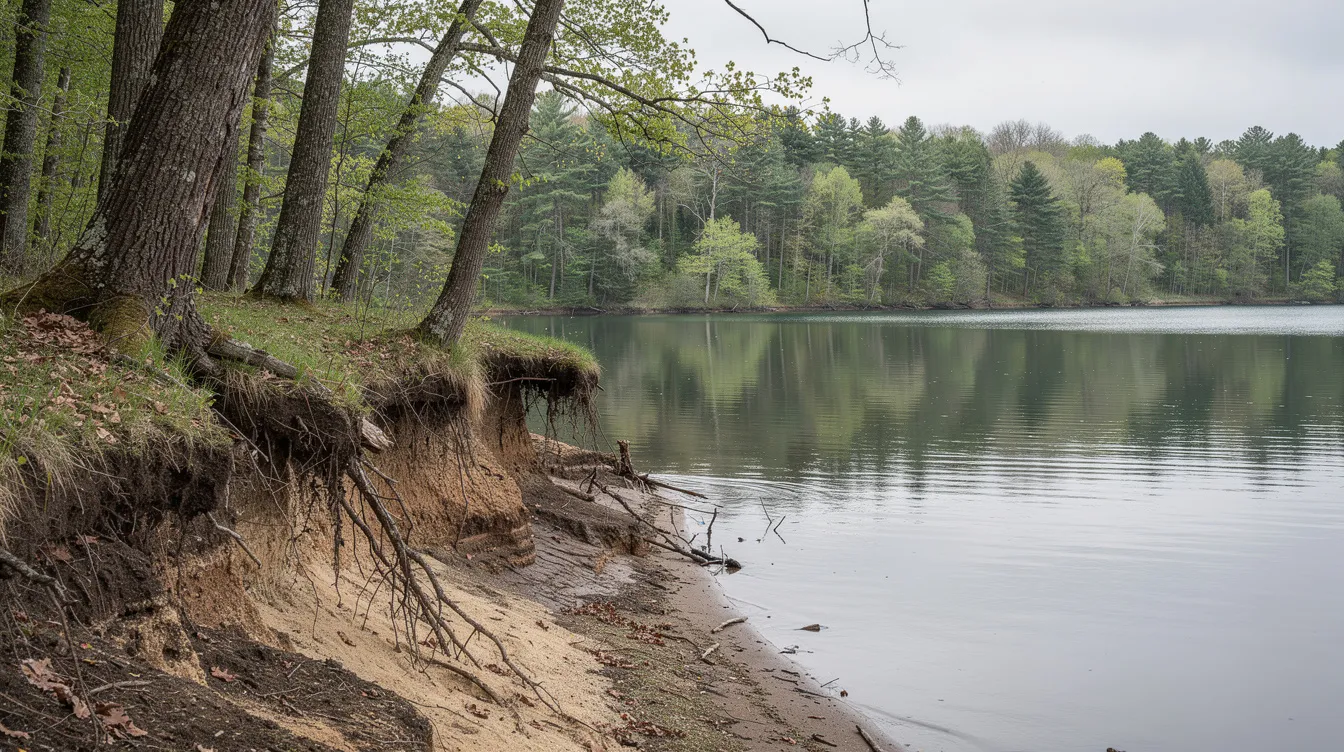
Signs to watch: Look for bare soil patches, slumping banks, exposed tree roots, leaning trees, and muddy water near shore after storms. On a typical upstate New York lake, a combination of boat wakes and vegetation removal can lead to undercutting and exposed roots over just 5–10 years.
How Natural Vegetation Protects and Restores Shorelines
Natural vegetation is the first line of defense for preventing shoreline erosion, and it often costs less per square foot than any structural alternative.
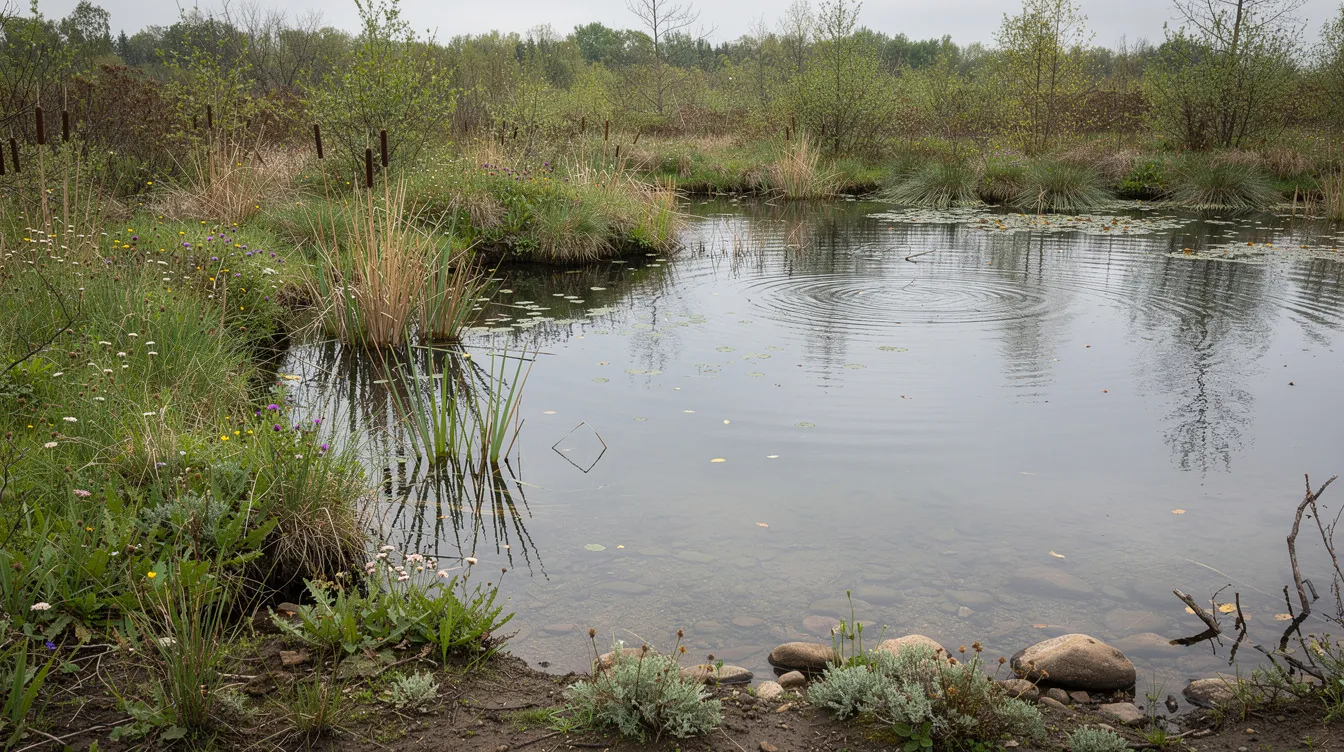
A vegetated buffer is effective for protecting shorelines from erosion because it works on multiple levels simultaneously. Deep roots of plants bind the earth together, holding shoreline soil in place even during high-water or storm events. Native vegetation strengthens shoreline structural integrity in ways that turf grass simply cannot.
Vegetative buffers anchor the soil and slow down runoff. Foliage and stems intercept rain impact and reduce surface runoff velocity, lowering the erosive power of water flowing toward the lake. Vegetation reduces erosion caused by rainfall and winds across all seasons.
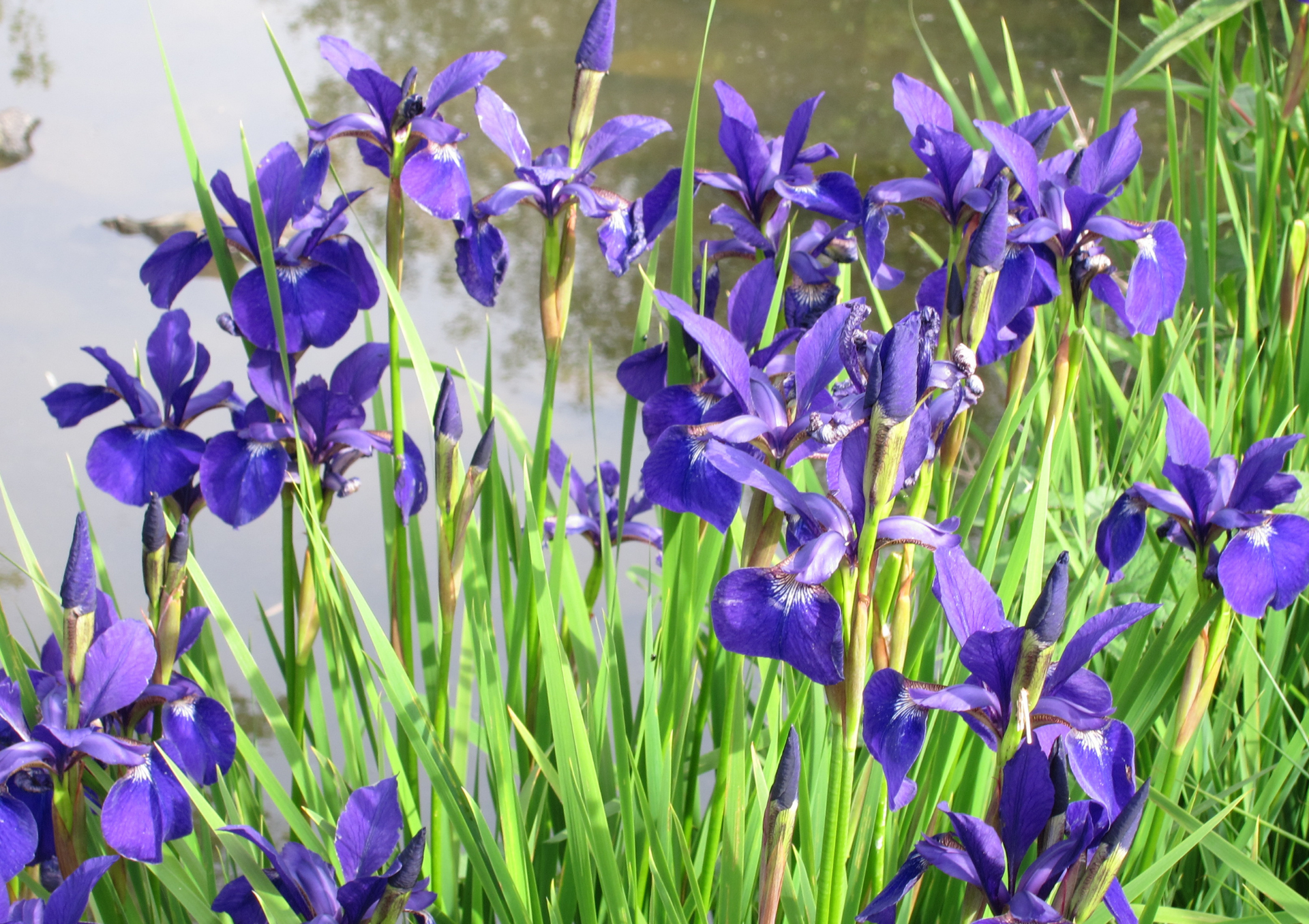
Emergent aquatic plants-pickerelweed, arrowhead, sedges, and rushes-at the water's edge break wave energy before it reaches the bank. These retaining moisture absorbing vegetation species trap sediment and build organic matter that improves soil structure over time.
Lightly managing a natural buffer of shrubs, grasses, and trees is far more effective than mowing turf grass to the waterline. Turf has shallow root systems and compacted soil. According to Michigan's bioengineering fact sheets, 40% of inland lakes in that state have poor lakeshore habitat from damaged or eroding shoreline ecosystems. Stabilized banks filter surface runoff, trapping pollutants before they enter lakes, which directly protects water quality.
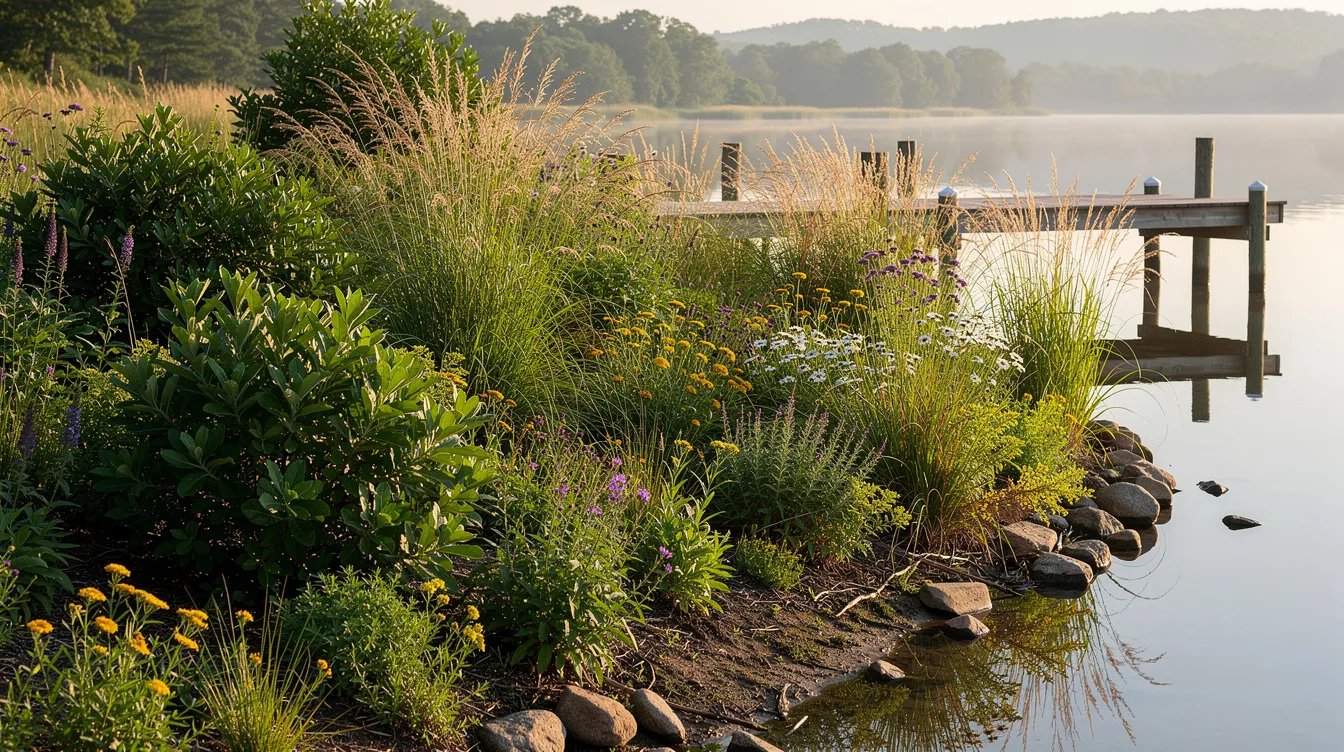
Effective Shoreline Buffer Zone with Native Plants
A buffer zone is a deliberately planted and protected strip of natural vegetation between developed land and the lake edge. It is one of the most cost effective erosion control solutions available.
Width matters: A buffer zone of 50 feet significantly reduces shoreline erosion on most inland lakes. General recommendations range from 10–35 feet on gentle slopes, wider on steep slopes or high-exposure areas. Vermont's Shoreland Protection Standards require vegetation protection within 250 feet of mean water level for certain clearing or impervious surface projects.
Native plants are preferred over ornamentals because they are adapted to local soils, freeze-thaw cycles, and water level changes across New Jersey, New York, Vermont, and Ontario. A 38 cell plug flat of native plants costs about $75, making buffer establishment accessible for most budgets.
Erosion control techniques include preserving existing vegetation and reducing runoff from upslope areas. Rain gardens can help slow and absorb runoff before it reaches the lake, and minimizing paved areas near shore keeps stormwater volumes manageable, especially when integrated into
effective lake management and conservation strategies.
Natural and Bioengineering Erosion Control Methods
Bioengineering combines living plants with natural materials to stabilize banks-offering a middle ground between "do nothing" and heavy structural armor. Using bioengineering techniques retains the natural functions of shorelines, including habitat, filtration, and aesthetics.
Brush layering: Alternating layers of live branches (often willow cuttings) with soil lifts on a reshaped slope. Root structures naturally stabilize the bank as cuttings sprout. This method works well on moderate erosion sites.
Brush mattresses: Live cut branches woven and pinned flat against the slope surface. Brush mattresses stabilize shorelines with live cut branches that root into the bank, creating a living armor over time.
Live staking: Live staking uses 2–3 ft long cuttings driven directly into the bank where they root and reinforce soil. Live staking uses 2–3 ft long cuttings for shoreline stabilization in areas with adequate soil moisture. It's simple, inexpensive, and effective for moderate erosion along stream banks and lake shores.
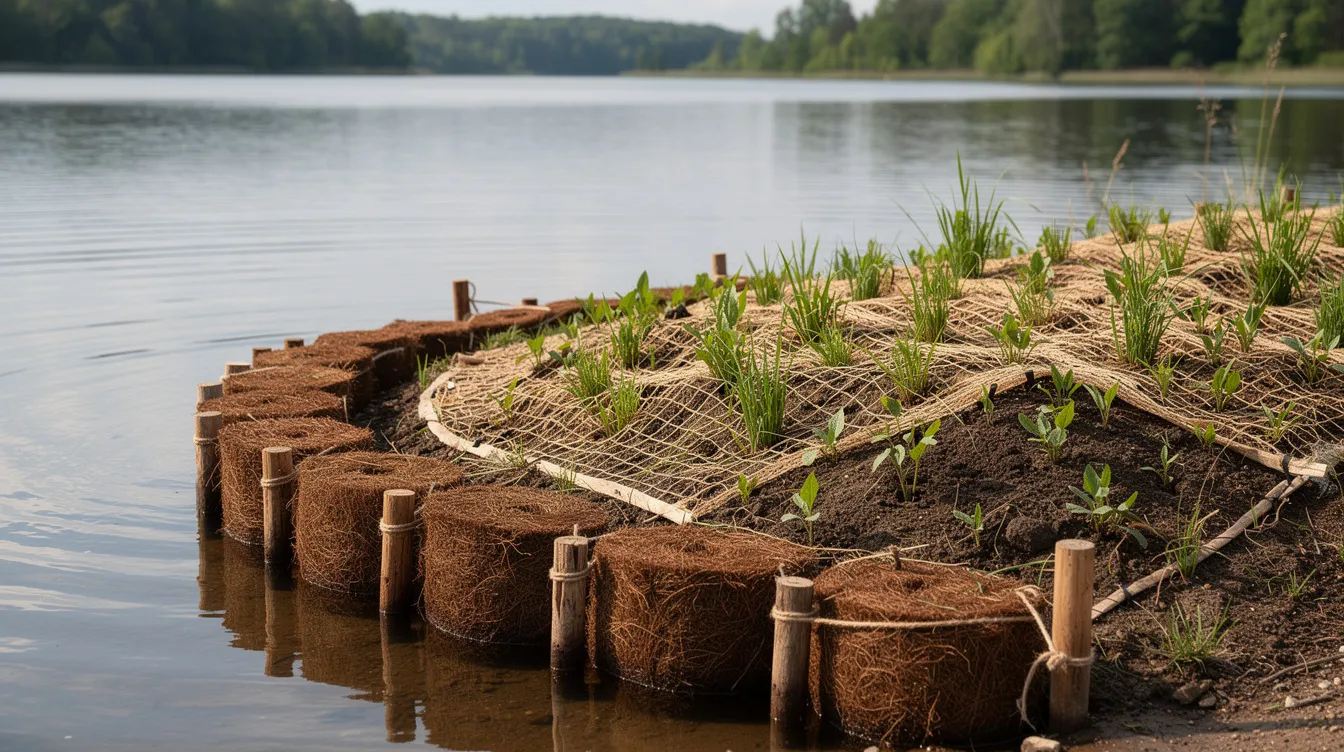
Coir (coconut fiber) logs: Placed at the toe of the slope at the water's edge, coir logs made from coconut husk fiber resist wave attack while native plants establish. Coir logs biodegrade after a few years, stabilizing shorelines during the critical early growth period.
Erosion control blankets and open woven fabrics: Wood fiber blankets and open woven fabrics hold soil until plants establish, acting as soft armor across bare slopes. Geotextile fabrics and turf reinforcement mats act as temporary armor for soil on steep slopes.
Wave attenuators can reduce the energy hitting the bank directly, and breakwaters intercept and break incoming wave energy before it reaches the shoreline-useful where fetch is long.
A Crystal Lake State Park project in Vermont treated 220 feet of eroding shoreline using coir logs, live stakes, soil lifts, and native plantings for approximately $37,000.
These natural erosion control methods are most suitable for low to moderate wave energy shorelines, smaller inland lakes, and sheltered coves. Where wave action or ice activity is intense, they should be combined with toe protection or rock.
Using Rock, Riprap, and Structural Erosion Control Solutions Wisely
Structural erosion control solutions-rock rip rap, metal or vinyl seawalls, retaining walls, or concrete blocks-are sometimes necessary, but they should not be the default choice.
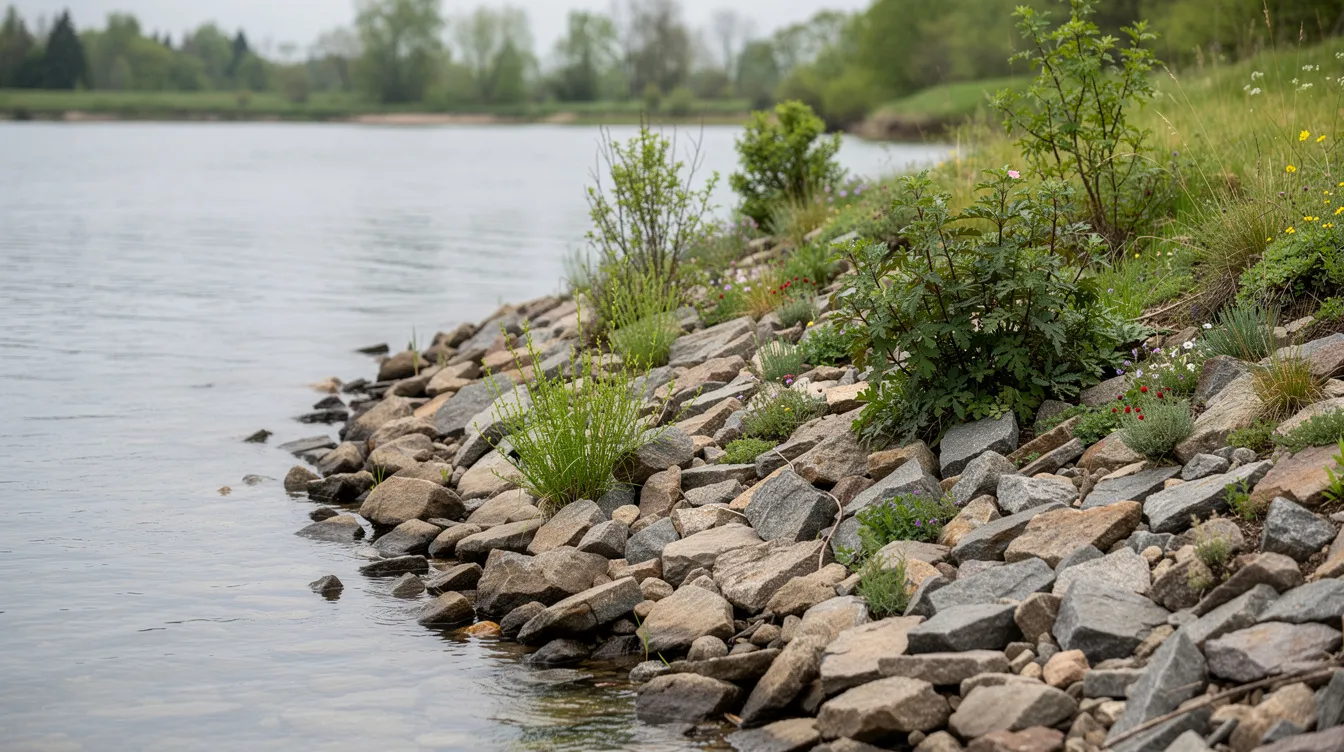
Riprap (sloped rock revetment): Riprap is a common solution for severe erosion due to wave action. It consists of medium to larger rocks placed over a filter layer of geotextile fabric on a graded slope. Geotextile fabrics stop soil from washing through gaps in riprap. NYSDEC requires slopes no steeper than 1 vertical to 1.5–3 horizontal, with two layers of stone. Riprap costs vary based on local contractor rates, and rip-rap installation costs depend on local contractor rates and rock availability-so always get multiple bids.
Vegetated riprap: Creating a combination of riprap and native vegetation can enhance ecosystem benefits. Joint planting-driving live stakes between beach rocks and armor stone-improves habitat and aesthetics while maintaining structural integrity. Native vegetation strengthens shoreline structural integrity even within rock revetments.
Seawalls and retaining walls: Retaining walls provide a vertical barrier against high-energy waves, but seawalls redirect wave energy downward, increasing erosion risk at the base. They can deepen water at the foundation, worsen erosion on neighboring properties, and destroy near-shore habitat. Seawalls are the most expensive shoreline stabilization option and often fail abruptly when undermined.
Soft armoring vs. hard armoring: Wherever possible, favor soft armoring approaches that incorporate vegetation. Hard structures should be reserved for sites where wave exposure, ice shove, or structural damage risk leaves no alternative.
Property owners should consult professionals before committing to expensive hard-armoring projects that require detailed engineering and permits.
Planning a Shoreline Erosion Control Project
Each inland lake shoreline is unique. Rushing into construction without a plan can create costly mistakes or shift erosion to a neighbor's property, which is why many communities rely on professional lake consulting and management services.
Recommended sequence:
- Site assessment: Measure slope, identify soil type (clay, sandy glacial outwash, till), evaluate exposure to wind and boat wakes, review lake level history, and inventory existing vegetation.
- Identify dominant causes: Is it wave action, concentrated stormwater runoff, ice shove, cleared vegetation, or a combination? Professional assessment is important for actively slumping banks.
- Choose appropriate methods: Match erosion control methods to the site. Creating terraced slopes can slow down water runoff and allow infiltration on steep slopes. Low-energy sites may need only buffer plantings; high-energy areas may need toe protection plus bioengineering.
- Design and permitting: Prepare plans with cross sections, plant lists, and construction details. Submit to relevant agencies.
- Document current conditions: Photograph the bluff edge, bare soil, and any structural damage after storms. Measure bank height and recession distance. These records are invaluable for permitting and future comparison.
Communities should also consider long-term maintenance capacity and future changes in boat use or lake levels when selecting solutions. Ready Scout routinely prepares integrated plans that combine erosion control, water quality monitoring and lake mapping, and invasive species management as part of its broader lake consulting and management services.
Regulations, Permitting, and Compliance in NJ, NY, VT, and Ontario
Most shoreline work below the ordinary high-water mark-including installing septic systems near a bank, adding rip rap, or building retaining walls-triggers permits or approvals. Even placing storage sheds or other structures near the bluff edge may require review. Skipping permits can result in fines and mandatory restoration.
Key agencies and rules by region:
| Region | Primary Authority | Key Considerations |
|---|---|---|
| New York | NYSDEC Protection of Waters; Adirondack Park Agency | Slope limits, vegetation cutting restrictions, wetland review |
| Vermont | VT DEC Shoreland Protection Standards | Vegetation protection within 250 ft; Lake Wise program |
| New Jersey | State wetland/stormwater laws; local zoning | Inland lakes less formally regulated but wetland/stormwater rules apply |
| Ontario | Conservation authorities; O. Reg. 41/24 | Development near water bodies restricted; new thresholds under Reg. 257/26 starting Jan 2027 |
Common permitting themes across all regions: protecting wetlands, limiting hard armoring, requiring erosion control plans with drawings and cross sections, timing work to avoid fish spawning and bird nesting seasons, and maintaining or replanting shoreline vegetation.
Ready Scout helps clients gather site data, prepare maps and drawings, and coordinate with local reviewers to streamline permitting and regulatory compliance for erosion control projects throughout its northern New Jersey and upstate New York service area.
Ongoing Shoreline Maintenance and Monitoring
Erosion control is not a one-time project. Natural shorelines are living systems that evolve and require light, regular care to remain effective.
Simple monitoring routines for property owners:
- Walk the shoreline each spring and fall. Look for new undercutting, bare soil patches, slumps, or eroding shorelines.
- Photograph changes from fixed reference points to track recession over years.
- Check rain gutter outlets and drainage features above the bank for clogs or concentrated discharge.
Seasonal tasks:
- Replant gaps in moisture absorbing vegetation where plants have died or been displaced.
- Remove invasive plants that displace deep-rooted natives.
- Inspect coir logs, erosion control blankets, and other biodegradable materials for breakdown.
- Ensure stormwater runoff is being managed upslope-maintain rain gardens, pervious surfaces, and swales.
Lake associations can set shared maintenance guidelines so that one property's actions-aggressive walling or vegetation clearing-do not harm neighbors. Ready Scout can bundle shoreline inspections into broader lake and pond management programs that also track water quality, algae, and aquatic invasive species, delivering comprehensive lake and pond management services.
How Ready Scout Supports Shoreline Erosion Control Projects
Ready Scout is a long-term partner for lake communities and individual property owners-not just a contractor for one-off fixes.
Services relevant to erosion control:
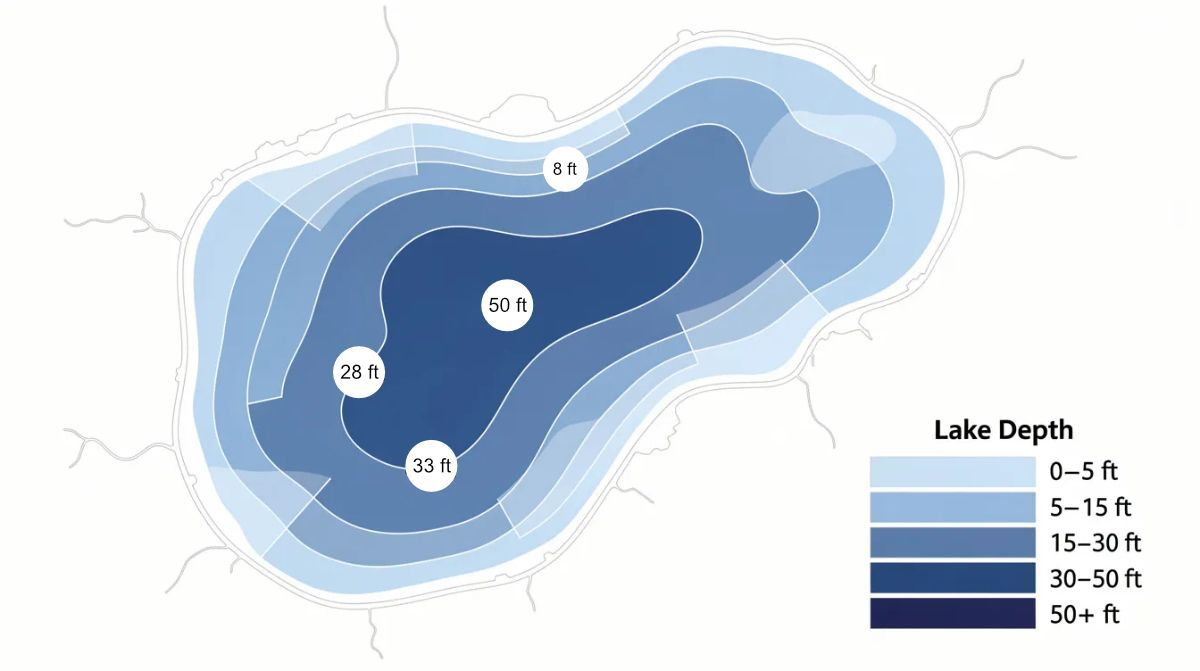
- Shoreline and bathymetric surveys, erosion risk mapping, and lake mapping to understand wave exposure and sediment movement
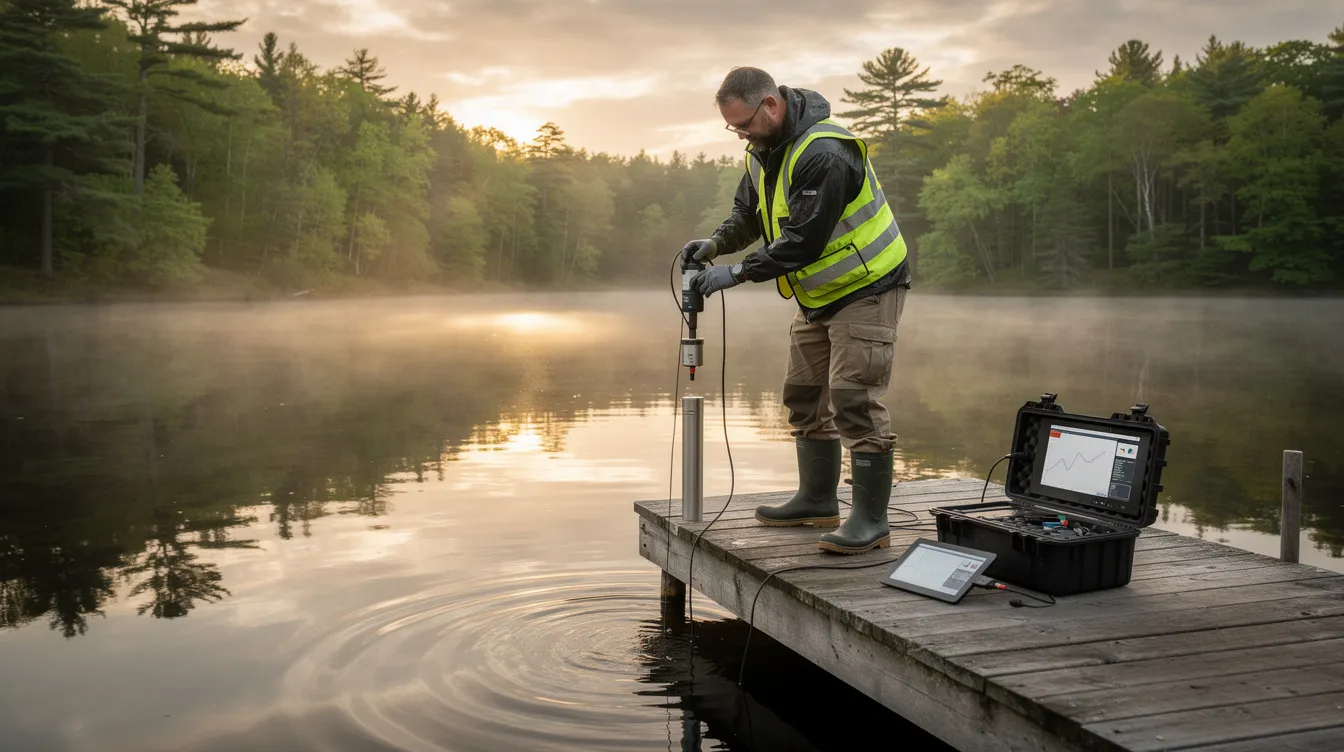
- Water quality monitoring to measure sediment and nutrient loading before and after projects
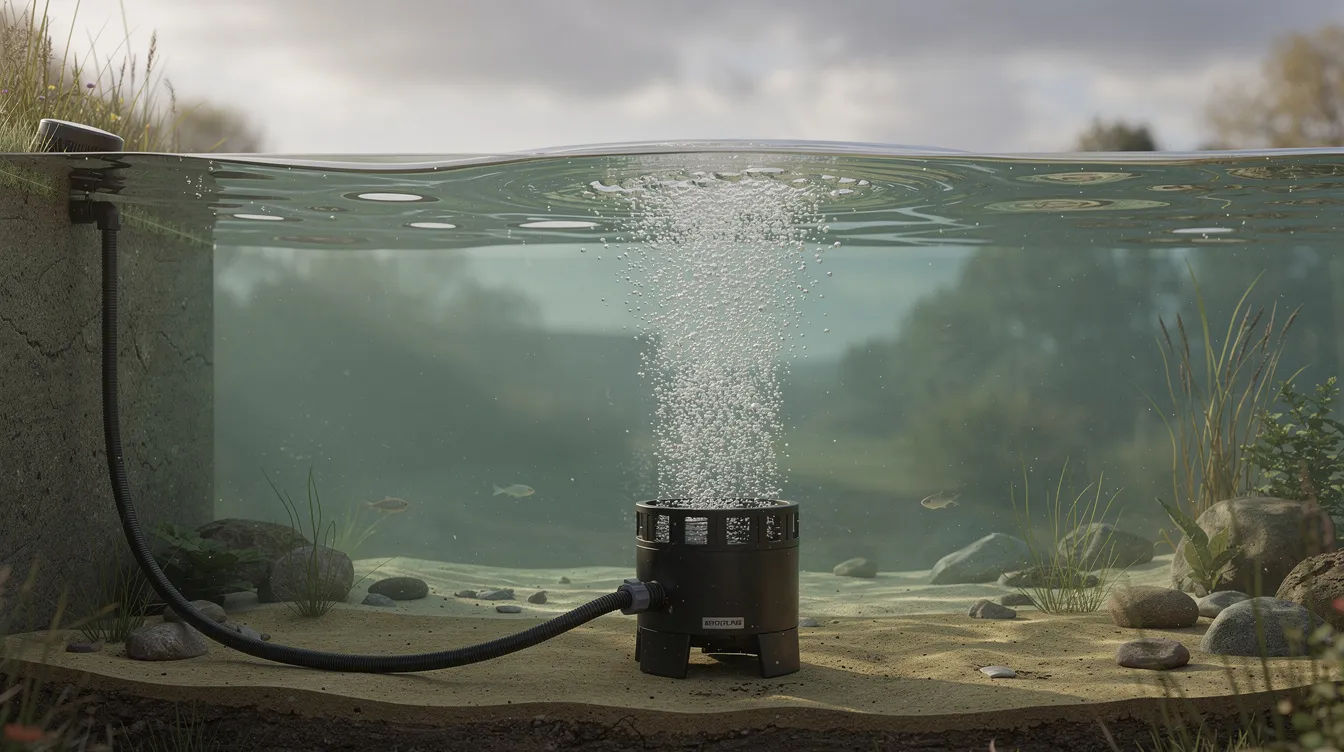
- Selecting appropriate erosion control methods, designing buffer zones, integrating aeration systems to reduce shoreline muck, and planning native plantings
- Permitting and regulatory compliance expertise across northern New Jersey, upstate New York, Vermont, and southern Ontario
- Lake community self-sufficiency consulting-helping boards and associations understand how to maintain their erosion control investments over 5–20 year horizons
Ready Scout also provides training so communities learn to manage their own natural resources responsibly, drawing on the expertise of its Certified Lake Manager leadership. When a lake association understands why their buffer zone matters and how to maintain it, the investment in shoreline protection pays off for decades.
Frequently Asked Questions About Lake Shoreline Erosion Control
How do I know if my shoreline erosion problem is serious enough to act on?
Look for annual loss of several inches of bank, exposed root structures, leaning trees, or muddy water near your shoreline after relatively small storms. If docks, patios, septic systems, or walkways are within a few feet of an eroding bank, seek professional advice within the same season rather than waiting. Ready Scout can perform a focused shoreline assessment visit to document the situation, address any related aquatic plant and algae management needs, and recommend whether immediate, moderate erosion intervention, or long-term monitoring is appropriate.
Can I still have a lawn, beach, and dock if I restore a natural shoreline?
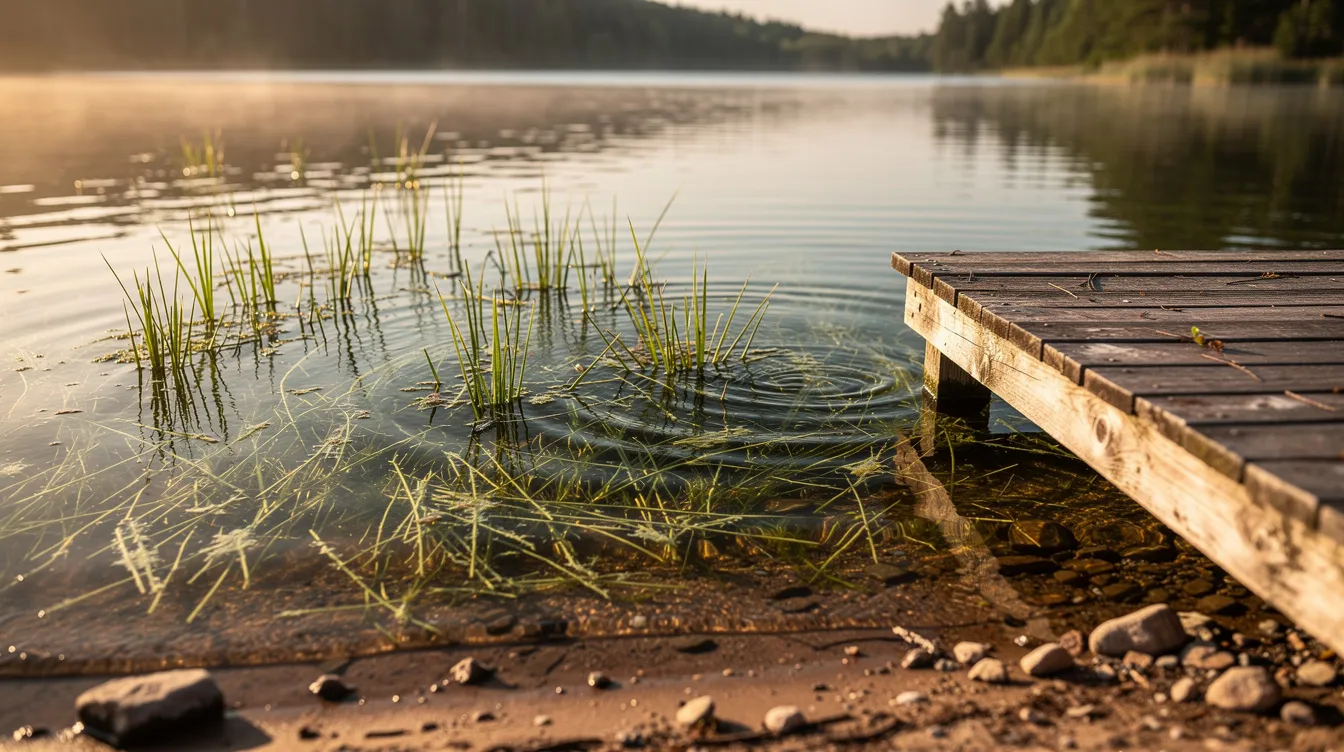
Absolutely. Erosion control does not require eliminating recreation areas. It usually means shrinking mowed lawn bands and adding buffer strips or planting pockets. Practical layouts include limited, well-defined access corridors through shoreline vegetation to a dock or small sand beach-rather than clearing the entire frontage. Ready Scout often designs custom buffer and access plans that preserve views and use patterns while dramatically improving erosion resistance and water quality. This is an environmentally friendly approach that keeps your lake enjoyable.
How long do natural erosion control methods like brush layering and native plant buffers last?
Properly installed bioengineering systems can perform for decades as plants mature, provided they are inspected and maintained during the first 3–5 years. The Maidstone Lake project in Vermont replaced failing railroad-tie retaining walls with bioengineered soil lifts and native plantings that now outperform the original structure. Compare this to rigid walls that may fail abruptly when undermined by waves or ice. Think in 10–20 year timeframes when comparing costs and benefits of various erosion control methods.
What season is best to start a shoreline erosion control project in the Northeast?
Plan and secure permits during late fall and winter, when regulators and consultants have more capacity and lake levels are often lower. Most planting, brush layering, and in-water work occurs from late spring through early fall, with exact timing adjusted to state and provincial guidelines on fish and wildlife protection. Ready Scout builds project timelines around local ice-out dates and growing seasons in New Jersey, New York, Vermont, and southern Ontario. Means adequate soil moisture and warm temperatures are available for root establishment.
How can I get started with Ready Scout on my shoreline erosion project?
Contact Ready Scout via phone or through the Ready Scout website or dedicated contact page for an initial consultation. Ideally, provide site photos, a rough shoreline length, and any past reports or permits. Ready Scout typically begins with a brief discussion of goals, constraints, and budget, followed by a site visit and written erosion control recommendations. Whether you are a lake association managing miles of inland lake shoreline or a single property owner watching your bank recede, schedule a shoreline review before the next storm season accelerates erosion. Acting now protects your property, your lake's water quality, and your community's natural resources for years to come.