How to Kill Duckweed in a Pond Without Harming the Ecosystem
Key Takeaways
- Duckweed is a fast-growing floating plant that can double its biomass in 48 hours and completely cover an acre of pond surface in just 45 days, smothering aquatic life and degrading pond health if left unchecked.
- The safest way to kill or remove duckweed combines manual skimming, improved circulation and aeration, careful biological control, and-when needed-properly selected aquatic herbicides applied in stages.
- Long-term duckweed removal depends on reducing nutrient inputs like fertilizer, runoff, and waterfowl waste while improving overall pond management, not just one-time treatments.
- Aggressive or poorly planned chemical duckweed removal can cause oxygen crashes and fish kills, so larger or high-value ponds should follow staged treatment plans or seek professional help.
- Ready Scout, LLC is a regional lake and pond management expert serving northern New Jersey, upstate New York, Vermont, and southern Ontario that designs safe, compliant duckweed control programs tailored to each site.
Introduction - Why Duckweed Becomes a Problem
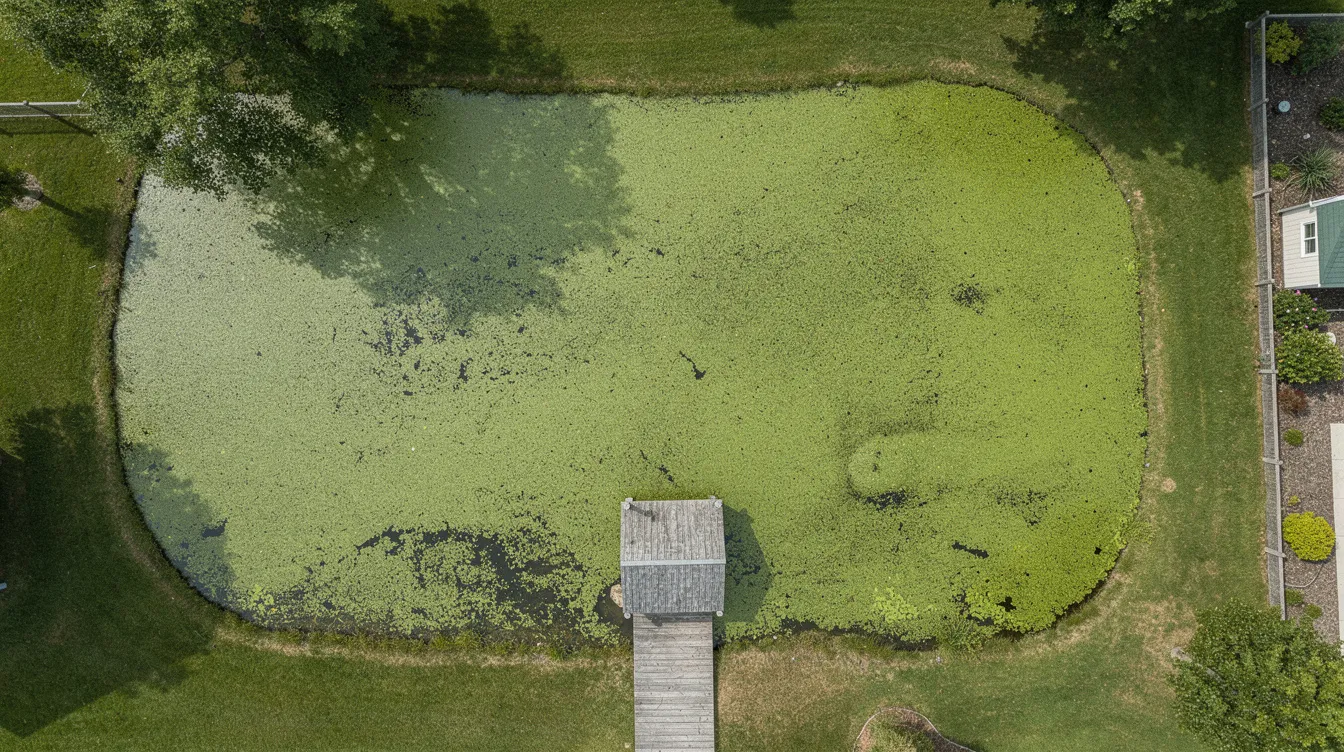
Picture your pond in late July: the entire water's surface is blanketed in bright green, so thick you can't see an inch below. That scenario can unfold on a quarter-acre pond in a single season if conditions are right. Duckweed is not algae-it's the world's smallest flowering plant, and it reproduces at a staggering pace. Under warm, nutrient-rich, still conditions, duckweed can double its biomass in 48 hours and cover an acre of surface in roughly 45 days.
Heavy duckweed cover blocks sunlight to submerged plants, suppresses natural oxygenation at the surface, raises water temperature, and stresses fish. It can also block UV light, causing coliform levels to spike. When too much duckweed takes hold, it signals deeper pond health issues-nutrient overloading, poor circulation, declining water quality.
This article walks through practical, step-by-step methods to kill and control duckweed while protecting your pond ecosystem. It complements our broader duckweed identification and control guide, but here the focus is squarely on safe duckweed removal and preventing duckweed from returning.
What Causes Duckweed to Grow in Ponds?
Duckweed outbreaks are a symptom of excess nutrients and stagnant conditions, not random bad luck. Understanding the root causes makes every removal method more effective.
Excessive nutrients from agricultural runoff, lawn fertilizer, livestock areas, septic seepage, and decaying leaf litter wash into ponds and feed explosive growth. Excess nitrogen and phosphorus fuel duckweed growth directly-the plants absorb these nutrients and convert them to biomass at remarkable speed. Duckweed also absorbs nutrients but releases them back into the water upon decay, creating a frustrating cycle.
Duckweed thrives in stagnant water and nutrient-rich conditions. Calm surfaces with limited wind action, no inflow or outflow, and zero aeration create ideal habitat. Slow moving water in coves, inlet areas, and shallow areas along pond edges is where mats first stabilize.
Warm temperatures accelerate the process. In northern New Jersey, upstate New York, Vermont, and southern Ontario, the critical window typically runs from late May through September when water temperatures exceed 65°F and long sunny days provide energy for rapid growth. Duckweed fragments are also commonly introduced by waterfowl, boat trailers, or boots-meaning even brand-new ponds can develop infestations in one season. Solving these nutrient and circulation issues benefits far more than just duckweed control; it improves overall pond and lake health.
How to Identify Duckweed Before Treatment
Correct identification matters before any treatment. Different species require different products and strategies, and confusing duckweed with algae or watermeal wastes time and money.
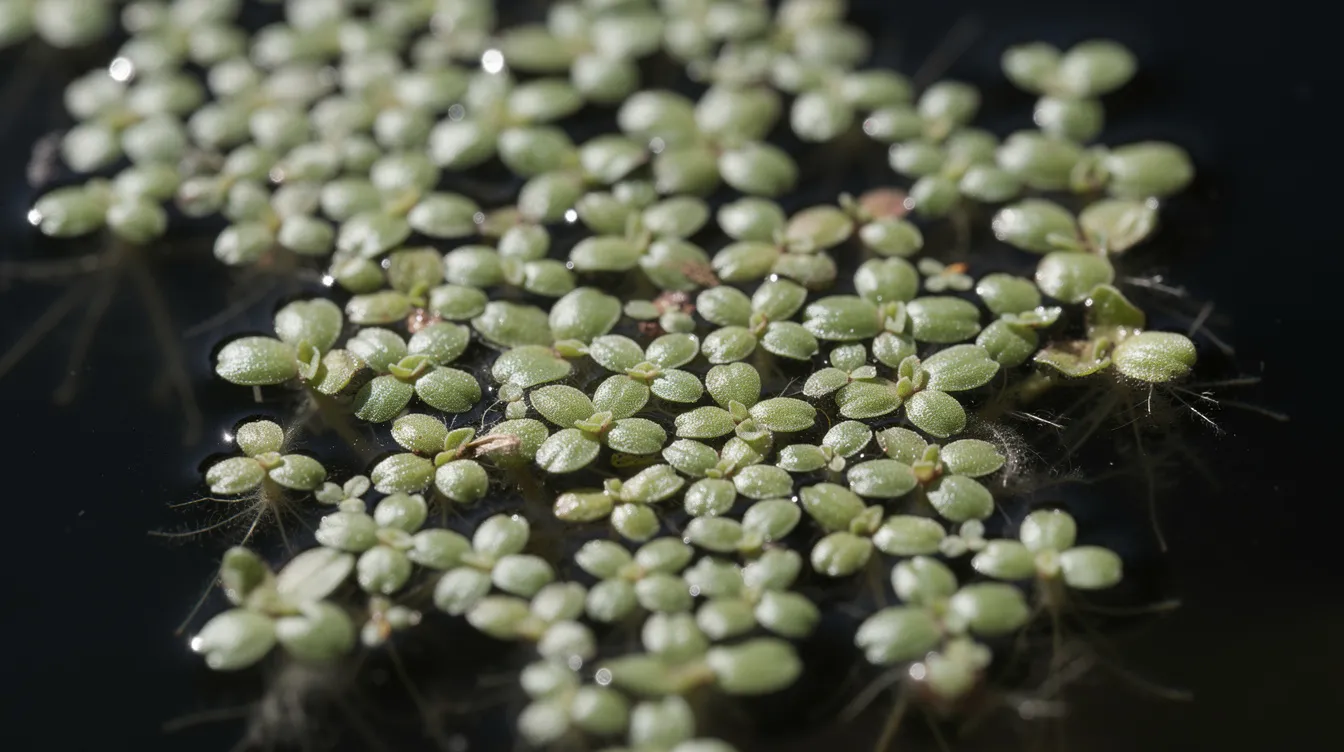
Duckweed (Lemna, Spirodela species): Look for tiny fronds with 1–3 leaves, each roughly 1–5 mm across, with visible hair-like roots dangling beneath. The mats form a bright to dull green carpet on the pond's surface that separates easily into individual floating plants when you run a hand through it.
Watermeal (Wolffia spp.): Looks like green sand or tiny pellets-no visible roots, slippery through fingers. It requires different herbicide strategies and is often harder to skim because duckweed fragments are already small, and watermeal is even smaller.
Filamentous algae: Forms stringy, slimy mats that hold together in clumps when lifted-distinctly different texture from the individual specks of duckweed.
Take close-up photos and compare them with a detailed duckweed identification guide, or send photos to a local expert before purchasing any chemicals. Misidentification leads to wasted herbicide and potential harm to non-target species.
How to Kill or Remove Duckweed From a Pond
No single method fits every pond. Effective control of duckweed usually combines physical removal and biological controls with aeration and-in some cases-approved aquatic herbicides. For safety and compliance, large ponds, community lakes, or sites with sensitive water uses should consider professional pond management support.
The following subsections walk through each approach in increasing order of intensity.
Manual Duckweed Removal
Manual or mechanical control is often the first and safest step, especially for small to medium-sized ponds under one acre. Manual removal techniques include raking or seining duckweed toward shore, and a pond rake is effective for small to medium-sized ponds where coverage hasn't yet become overwhelming.
Practical tools and techniques include:
- Wide pond rakes and fine-mesh skimmer nets for daily or weekly passes
- Floating booms and barriers (PVC pipe sections, rope lines) that corral duckweed into a collection zone
- Aquatic vacuums that efficiently remove dense duckweed infestations where hand-skimming falls short
- Wind-assisted skimming-work with wind action to push mats into a corner for easier removal
Skim regularly during peak growth months (June–August) and remove as much duckweed as possible each session. Proper disposal of removed duckweed prevents reintroduction-compost biomass well away from the shoreline, spread it as thin-layer garden fertilizer, and never leave piles in the shallows where nutrients wash back in.
Limitations are real: manually removing duckweed is labor-intensive, may not reach every corner, and must be repeated as new plants float in from coves or inlets. Pair manual removal with other methods so herbicides or biological tools don't carry the full load.
Improving Pond Circulation and Aeration
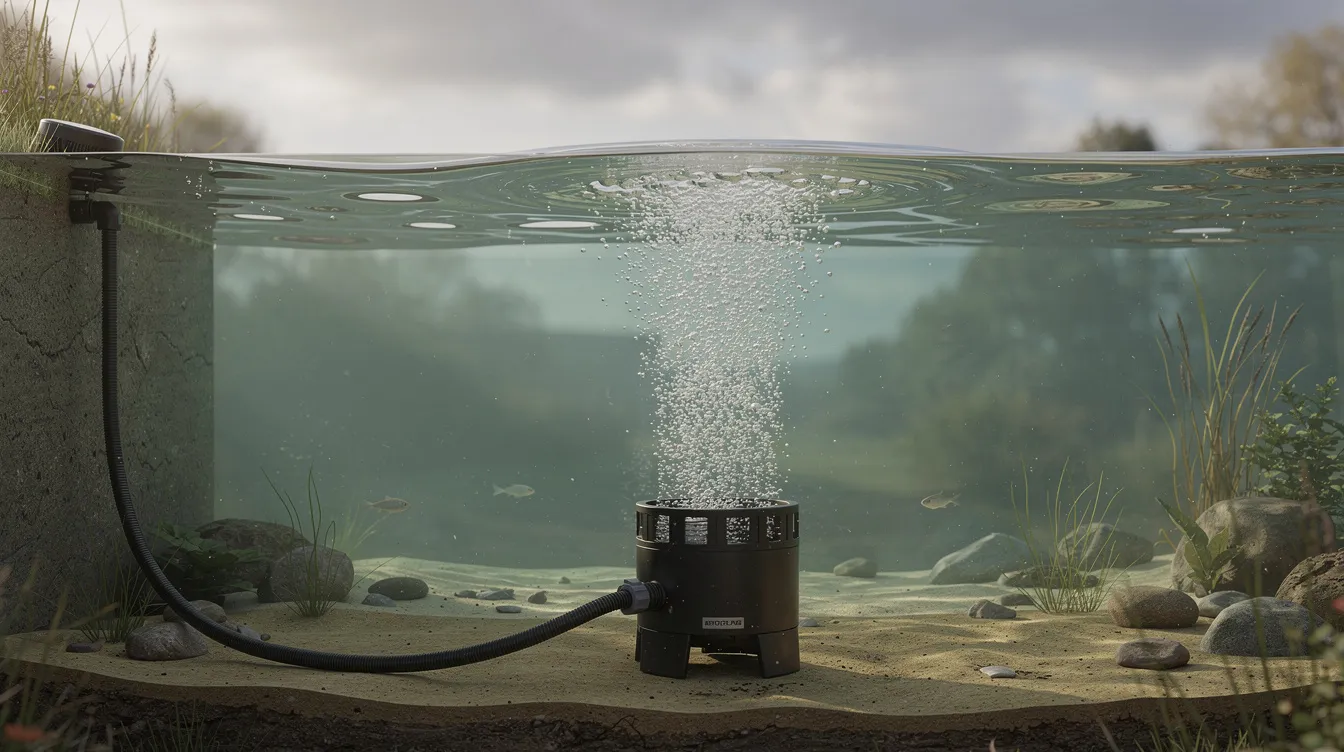
Duckweed thrives on still, stratified water, so aeration and circulation are core parts of long-term duckweed control. Aeration systems help prevent duckweed from taking over ponds by disrupting the calm surfaces these floating plants need. Increasing water movement through aeration discourages duckweed growth and supports the broader ecosystem.
Practical options include:
- Bottom diffused aeration systems sized to pond depth and surface area
- Surface fountains that break up stagnant zones
- Directional circulators that create flow patterns across edges and coves
Aeration increases dissolved oxygen levels, mixes water layers, and supports beneficial bacteria that consume excess nutrients. That said, aeration alone rarely kills duckweed outright-it makes conditions less favorable so mechanical, biological, and chemical methods work better and regrowth slows. Professional design and installation ensures correct diffuser placement and compressor sizing. Learn more about submersed diffused aeration and pond health.
When herbicides are used, operating aeration before and after treatment helps prevent oxygen depletion from decaying plant biomass.
Biological Management
Biological control means using living organisms and ecological processes to help manage duckweed rather than relying solely on chemicals.
Fish options:
- Certain fish species such as goldfish and koi eat duckweed and can contribute to population control in ornamental ponds.
- Tilapia can consume duckweed but require warm water (typically above 60°F); stocking rates for tilapia are 15 to 20 pounds per surface area of pond. However, regulations vary by state and province, and permits are often required.
- Grass carp may eat duckweed, but typically can't keep pace with its rapid growth.
- Fish stocking can help manage duckweed populations sustainably when paired with other methods.
Waterfowl: Ducks eat duckweed, but they do not effectively control it. Waterfowl typically add more nutrients through droppings than they remove through feeding, and they transport duckweed fragments between ponds on their feet.
Pond dyes that reduce sunlight penetration can suppress duckweed as a supplemental tool, but dye is not a stand-alone method. Biological control is rarely sufficient for complete eradication-it works best as part of an integrated pond management plan, not a quick fix for an already smothered pond.
Aquatic Herbicide Treatments
Aquatic herbicides can be very effective at killing duckweed, but they carry real risk if misused-including fish kills, regulatory violations, and harm to other plants in the ecosystem.
Two main classes:
| Type | Examples | Speed | Notes |
|---|---|---|---|
| Systemic herbicides | Fluridone, Penoxsulam | Weeks to months | Absorbed and translocated through the plant; gradual kill |
| Contact herbicides | Diquat, Flumioxazin, Carfentrazone | Hours to days | Burns foliage on contact; fast but may require repeat treatment |
Fluridone is a systemic herbicide effective against duckweed, and herbicides like Fluridone target duckweed without harming many other plants when applied at label directions. Diquat is a contact herbicide that kills duckweed quickly but demands careful coverage. Only EPA- and state-approved aquatic herbicides labeled for duckweed should ever be used-labels are legal documents dictating dosage, method, and water use restrictions.
The critical danger: killing large amounts of duckweed at once can deplete dissolved oxygen in water as thick mats decay and bacteria consume available oxygen. This can trigger overnight fish kills, especially in shallow or already low-oxygen ponds. Reducing the treatment area size and spacing treatments a week or two apart combined with aeration, helps prevent oxygen crashes and protects fish.
Chemical treatments for duckweed should be selected based on impact on fish and water conditions. Proper dosing of herbicides requires knowing pond volume. Ponds used for drinking water, irrigation, or those near downstream wetlands may require special permits.
How to Prevent Duckweed From Returning
Eliminating duckweed once is only half the job. Long-term prevention of duckweed requires nutrient management strategies that address why it grew in the first place. Duckweed absorbs nutrients during growth but releases them upon decay, so removal without prevention keeps the cycle spinning.
Nutrient management:
- Reduce lawn and field fertilizer application near the shoreline
- Divert barnyard or manure runoff away from the pond
- Manage leaf litter, grass clippings, and debris that blow into the water
- Reducing nutrient runoff is key to limiting duckweed growth season after season
Buffer strips and structures:
- Establish 10–30 feet of native grasses, shrubs, and wetland plants around pond edges to filter runoff
- Install small sediment basins, diversion swales, or rock-lined channels upstream
Monitoring and maintenance:
- Visually track coverage weekly; dense duckweed coverage can exceed 60–80% of pond surface before you realize it
- Maintaining 10% to 20% duckweed coverage is actually ideal for ponds-it provides shade and habitat without smothering the ecosystem
- Test water quality for phosphorus, nitrogen, ammonia, and dissolved oxygen regularly
- Maintaining proper water quality is crucial for effective duckweed management
Beneficial bacteria can be used to reduce organic nutrient buildup at pond bottoms, breaking down muck that otherwise releases phosphorus back into the water column. Periodic dredging of nutrient-rich sediment in older ponds, ongoing aeration, and annual vegetation assessments keep duckweed and other weeds in check. Integrate duckweed removal into a broader pond management strategy rather than reacting only when problems become severe.
When Should You Hire a Professional Pond Management Company?
DIY duckweed control might be realistic for very small ponds, but certain situations justify professional support:
- Ponds over 1 acre or with repeated outbreaks despite prior treatments
- History of fish kills or oxygen depletion events
- Complex water uses-drinking water, irrigation, fire protection, swimming
- Sensitive downstream wetlands or regulatory triggers requiring licensed applicators
- Stocking triploid grass carp that require permits
- Any time you are considering aquatic herbicide applications
A professional firm like Ready Scout conducts a full duckweed assessment: site visit, species identification, bathymetric mapping, water quality testing, review of watershed nutrient sources, and development of a staged treatment and pond health plan. Ready Scout serves northern New Jersey, upstate New York, Vermont, and southern Ontario, providing permitting support, herbicide application, aeration design, and long-term lake and pond management partnerships.
Expert guidance saves years of trial-and-error and prevents costly mistakes like over-dosing herbicides or triggering avoidable fish kills.
Frequently Asked Questions About How to Kill Duckweed
What kills duckweed permanently?
There is no truly permanent solution. Duckweed can always be reintroduced by birds, equipment, or wind. However, combining nutrient reduction, aeration, and periodic targeted herbicide or mechanical control can keep coverage at low, manageable levels for years. Relying only on one-time herbicide treatments without improving pond health almost always results in duckweed returning within a season or two.
Is it safe to swim or let pets drink from the pond after duckweed treatment?
Safety depends entirely on the product used and its label restrictions. Some aquatic herbicides have waiting periods for swimming, pet access, livestock watering, or irrigation, while others impose none. Always check the specific herbicide label for water use restrictions and consider consulting a professional to ensure compliance and safety.
When is the best time of year to start duckweed control?
Start early in the growing season-late spring-when coverage is still light. This makes manual removal easier and reduces the dosage and risk if herbicides are needed. Waiting until August, when the pond is already 80–100% covered, increases biomass that can decay and raises the risk of oxygen depletion and fish stress.
Can I use household products like salt or vinegar to kill duckweed?
Very high concentrations of salt or vinegar can damage duckweed, but they also harm fish, invertebrates, beneficial plants, and upset overall pond chemistry. Avoid home-remedy approaches and rely on approved aquatic herbicides, mechanical control, and professional guidance where needed.
Will winter cold completely get rid of duckweed in colder climates?
In regions like Vermont, upstate New York, and Ontario, visible duckweed often dies back with freeze-up. However, overwintering buds called turions survive in the sediment and germinate in spring. Winter provides a partial reset but not a cure-chronic duckweed problems require active pond management of nutrients and vegetation when the growing season returns.
Need Help Beating Duckweed for Good? Talk to Ready Scout
If recurring duckweed has you frustrated-or you're worried about managing duckweed with herbicides safely-Ready Scout can build a tailored pond management plan for your property. Our services include aquatic plant and algae management, water quality monitoring, aeration system design, invasive species control, and full permitting and regulatory support.
We work with individual pond owners and lake associations across northern New Jersey, upstate New York, Vermont, and southern Ontario. Stop guessing and start managing-schedule a consultation or site visit to assess your duckweed coverage, evaluate pond health, and create sustainable results.
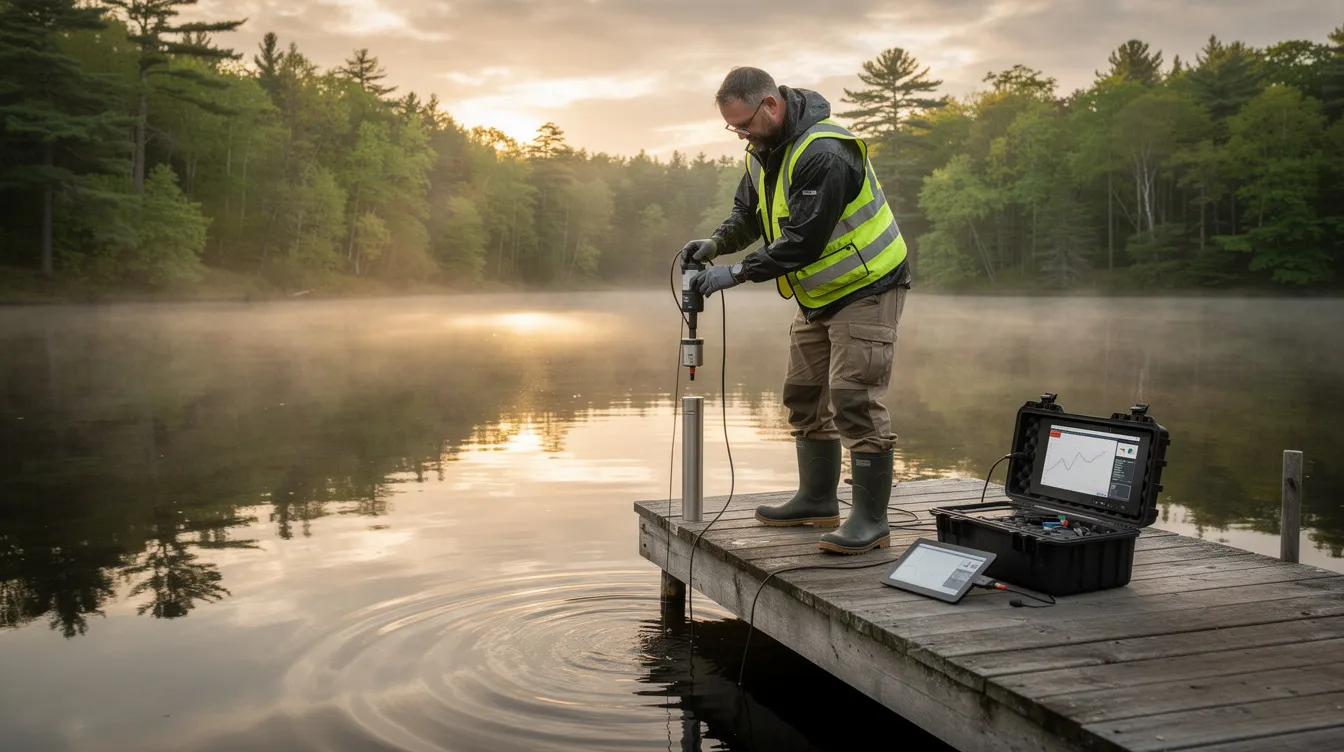
Smart Clean Water Management: How Ready Scout Uses Smart Water Technology to Protect Lakes and Ponds