Duckweed Pond Surface Coverage: Identification, Causes & Control Plus Ready Scout Solutions
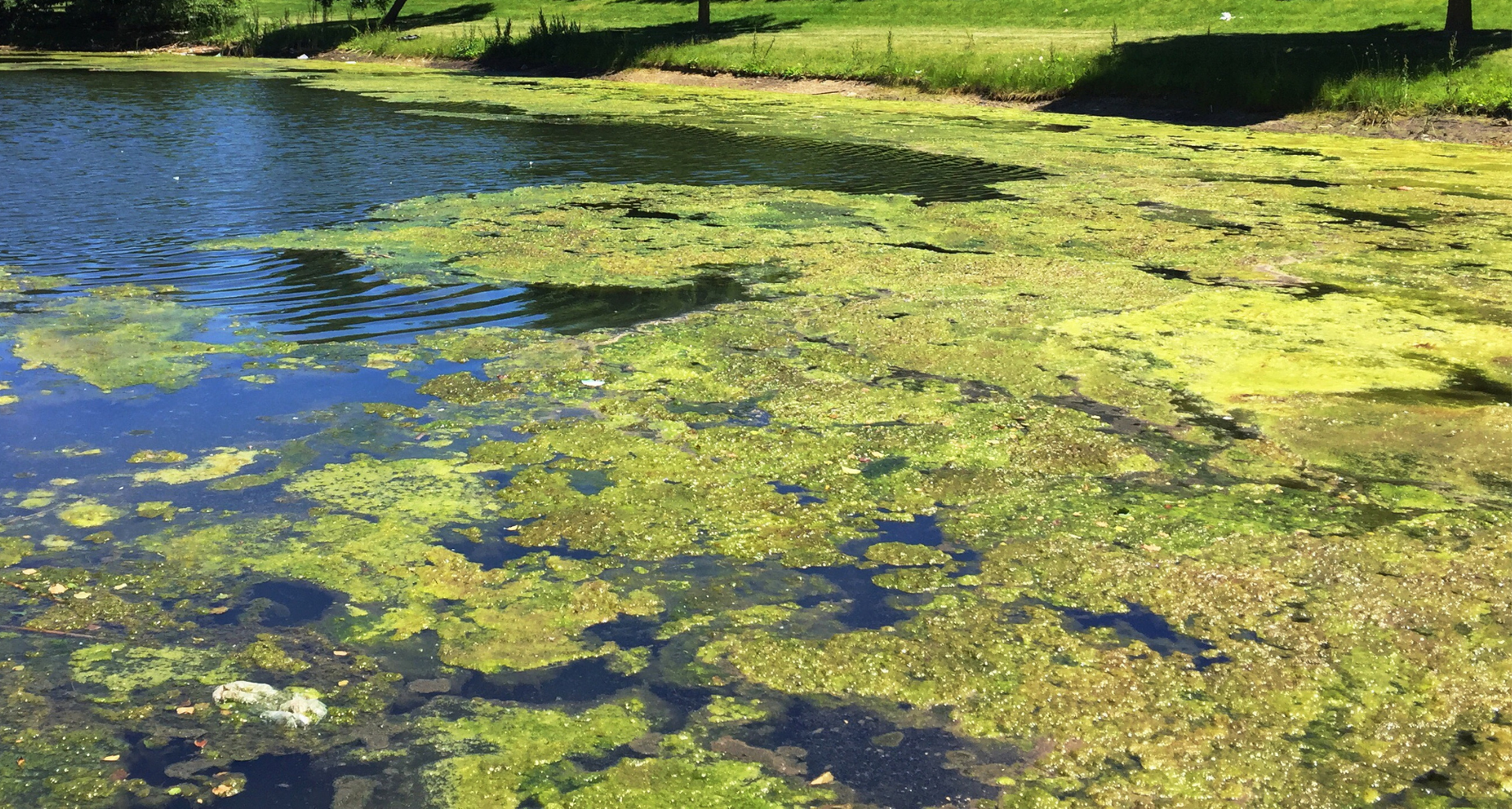
If you’ve noticed a bright green carpet creeping across your pond this summer, you’re likely dealing with duckweed pond surface coverage—an invasive aquatic plant known for its aggressive growth and ability to quickly cover pond surfaces. This tiny floating plant can double its biomass in as little as 48 hours under ideal conditions, transforming a clear pond into a dense green mat within weeks.
This guide is designed for pond owners, land managers, and anyone seeking to identify, understand, and control duckweed in ponds to maintain healthy, attractive water features. Understanding and managing duckweed is crucial for preserving pond health and aesthetics, as unchecked growth can lead to oxygen depletion, fish kills, and unsightly water features. Managing duckweed pond surface coverage is essential not only for the health of your pond’s ecosystem but also for maintaining the value and enjoyment of your property.
The good news? With the right approach, you can control duckweed and restore your pond to health.
Key Takeaways
- Duckweed spreads extremely fast, with the ability to double its coverage in 2-4 days under warm, nutrient-rich conditions—meaning a small patch in May can completely cover a ¼-acre pond by mid-July if left unmanaged.
- Effective long term control requires a combination approach: reducing nutrient inputs, physical removal, and carefully selected chemical treatments rather than relying on any single quick fix.
- Correct identification matters because duckweed and watermeal require different treatment strategies—systemic herbicides that work through roots won’t control rootless watermeal.
- Ready Scout helps pond owners monitor coverage, choose the right treatment strategy, and time applications properly to avoid fish kills and wasted product by leveraging expert lake management consulting services from a specialized lake management consulting firm.
- Prevention through nutrient management (buffer strips, reduced fertilizer, septic maintenance) will always be more cost-effective than repeated emergency treatments each season.
What Is Duckweed in Ponds?
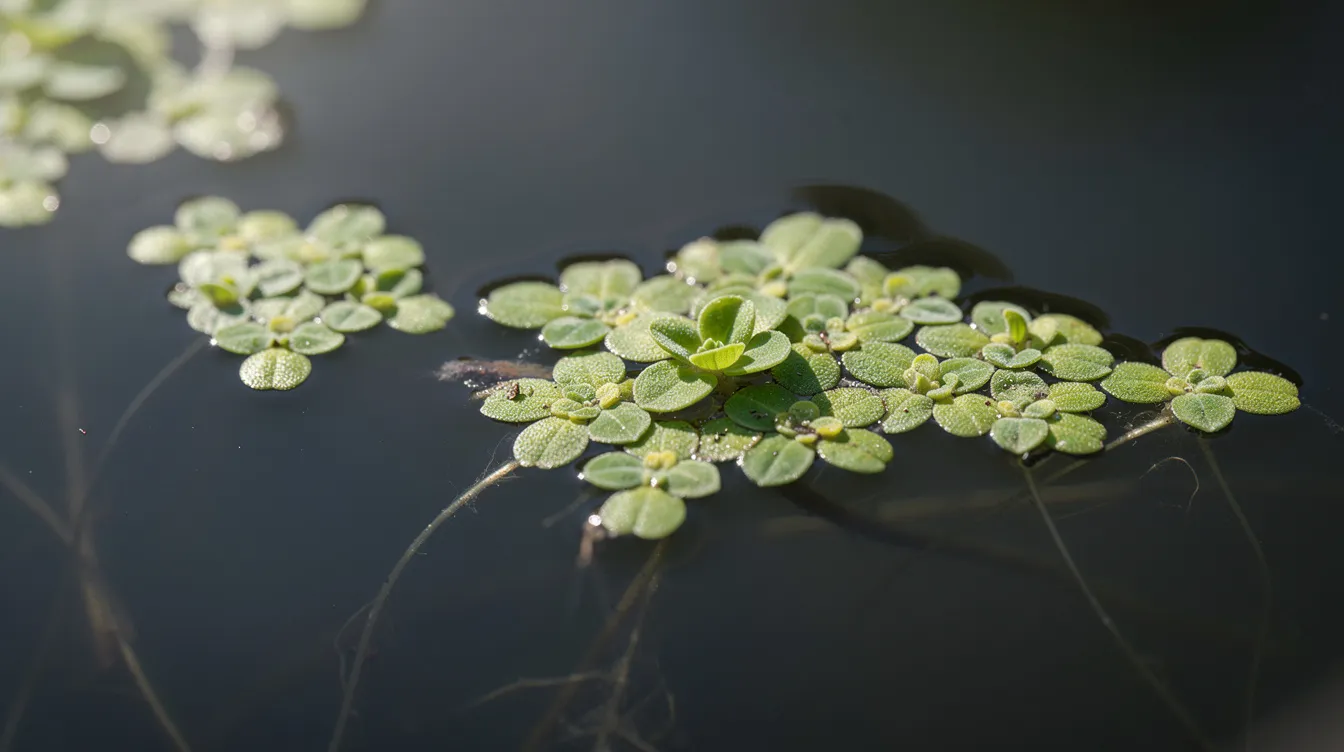
Duckweed is a tiny, fast-growing, free-floating aquatic plant in the Lemnaceae family, often mistaken for algae, consisting of small, oval-shaped green fronds about the size of a pencil eraser with a single rootlet. Duckweed refers to several species of tiny, free-floating aquatic plants in the family Lemnaceae, primarily from the genera Lemna, Spirodela, and Landoltia. These plants form the characteristic bright green mats you see floating across calm pond surfaces throughout the warmer months.
The typical duckweed plant consists of one to three rounded fronds (the leaf-like structures) measuring 2-6 mm across—roughly the diameter of a pencil eraser. Fine root threads dangle below each frond into the water. This is what pond owners commonly encounter on farm ponds, golf course water hazards, and small ornamental ponds across the country.
What makes duckweed so successful is its reproductive strategy. Rather than relying on seeds, these plants reproduce primarily through budding and fragmentation. Each frond produces daughter fronds that break off and become independent plants. Under optimal conditions—warm water, full sunlight, and abundant nutrients—this clonal reproduction allows a handful of plants introduced in late spring to grow into complete pond coverage by midsummer.
Interestingly, duckweed is among the smallest flowering plants on Earth. However, the tiny flowers are rarely noticed by pond owners and play almost no role in the plant’s spread across your pond.
Duckweed vs. Watermeal and Other Look-Alikes
Before purchasing any herbicide or treatment, you need to correctly identify what’s growing on your pond. Some products and strategies work much better on duckweed than on watermeal, and using the wrong approach wastes money and time.
Duckweed vs. Watermeal comparison:
| Feature | Duckweed | Watermeal |
|---|---|---|
| Size | 2-6 mm (pencil eraser) | Less than 1 mm (grain-like) |
| Roots | Visible root threads | No roots |
| Texture when scooped | Soft, connected plants | Feels like floating green cornmeal |
| Appearance | Distinct leaf shape | Looks like finely ground peas |
| Both species often occur together in many ponds, particularly across the mid-Atlantic and Midwestern regions. A ¼-acre pond in Pennsylvania or Ohio can easily develop mixed mats of both by late summer. This co-occurrence complicates treatment because systemic herbicides that get absorbed through roots won’t effectively control rootless watermeal. | ||
| Don’t confuse either plant with filamentous algae, which forms stringy, mat-forming masses that can be lifted out in clumps. Algae control requires different products entirely. | ||
| A simple tip for identification: scoop some material from your pond’s surface and examine it closely. Clear photos from above and in-hand, plus a quick look for those fine roots, are usually enough to distinguish duckweed from watermeal. Ready Scout tools and services, including water quality monitoring and lake mapping, can help confirm your ID before you invest in herbicides. |
Why Does My Pond Have Duckweed?
Duckweed rarely appears out of nowhere. It’s almost always introduced from an external source, and duckweed growth is then fueled by excess nutrients—particularly nitrogen and phosphorus from runoff from agricultural fields, lawns, and septic systems—already present in your pond water.
Common introduction pathways include:
- Waterfowl transport: Ducks, geese, other waterfowl, and water birds carry duckweed fragments on their feathers and feet as they move between farm ponds, municipal lakes, and wetlands.
- Runoff and inflows: Spring rains wash fragments from upstream ditches or creeks directly into retention ponds and farm ponds.
- Equipment transfer: Nets, boats, pumps, plant baskets, and waders moved between ponds on the same property can hitchhike fragments from an infested pond to a clean one.
- Intentional introduction: Some pond owners have introduced duckweed as a food source for fish or as “natural filtration” only to watch it escape into decorative or farm ponds.
Why some ponds explode with growth while others stay clear:
The difference usually comes down to growing conditions. Ponds that develop severe duckweed problems typically share these characteristics:
- Calm, shallow water with minimal circulation or waves
- High nutrient loads from lawn fertilizer runoff, barnyards, septic seepage, or golf course maintenance
- Warm water temperatures (generally above 60-65°F)
- Full summer sunlight exposure
A 1-acre cattle-watering pond in the Midwest receiving pasture runoff will often see dense duckweed sheets by late June if left unmanaged. The combination of manure nutrients, still water, and summer heat creates ideal conditions for explosive growth.
Understanding that duckweed presence signals nutrient imbalance—not just a cosmetic issue—is essential for developing an effective control strategy grounded in sustainable lake and pond management practices.
Effects of Duckweed on Pond Health
A thin duckweed layer won’t harm your pond and can actually provide some benefits. The problems start when coverage becomes dense and persistent.
Benefits at light to moderate coverage:
- Helps support aquatic wildlife by providing food to ducks, some fish, and the larvae of small moths
- Offers natural shade that can lower water temperatures, suppress some algae growth, and help protect small aquatic organisms, including aquatic invertebrates
Keeping duckweed coverage at a balanced 10% to 20% of a pond's surface is ideal for maintaining a healthy ecosystem.
Roughly 10% to 20% of the pond surface is a reasonable balance for a healthy pond.
Problems when coverage exceeds 60-80% of surface:
Dense mats of duckweed, which is considered one of the most challenging aquatic weeds, create cascading problems for pond health:
- Light blockage: Sunlight can’t reach submerged plants, causing die-off of beneficial vegetation and reducing habitat complexity
- Oxygen exchange disruption: The mat limits gas exchange at the water surface, and a solid carpet can also block wind action and reduce natural oxygenation at the pond surface, particularly dangerous on still, hot days
- Decomposition crashes: When large mats die—whether from herbicide treatment or the first autumn frost—decomposition consumes dissolved oxygen rapidly, potentially triggering overnight fish kills
Duckweed can act like a sponge for excess nutrients, but as mats decay, those nutrients are released back into the water and can worsen pollution.
In deeper ponds, excessive coverage can also contribute to stratification, creating poor bottom-water conditions that reduce fish growth and can lead to fish kills.
Practical impacts for pond owners:
- Unsightly “pea soup” or “green carpet” appearance that reduces property aesthetics
- Clogged intake screens and pumps on irrigation systems or decorative fountains
- Reduced recreational use—fishing, swimming, and paddling become difficult through thick mats
Ready Scout solutions focus on preventing these oxygen crashes by planning staged treatments, monitoring coverage over time, and integrating aeration system design and installation supported by expert plant and algae management services rather than reacting after a full mat has already formed.
Preventing Duckweed & Watermeal: Long-Term Nutrient Management
Long term control means attacking the root cause: nutrient loading from external and internal sources. Simply killing surface plants each year without addressing nutrients guarantees you’ll repeat the same cycle indefinitely, because reducing nutrient and sediment runoff is the primary way to limit duckweed growth.
Reducing external nutrient sources:
- Reduce or redirect lawn and field fertilizers within 50-100 feet of the shoreline; never apply fertilizer right before heavy rain
- Inspect and maintain septic systems, especially on properties built before 2000, to prevent nutrient seepage into nearby ponds
- Install or widen vegetative buffer strips using native grasses, sedges, shrubs, and other native plants to filter runoff from driveways, roofs, and barnyards
- Healthy pond plants along the shoreline also help stabilize banks, filter runoff, and support overall pond management
- Use swales or simple berms to divert barnyard or feedlot runoff away from ponds where feasible
- Limit direct access for livestock to pond edges
Managing internal nutrient loading:
Decades of accumulated leaf litter, dead vegetation, and manure can create nutrient-rich sediments that continuously feed recurring duckweed blooms—even after you’ve addressed external sources.
Options for internal management include a mix of effective weed control lake strategies tailored to your basin:
- Dredging for heavily silted, decades-old ponds (costly but effective)
- Careful organic-matter removal from shallow areas
- Bottom aeration to oxidize sediments and reduce nutrient release
Ready Scout can help owners map runoff sources, estimate nutrient loading risk through water quality monitoring and lake mapping services, and prioritize which preventive measures—buffer strips, diversion structures, reduced fertilizer applications—will deliver the biggest payback at your specific site.
Physical & Mechanical Control of Duckweed
Physical removal is often the first and most straightforward step, and it’s most practical on small ponds; on larger ponds, removal usually needs to be combined with other control methods informed by expert lake and wetland management guidance. It’s immediately effective and doesn’t require permits or herbicide knowledge.
Manual removal techniques:
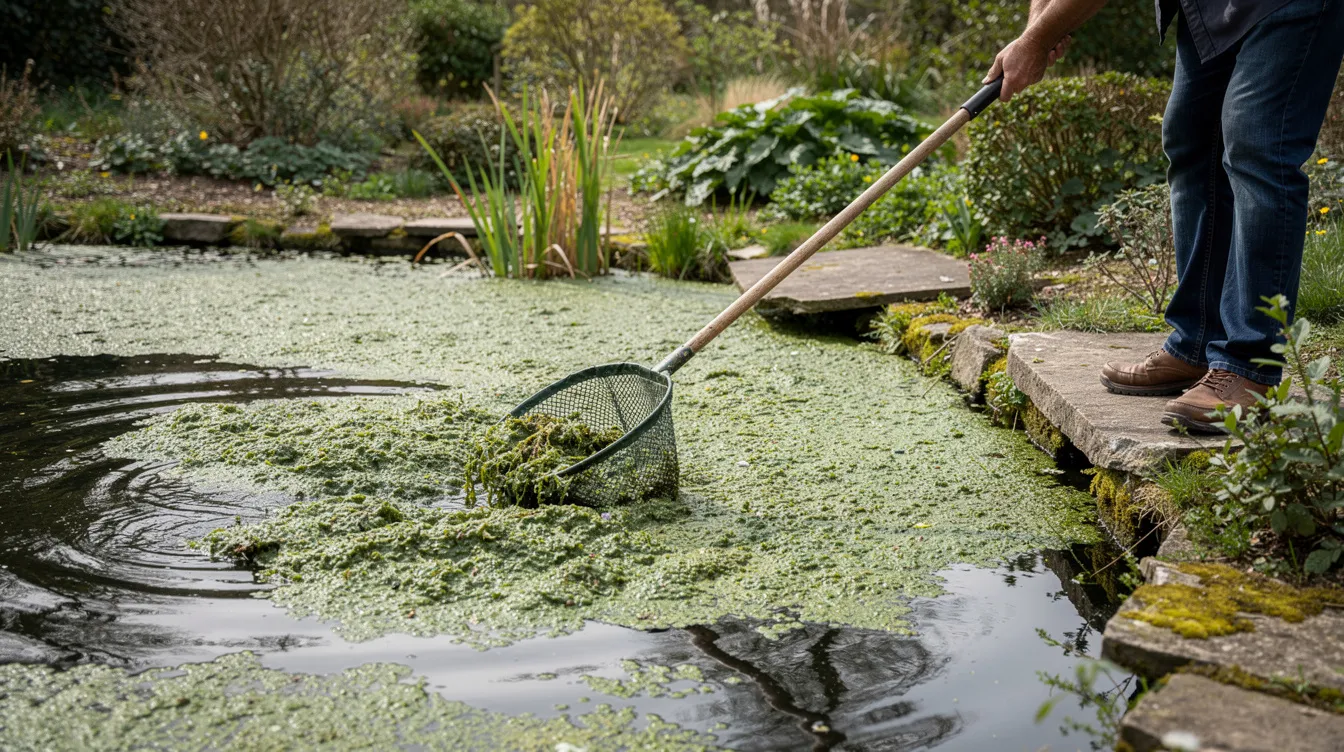
- Raking, seining, or skimming duckweed with pool nets or fine-mesh seines works best early in the season before full coverage develops
- For a ¼-acre ornamental pond, a routine of weekly 20-30 minute skimming sessions during May through July can significantly slow build-up
- Work from downwind areas where wind concentrates floating material
Mechanical aids:
- Floating booms, ropes, or simple PVC pipe barriers can gather individual plants into one corner or shallow cove for easier removal from the pond surface
- Surface skimmers or small trash pumps drawing from the surface layer remove plants and some nutrient-rich water together
Aeration and circulation:
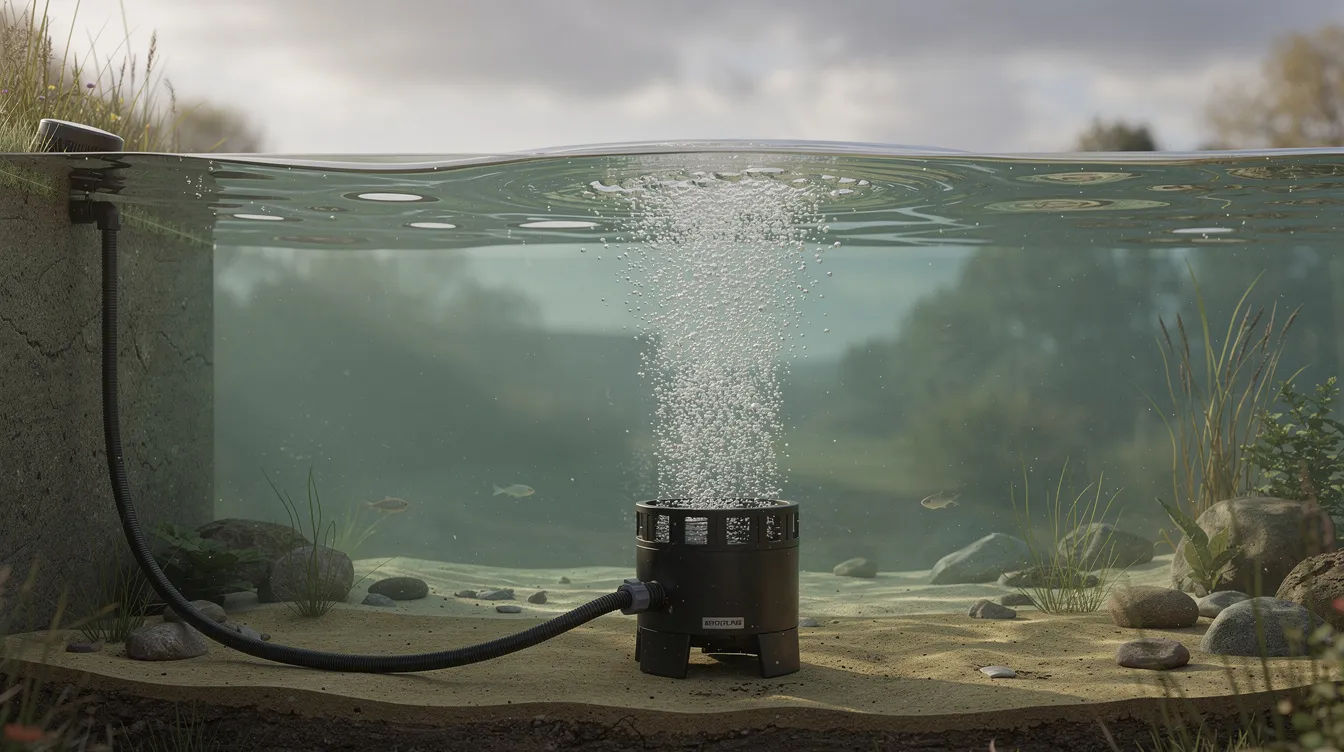
Bottom diffused aeration or carefully designed surface fountains keep water moving, making it harder for solid, stagnant mats to form across the central pond area. Aeration won’t kill duckweed, but it complements removal and chemical controls by improving oxygen levels and reducing die-off risks.
Proper disposal:
Move collected duckweed away from the shoreline immediately. The material makes excellent compost or can be spread in thin layers on gardens and fields. Just ensure nutrients don’t wash straight back into the pond during the next rain.
Biological Control Options
Biological control can help manage duckweed populations but is rarely sufficient by itself for complete eradication.
Fish options:
- Grass carp: These fish will eat some duckweed, but they typically prefer submerged plants first. Their effectiveness on floating duckweed is limited and highly variable. Many states permit triploid (sterile) grass carp with regulations—states including Pennsylvania, Ohio, Illinois, and Indiana allow them, while Michigan, Wisconsin, and Minnesota prohibit possession regardless of ploidy. Pond owners may need a state permit before stocking and should buy fish from an approved hatchery.
Waterfowl considerations:
Ducks and domestic geese do eat duckweed, but relying on them as a “solution” often backfires. Their droppings return nutrients to the pond, and their movements can spread duckweed fragments between ponds on the same property.
Permits and regulations:
Always check state wildlife and environmental regulations before stocking any species. Many states have adopted stricter non-native fish rules, and triploid grass carp should be purchased only from an approved hatchery and only after obtaining any required state permit.
Ready Scout can help connect pond owners with qualified local biologists or fisheries professionals who can evaluate whether biological control is legal, cost-effective, and appropriate for their specific situation through its broader
professional lake consulting and management services and
comprehensive lake consulting offerings.
Pond dye as a supplemental tool
Adding dye to pond water reduces light penetration, helping to protect fluridone in the water column and slightly suppressing regrowth of both duckweed and algae. Some pond owners also use barley straw in late winter or early spring to discourage algae growth, but it is not a stand-alone duckweed treatment.
Fish safety and oxygen management:
Killing a heavy mat all at once can cause severe oxygen depletion, potentially triggering fish kills—especially in warm, shallow ponds. To avoid this:
- Treat in sections (¼ to ⅓ of pond area at 1-2 week intervals)
- Use aeration during and after treatment
- Time applications for cooler periods when possible
- Monitor fish behavior closely after treatment
Chemical treatments are not toxic to humans at label rates, but water-use restrictions for livestock, irrigation, and swimming must be followed.
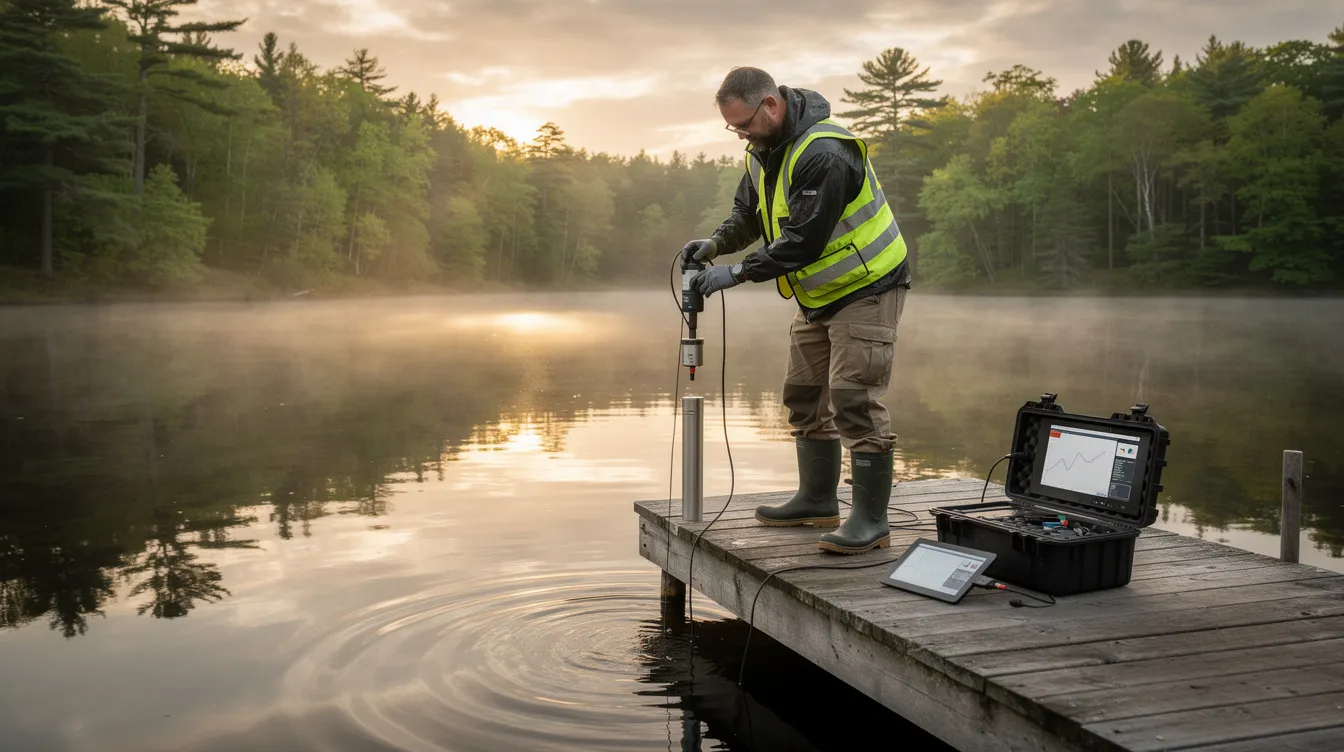
Ready Scout helps pond owners calculate pond area and volume before choosing herbicide rates, select between contact and systemic products based on coverage level and budget, and plan staggered treatment schedules that minimize risk through its expert plant and algae management services and the guidance of an experienced Certified Lake Manager.
Integrated Duckweed Management with Ready Scout
The most effective approach combines nutrient control, physical removal, aeration, biological tools, and herbicides for sustainable results over multiple seasons. No single method provides a permanent solution.
Sample integrated plan for a 0.5-1 acre residential pond:
Early Spring:
- Assess nutrient sources (runoff paths, septic condition, fertilizer practices)
- Install or widen shoreline buffer strips
- Set up or service aeration equipment
Late Spring:
- Verify plant ID—confirm whether you’re dealing with duckweed, watermeal, algae, or a combination
- Document coverage with photos for comparison
Early Summer:
- If coverage exceeds 30-50%, apply appropriate herbicide based on species and goals
- Follow all label directions and water-use restrictions
Late Summer/Fall:
- Remove accumulated organic debris from shallow areas
- Plan any dredging or shoreline improvements for low-water periods
- Evaluate season results and adjust next year’s plan
How Ready Scout supports each step:
We help pond owners through remote or on-site assessment tools that track duckweed coverage over time using photo logs and simple mapping. This data helps determine exactly when to intervene rather than guessing.
Our guidance covers selecting compatible products—herbicides, dyes, aeration equipment—and sequencing them safely so treatments complement rather than conflict with each other.
The goal is helping pond owners across northern New Jersey, upstate New York, and nearby regions move away from repeated emergency treatments each year toward gradually reducing the underlying nutrient and vegetation pressure through regional lake management services delivered by a professional lake consulting and management firm.
Conditions or Serious Problems that Require Professional Help:
- Any pond larger than 1 acre with an outlet will require treatment by a licensed applicator
- Your pond exceeds 2-3 acres or has complex shapes and varying depth zones
- The pond provides drinking water or irrigation for livestock, crops, or neighborhoods where herbicide misuse could have serious consequences
- You’ve experienced repeated duckweed or watermeal infestations despite several years of skimming and chemical applications
- There’s a history of fish kills, heavy fish stocking, or sensitive species (koi ponds, trout ponds)
- You’re uncertain about species identification or appropriate treatment rates
Before making major management decisions regarding duckweed in ponds, seek advice from reputable sources such as county extension offices or aquatic management professionals to ensure effective and environmentally responsible control.
Ready Scout provides owners with
experienced lake consulting and management, university extension resources, and provide planning tools that make professional work more targeted and cost-effective. Sometimes a single professional consultation, or a broader
lake community self-sufficiency
assessment, can save years of trial and error.
Frequently Asked Questions About Common Questions About Duckweed in Ponds
How fast can duckweed really take over a pond?
Under warm, nutrient-rich conditions with full sunlight, duckweed can double its biomass in roughly 2-4 days. This means a small patch appearing in late May can blanket a ¼-acre stillwater pond by mid to late July if left completely unmanaged. In laboratory conditions, some species have demonstrated doubling times under 30 hours. The exponential nature of growth—ten doublings equals roughly 1,000 times the original coverage—explains why early intervention matters so much.
Is duckweed always bad for my pond?
Thin, patchy duckweed coverage can actually provide shade and wildlife food without causing major harm. Problems emerge when coverage becomes dense and persistent—generally more than half the surface for several weeks. At that point, you risk oxygen depletion, loss of submerged plants, and potential fish kills. The key is maintaining light coverage through regular management rather than allowing complete takeover.
Can I use duckweed I remove as fertilizer or animal feed?
Duckweed is nutrient-rich and makes excellent compost material or garden fertilizer when spread in thin layers. It has also been used as supplemental feed for poultry, pigs, and some fish species. However, you should introduce it slowly into any feeding program and consult nutrition guidelines or a veterinarian before using it as a significant feed component. Also ensure your pond hasn’t been recently treated with herbicides before using harvested material.
Will cold winter temperatures get rid of duckweed on their own?
In cold-winter climates across the northern U.S., Canada, and northern Europe, surface duckweed typically dies back with frost and ice formation. However, many species produce dormant buds called turions that sink to the bottom and overwinter in sheltered sediments. These survive to repopulate the pond each spring. Winter alone usually doesn’t solve chronic duckweed problems—it just provides temporary relief.
How do I know how much herbicide to use in my pond?
Proper dosing requires knowing your pond’s surface area and average depth to calculate total volume. Label directions specify rates based on these measurements. Underestimating volume leads to poor control; overestimating wastes product and may harm fish or violate regulations. Ready Scout provides tools and expert guidance for these calculations, along with access to detailed product label information for aquatic treatments, helping ensure you apply the effective amount without waste or environmental harm.